
US Targets Iranian Ports in Hormuz Blockade After Nuclear Talks Collapse

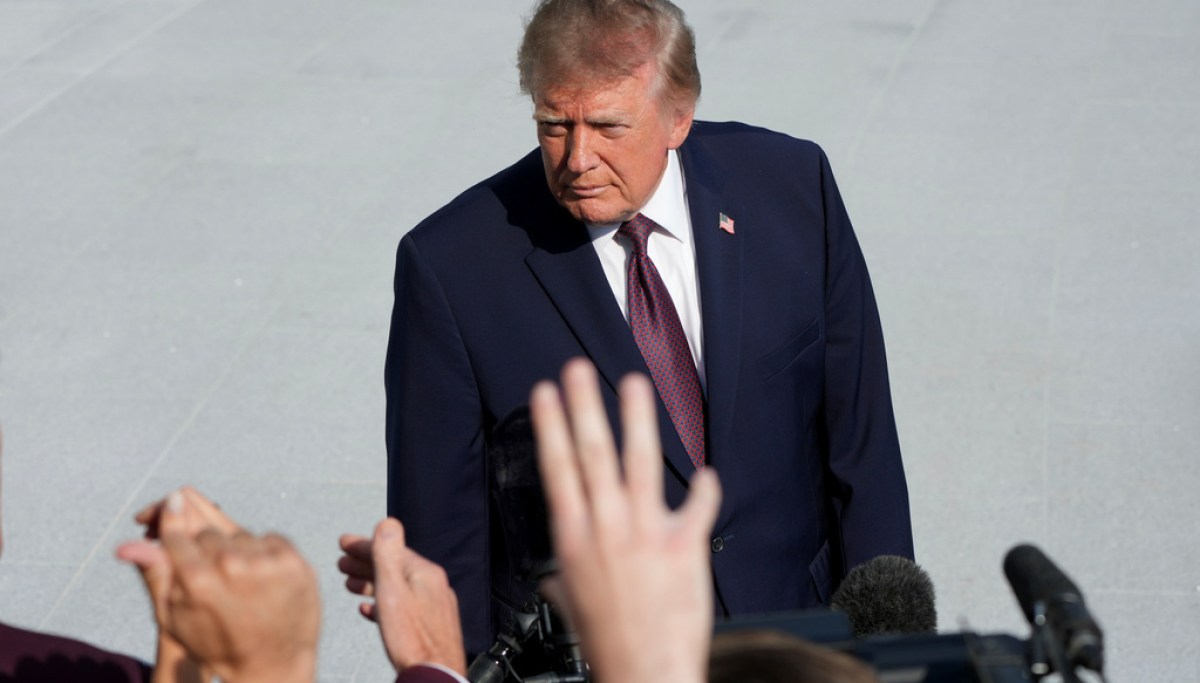
Cover image from thedispatch.com, which was analyzed for this article
President Trump ordered a US naval blockade of Iranian ports along the Strait of Hormuz, warning that Iranian fast-attack vessels will be targeted. Tankers passed through on the first day according to data, but Iran denounced it as piracy. Debates rage on its strategic value, risks, and alternatives amid fears of escalation.
PoliticalOS
Tuesday, April 14, 2026 — Politics
The U.S. naval operation is a targeted effort to cut off revenue from Iranian oil exports after nuclear negotiations failed over the length of an enrichment moratorium, not a total closure of the Strait of Hormuz. Early shipping data shows non-Iranian tankers continue to pass, but the success of this high-stakes gamble depends on whether economic pressure can force concessions without provoking mine attacks, drone strikes or broader energy disruption that would raise costs for consumers worldwide. Readers should recognize that pipeline alternatives fall far short of replacing 20 million barrels per day, allied support is limited, and the central unresolved question is whether Iran’s leadership will accept strict limits on its nuclear program before the fragile ceasefire collapses.
What outlets missed
Most coverage underplayed the precise nuclear proposals exchanged in Islamabad: the U.S. 20-year enrichment moratorium and full stockpile removal versus Iran's 3-5 year freeze and monitored down-blending, details corroborated by The Washington Post, Axios and The Dispatch but rarely synthesized. The exact CENTCOM definition limiting the blockade to Iranian ports and coastal areas, explicitly sparing neutral transit, was often blurred into broader 'Strait blockade' language, obscuring operational nuance. Prior Iranian actions, including mine-laying, attacks on more than a dozen merchant vessels and selective toll demands that reduced traffic by over 90 percent before the U.S. move, received uneven attention and were sometimes omitted entirely. Pipeline capacity shortfalls, Saudi East-West at 7 million barrels per day and UAE's ADCOP at 1.8 million against Hormuz's 20 million, were quantified in only a few specialist reports yet are central to debates over alternatives. Finally, allied reluctance, UK and French refusal to assist plus active Saudi lobbying against the policy, was downplayed outside the Wall Street Journal and Bulwark, masking the increased burden on U.S. forces.
Trump's Hormuz Blockade Tightens Economic Noose on Iran After Talks Fail
President Donald Trump has escalated America's military confrontation with Iran by imposing a naval blockade on the Strait of Hormuz, the narrow waterway through which roughly one-fifth of global oil supplies normally flow. The decision, announced after weekend peace talks collapsed in Islamabad, comes as the United States seeks to choke off Iran's remaining economic lifelines in a conflict that has already destroyed much of its nuclear infrastructure, killed senior leaders including Supreme Leader Ayatollah Ali Khamenei, and left more than 80 energy facilities across the Persian Gulf damaged.
The blockade, which took effect Monday, targets vessels traveling to or from Iranian ports while ostensibly allowing neutral shipping and humanitarian aid to pass after inspection. Two U.S. Navy destroyers, the USS Frank E. Petersen Jr. and USS Michael Murphy, transited the strait Saturday to "clear" sea mines allegedly laid by Iran's Islamic Revolutionary Guard Corps. Shipping data Tuesday showed several tankers, including U.S.-sanctioned vessels carrying Russian and Iranian oil in the past, continuing to move through the waterway if they were not bound for Iran itself. One, the Rich Starry, exited the Gulf carrying methanol; another headed to Iraq for fuel oil.
Trump framed the action as necessary to prevent Iran from "blackmailing the world." Speaking at the White House, he said Tehran had refused to agree that it would "never have a nuclear weapon," the core sticking point in negotiations led by Vice President JD Vance. U.S. officials proposed a 20-year ban on all Iranian uranium enrichment. Iran countered with three to five years and repeated its long-standing position, backed by a fatwa from its late supreme leader, that it has no intention of building a bomb. Tehran maintains its nuclear program is for civilian energy purposes, a claim viewed with deep skepticism in Washington but one that has allowed Iran to resist total capitulation.
The blockade represents the latest phase of a conflict that began with Israeli strikes and drew in direct U.S. military involvement. Iran initially responded by disrupting shipping through the strait, sending oil prices soaring and inflicting pain on the global economy. Trump now aims to turn that pressure back on the Islamic Republic with what amounts to a modern oil embargo. Yet the move carries substantial risks. Analysts at RBC Capital Markets warned that Tehran could retaliate by striking remaining energy infrastructure across the region, making reconstruction of damaged facilities even harder. Oil markets have so far absorbed the news without total panic, but the threat of renewed attacks looms.
Critics of the administration's approach, including some former military officers, question both the terminology and the strategy. Retired Army Gen. Mark Hertling, writing in The Bulwark, noted that calling this a "blockade" may overstate the legal and operational reality. True blockades under international law are acts of war with specific requirements. Destroyers like those deployed are not minesweepers; they are sophisticated warships designed for air defense and power projection. The U.S. military has signaled a three-step enforcement process of interception, diversion, and capture, while insisting humanitarian goods will be permitted. Iran has denounced the action as "piracy" and vowed a "strong and forceful response."
The economic stakes are enormous. Before the war, nearly 20 million barrels of oil and petroleum products moved through the strait daily. Iran's ability to threaten that flow has been its strongest remaining card after suffering devastating losses to its military capacity, proxy network, and internal control mechanisms. By seizing control of the decisive terrain, as some conservative analysts describe it, the Trump administration hopes to force unconditional surrender. Yet history suggests such maximum-pressure campaigns can produce unintended consequences. Similar tactics used against Venezuela and Cuba achieved limited results while inflicting widespread civilian hardship.
For ordinary Iranians, already reeling from the effects of war and sanctions, the blockade promises further isolation. Imports of food, medicine, and other essentials could be squeezed even if Washington claims humanitarian exceptions. Tehran has floated ideas of a toll system on Gulf shipping to generate revenue, a proposal the U.S. views as extortion. The result is a dangerous game of escalation where control of a 21-mile-wide chokepoint at the mouth of the Persian Gulf could determine the war's outcome.
Supporters of the policy argue there are few good alternatives. Saudi Arabia and other Gulf producers have expanded pipeline networks to bypass the strait, but those routes cannot fully replace its capacity and remain vulnerable to attack. National Review noted the promise and pitfalls of such infrastructure projects, but in the short term, the world remains dependent on safe passage through Hormuz.
As the two-week ceasefire period continues, the blockade signals that Washington has little interest in compromise on the nuclear question. Trump has expressed confidence that Tehran will eventually yield. Iranian officials insist their right to a peaceful nuclear program is non-negotiable. The coming days will test whether economic strangulation can succeed where airstrikes and assassinations have not, or whether this latest assertion of American power in the Middle East will once again destabilize energy markets and draw the region into deeper violence. The destroyers now patrolling those waters make clear that, for the Trump administration, the time for negotiation has given way to coercion.
You just read Progressive's take. Want to read what actually happened?
More in Politics

Federal Agents Search Omar Home in Ongoing Immigration Probe
Homeland Security agents searched the Minnesota Democrat's DC residence in a criminal probe, prompting accusations of political intimidation from Omar and Democratic leaders. Coverage spans left-leaning outlets like NPR, BBC, and The Guardian alongside right-leaning criticism from The Federalist and Daily Wire.

Trump Diesel Import Plan Draws Pushback Over Russia Ties
The weekend agreement drew bipartisan congressional pushback and criticism from Ukraine's Zelenskyy, with analysts downplaying US fuel price impacts. Right-leaning outlets like National Review, Dispatch, and Washington Examiner questioned its legality and effectiveness.

Independents Test Voter Appetite for Middle Ground in 2026 Midterms
Nearly 200 independents are running in competitive races as voters weigh ballot measures on housing costs in states like Massachusetts. Left-leaning coverage from NYT, NPR, and Guardian highlights turnout and key races while right outlets focus on GOP strategy.
Trump Rallies in Alaska, Ohio to Bolster GOP Senate Candidates
The president rallied in Wasilla for Sen. Dan Sullivan and faced empty seats at an Ohio event amid midterm concerns. Outlets across the spectrum covered the trips as signals of GOP vulnerability weeks before Election Day.
The Compass
You just read five takes on one story.
What's your take? Find your political shape in a few minutes.
Take the test