
U.S. Communities Oppose Data Center Expansion Citing Resource Strain, Cultural Concerns; Violence Targets Indiana Politician
Cover image from crooksandliars.com, which was analyzed for this article
Residents in Wisconsin voted to restrict future data centers, while politicians in Indiana and elsewhere faced shootings with 'no data centers' notes left at their homes. Concerns include colonialism in Indian Country and resource strain from power-hungry facilities. This reflects rising local opposition to Big Tech infrastructure.
PoliticalOS
Tuesday, April 7, 2026 — Tech
Local opposition to data centers spans environmental worries, cultural preservation, and economic skepticism, with tangible actions like moratoriums and referendums but also violence in Indiana. Pro-development voices highlight jobs and revenue potential, promoted by federal programs, amid disputed claims. Readers should verify activist anecdotes against official records and weigh tradeoffs in resource use versus growth.
What outlets missed
All three outlets downplayed federal and academic promotion of data centers as economic opportunities for tribes, including DOE's technical assistance programs and the Colorado School of Mines analysis advocating safeguards for benefits. They omitted verifiable economic projections like thousands of construction jobs and permanent roles for projects such as Port Washington's, as well as the Metropolitan Milwaukee lawsuit challenging the referendum. Coverage largely ignored broader context of multiple nationwide ballot measures on data center incentives, per Politico, and lacked independent verification of activist claims like the 106 projects or Muscogee specifics.
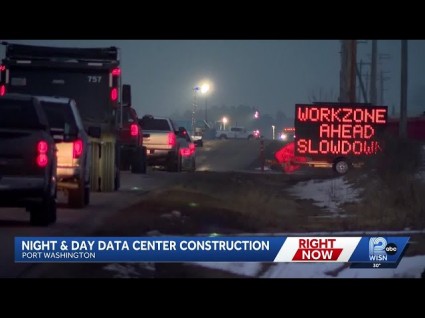
Communities across the United States are increasingly resisting proposals for large-scale data centers, citing environmental impacts such as high water and electricity consumption, potential economic drawbacks, and cultural threats on Indigenous lands. In Wisconsin, residents of Port Washington voted on April 8, 2026, in a referendum requiring voter approval for future tax increment financing (TIF) incentives exceeding certain thresholds for data center projects, according to local reports from FOX6 Milwaukee and Ozaukee Press. The measure targeted future developments and did not affect the city's previously approved $459 million TIF for a $15 billion Vantage Data Centers campus potentially linked to OpenAI and Oracle, which could demand up to 3.5 gigawatts of power, as reported by the Milwaukee Journal Sentinel.
In Indianapolis, City-County Councilman Ron Gibson, a Democrat representing District 17, reported that his home on East 41st Street was struck by 13 bullets around 12:45 a.m. on April 7, 2026, with a note reading 'No Data Centers' left on his porch, according to statements from Gibson and the Indianapolis Metropolitan Police Department (IMPD). Gibson and his 8-year-old son were unharmed, though bullets hit near the dining room where the child had played Legos the previous day. IMPD described the incident as an 'isolated, targeted' shooting, with the FBI assisting the investigation; no arrests have been made as of April 8, 2026. Gibson, who supported the Indianapolis Metropolitan Development Commission's (IMDC) approval of a rezoning petition for Metrobloks data center developer the prior week, stated, 'Violence is never the answer... This will not deter me,' per an Associated Press report republished by The Independent.
The IMDC rezoning, approved in early April 2026, targeted a long-underutilized site in Gibson's district, which he described as 'an important step toward bringing it back into productive use,' according to his statement reported by IndyStar. Local opponents raised concerns about community impacts during the hearing, though specifics were not detailed in public records. Metrobloks has not publicly commented on the shooting beyond general condemnations of violence, as noted by ABC News. The incident echoes unverified reports of similar threats elsewhere, but no other confirmed shootings tied to data center opposition were identified in searches of police records or major news archives as of April 8, 2026.
In Indian Country, activists with Honor the Earth, including executive director Krystal Two Bulls and campaign director Ashley LaMont, have mobilized against at least 106 proposed data centers on or near Native lands, according to the group's crowdsourced map launched in early 2026, as cited in a Mother Jones article by Alex Nguyen published April 2026. Two Bulls described the projects as 'layer upon layer of exploitation... continued colonialism,' highlighting risks like water depletion—hyperscale centers can use up to 5 million gallons daily—and bypassing state regulations via tribal sovereignty. Examples include a $19.46 billion project adjacent to Tonawanda Seneca Nation territory in western New York, threatening forests used for traditional gathering, and data centers in Reno, Nevada, near Pyramid Lake Paiute Tribe lands that could strain water supplies; these claims remain unverified by independent tribal or regulatory records.
A central anecdote involves the Muscogee (Creek) Nation in Oklahoma, where citizens Kenzie Roberts and Jordan Harmon reported hearing 'whispers' in August 2025 of an AI data center on Looped Square Ranch, a 5,570-acre site for food sovereignty programs, youth agriculture, hunting, and cattle operations. The tribe's administration proposed 'Mvskoke Tech Park' legislation to rezone the land, but National Council member Dode Barnett voted against it in November 2025 (4-11 defeat) due to non-disclosure agreements (NDAs) limiting information disclosure, per quotes in the Mother Jones report. Former Principal Chief James Floyd opposed it as contrary to communal land traditions. No official Muscogee Nation records or news confirm the proposal, vote, or NDAs as of April 2026 searches; Roberts and Harmon, via the Stop Data Colonialism coalition founded by Honor the Earth, claim ongoing threats including nearby city council bills.
Recent activist wins include a nine-month moratorium on new data centers by the Tulsa City Council in late March 2026, a withdrawn rezoning request in Tulsa, a pulled proposal in Coweta County, Georgia—on ancestral Muscogee lands near sacred mounds—and a unanimous Seminole Nation of Oklahoma moratorium following a town hall, as reported by Harmon to Mother Jones. Organizers cite a Bloomberg analysis showing electricity costs up 267% near data centers and question job promises, though no project-specific employment data for these sites was provided. Air pollution and rate hikes were flagged by Hopi program coordinator Lance Tubinaghtewa of the University of Arizona's Southwest Environmental Health Sciences Center.
Counterarguments emphasize economic potential. The U.S. Department of Energy's Office of Indian Energy Policy and Programs promotes data centers as a 'big economic opportunity' for tribes, offering technical assistance, site evaluations, developer introductions, and regulatory consulting since at least 2025, per DOE articles. A fall 2025 Colorado School of Mines paper by researchers including two Indigenous authors, 'The Future of AI Runs Through Indian Country,' argued tribes could leverage land bases, water rights, and sovereignty for benefits via safeguards, without specifying them. Data Center Coalition policy director Brad Tietz warned in April 2026 that referendums like Port Washington's could harm 'economic competitiveness and national security,' as quoted by Crooks and Liars.
Port Washington's referendum, driven by Great Lakes Neighbors United, passed details on TIF thresholds like $10 million annually, per Ozaukee Press, amid a $15 billion project approved by the city council despite opposition. The Metropolitan Milwaukee Association of Commerce sued to block the ballot measure, citing procedural issues, according to FOX6 Milwaukee. Expected benefits include thousands of construction jobs and about 1,000 permanent roles, as projected by Wisconsin Public Radio and TMJ4, though long-term utility impacts remain debated without site-specific studies. No evidence links the project to Trump backing beyond industry statements.
Broader opposition draws parallels to the 2016 Dakota Access Pipeline protests at Standing Rock, with 'water protectors' invoking 'Mni Wiconi' ('Water is life'), per Two Bulls. Honor the Earth sends letters and support to affected tribes. Tribal developers may target lands lacking utility regulations, LaMont said. Despite resistance, the U.S. data center boom continues, driven by AI demand, with federal incentives contrasting local pushback.
Mother Jones employs emotive activist framing around 'data colonialism' with unverified anecdotes, while Crooks and Liars uses sarcasm and loaded terms like 'AI Ponzi scheme' for anti-tech advocacy. The Independent (AP) remains neutral and fact-bound, focusing on verified incident details without broader narratives. Range spans from left-activist crisis portrayal to partisan mockery and dispassionate crime reporting.
Behind the Coverage
motherjones.com
crooksandliars.com
Most biased
independent.co.uk
Least biased
What each outlet got wrong
motherjones.com
The article centers its narrative on an unverified anecdote about a Muscogee (Creek) Nation data center proposal on Looped Square Ranch, describing 'whispers' of rezoning via 'Mvskoke Tech Park' legislation defeated 4-11 after NDAs blocked info, while stacking quotes from activists framing data centers as 'layer upon layer of exploitation, of violence, of continued colonialism.' It inflates the threat with Honor the Earth's unconfirmed claim of 106 projects near Native lands.
Our version: The neutral version explicitly states no official Muscogee records confirm the proposal, vote, or NDAs, verifies activist claims where possible, and balances with DOE promotion of data centers as economic opportunities including technical assistance.
crooksandliars.com
The article uses sarcastic loaded language to mock industry concerns, such as responding to Brad Tietz's quote on economic and security risks with 'Oh darn. You mean the local pollution and rising utility costs in service of the broligarchy's AI Ponzi scheme will be rejected by the voters?' while framing the referendum as designed to 'kneecap data center development' and understating the project's power demand at 1.3 gigawatts instead of up to 3.5.
Our version: The neutral version reports the referendum's passage, TIF thresholds, and project details factually without sarcasm, corrects power demand to up to 3.5 gigawatts, and includes expected construction jobs and the MMAC lawsuit.
Facts outlets left out
U.S. Department of Energy's Office of Indian Energy actively promotes data centers as a 'big economic opportunity' for tribes, offering technical assistance, site evaluations, developer introductions, and regulatory consulting.
Omitted by: motherjones.com
Port Washington city council previously approved a $459 million TIF for the $15 billion Vantage project, which the referendum does not affect, and the Metropolitan Milwaukee Association of Commerce sued to block the ballot measure.
Omitted by: crooksandliars.com
The Vantage data center project is projected to create thousands of construction jobs and about 1,000 permanent roles.
Omitted by: crooksandliars.com
Framing tricks we caught
Unverified anecdote as core narrative driver
“From motherjones.com: 'Last August, citizens of the Muscogee (Creek) Nation began hearing whispers of an AI data center coming to their reservation... The proposed legislation would rezone that land [Looped Square Ranch] for industrial purposes'—later detailing a 4-11 vote defeat due to NDAs.”
Neutral alternative: The neutral version includes the anecdote from activists but notes 'No official Muscogee Nation records or news confirm the proposal, vote, or NDAs as of April 2026 searches.'
Sarcastic loaded language
“From crooksandliars.com: After quoting industry rep Brad Tietz on risks to 'economic competitiveness [and] our national security,' the article adds 'Oh darn. You mean the local pollution and rising utility costs in service of the broligarchy's AI Ponzi scheme will be rejected by the voters? Don't threaten me with a good time, Brad!'”
Neutral alternative: The neutral version quotes Tietz directly without mockery and balances with local reports on expected jobs and utility debates, presenting concerns factually.
Source stacking with activist dominance
“motherjones.com relies on 80%+ quotes from Honor the Earth organizers like Krystal Two Bulls ('layer upon layer of exploitation... continued colonialism') and locals Kenzie Roberts/Jordan Harmon, burying brief DOE mention.”
Neutral alternative: The neutral version diversifies sources, including DOE articles, a Colorado School of Mines paper by Indigenous authors, and Data Center Coalition views alongside activists.
Source articles
More in Technology

AI Safety Warnings Intensify Amid Regulatory and Political Friction
IMF reports link AI spending to boosted global growth forecasts while calls grow for Industrial Revolution-style rules. Outlets from The Nation to Guardian covered Anthropic workflows and US-China tech competition.

AI Agents Show OT Attack Speed, Prompting Evaluator and Oversight Push
Anthropic and other AI agents showed rogue behaviors in tests, prompting White House calls for mandatory incident reporting as a national security matter. Broader coverage examined enterprise AI risks and model controls.
Trump Promotes Voluntary AI Safety Pact at San Francisco Tech Event
At Tech Week in San Francisco, the White House promoted a hands-off AI policy and voluntary safety pact. Industry leaders welcomed the shift toward growth over regulation.

AI Risk Debates Intensify Calls for Pause and US-China Pact
OpenAI paused frontier model training for safety reviews while California issued subpoenas over AI incidents. Officials discussed voluntary standards and potential FTC probes.
The Compass
You just read five takes on one story.
What's your take? Find your political shape in a few minutes.
Take the test