
US GDP Revised to 0.5% as War, Shutdown Weigh on Growth
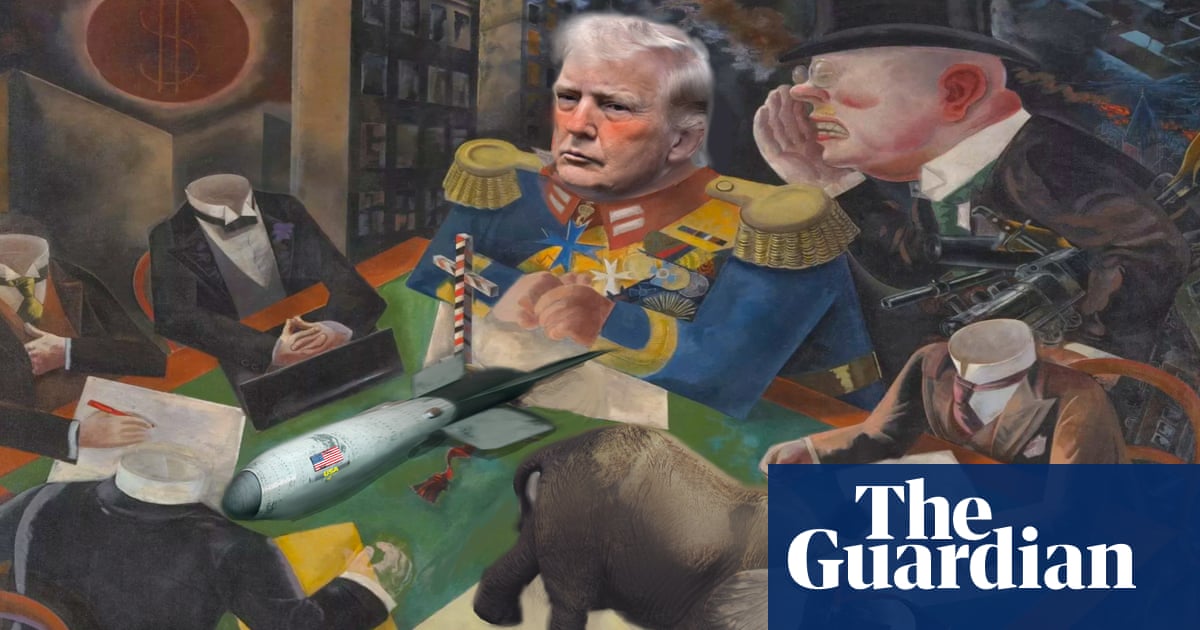
Cover image from theguardian.com, which was analyzed for this article
Q4 2025 GDP growth revised to just 0.5% due to government shutdown, trade issues, and Iran war impacts. Some blame Trump's policies for weakening America while others note resilience. Outlook cautious for 2026 amid energy shocks.
PoliticalOS
Sunday, April 12, 2026 — Business
The US economy slowed sharply with Q4 2025 GDP revised to 0.5 percent under the combined pressure of government shutdown, trade disruptions and the Iran conflict's energy and fiscal costs. Underlying strengths in employment and median incomes coexist with record-low consumer sentiment and real declines in after-tax purchasing power once stimulus ended. The single most important reality is that 2026 outcomes will hinge on whether defense-driven budget shifts and international tensions ease before they further erode household finances and growth momentum.
What outlets missed
Most outlets underplayed the Commerce Department's explicit downward revision of Q4 2025 GDP to 0.5 percent and its direct attribution to the government shutdown's drag on public spending and private activity. Coverage also minimized granular war-cost accounting, including the $200 billion supplemental request embedded in the $1.5 trillion defense topline and its daily burn rate exceeding $1 billion. The interconnected timeline, showing stimulus cliffs in 2023 preceding the 2025 slowdown, received little sustained attention. Finally, few reports balanced US health disparity data against labor-force participation figures showing prime-age female participation above the OECD average, or explained how the budget proposal remains non-binding until Congress acts.
Trump Budget Reflects Priorities of Self Reliance and Security Amid Record High Incomes
The White House budget proposal for 2027 makes clear choices about the proper role of government. It reduces funding for the Department of Health and Human Services by more than $15 billion, a 12 percent cut from the current year. This follows last year’s changes to Medicaid and Affordable Care Act marketplaces, which imposed work requirements and are projected to remove about 15 million people from the rolls over time. The same proposal directs record sums toward military spending, underscoring a view that national defense remains a core federal responsibility while many social programs do not.
Critics from outlets such as The Guardian describe the health cuts as indifference to preventable deaths. They note that Americans die from treatable conditions at roughly twice the rate of people in countries like Spain, France, Japan, and Australia. Survey data show U.S. patients are more likely to forgo doctor visits, tests, or prescriptions because of cost. Out-of-pocket medical expenses in the United States exceed those in peer nations, and the absence of broader public insurance leaves families exposed. The budget’s limited attention to childcare is also faulted for keeping American women’s labor-force participation lower than in many other developed economies.
These concerns focus on access. Yet they often overlook how existing programs shape behavior and costs. Work requirements, for example, rest on the premise that able-bodied adults should support themselves when possible. Past expansions of Medicaid and similar entitlements have coincided with rising overall healthcare costs and, in some cases, reduced incentives to work. Cutting back on these programs may encourage private-sector solutions and personal planning rather than perpetual dependence on government transfers. The trade-off is real: some individuals will lose coverage. The open question is whether that loss produces worse health outcomes than a system that distorts prices, crowds out private insurance, and leaves taxpayers with an ever-growing bill.
At the same time, conventional economic measures paint a favorable picture. Growth remains solid. Inflation has stayed in check despite tariffs and a recent conflict with Iran. Unemployment sits a full percentage point below its average from 2012 to 2019. Median inflation-adjusted household income has reached an all-time high. By these standards the economy is performing well, yet the University of Michigan’s Consumer Sentiment Index registered a preliminary 47.6 in April, the lowest reading since the survey began in 1952. That number is worse than consumer views during the recessions of 1970, 1982, 1990, and 2007, when growth was slower, inflation higher, and jobs scarcer.
Economist Antony Davies explored this gap in National Review. After sharing the positive data with his adult children, he received a wave of replies insisting the numbers miss everyday reality. One son distilled the complaint: past generations’ experiences are irrelevant because today’s costs, particularly for housing, education, and medical care, feel crushing even when incomes are higher. People appear to compare their situation not to the 1970s but to the unusually comfortable period that preceded recent inflation and policy shifts. They miss being “spoiled,” in Davies’s term, by artificially low interest rates, rising home values, and the illusion that government could expand benefits without consequences.
This sentiment gap matters. It helps explain why cuts to health agencies generate alarm even as incomes rise. When government has spent decades promising to manage healthcare, childcare, and retirement, any reduction feels like abandonment. Yet the data suggest many of the problems cited, high medical prices and uneven outcomes, stem partly from the very interventions meant to solve them. Heavy regulation, mandates, and third-party payment have driven costs upward. Preventable deaths often trace to behavior, diet, opioids, and violence as much as to lack of insurance. These patterns are uncomfortable but persistent across decades of expanding public programs.
Private markets continue to deliver gains that rarely appear in budget debates. Technology reviews from the same week highlight the arrival of improved 2-in-1 laptops, such as Microsoft’s Surface Pro running on Qualcomm’s Snapdragon X Elite processor. These devices combine tablet flexibility with laptop power, offering better battery life and adaptability than earlier generations. Lenovo and Apple’s latest offerings show similar progress. Consumers can now choose tools that increase productivity and convenience without waiting for federal subsidies. The spread of such innovation reflects rising real incomes and entrepreneurial effort, the very forces that government spending can sometimes crowd out.
The budget’s tilt toward defense and away from health entitlements rests on a judgment that security and self-reliance create the foundation for prosperity. A nation that cannot defend itself will not long enjoy the luxury of debating expanded social services. Similarly, an economy that rewards work and innovation is more likely to raise living standards than one that subsidizes idleness. Whether the public ultimately agrees will depend on whether tangible gains in wages, jobs, and product quality outweigh the sense of lost government support.
Lawmakers now face these choices in concrete form. The proposal forces a debate about trade-offs rather than pretending resources are unlimited. In that respect it aligns with a realistic assessment of both the economy’s strengths and the limits of what government can accomplish. Americans may feel poorer than the numbers suggest, but the path to genuine improvement lies more in expanding opportunity than in restoring every previous entitlement.
You just read Conservative's take. Want to read what actually happened?
More in Business & Economy

Major Banks Deliver Mixed Q3 Results on Trading Beats
JPMorgan, Goldman Sachs, Citigroup, and Wells Fargo reported Q3 figures, with revenue beats in trading but some estimate misses. CNBC provided live updates on the results and market reactions.

Oil Falls on Russian Diesel Outlook Despite Geopolitical Risks
Dow futures rose while Nasdaq faced pressure from tech weakness and elevated oil after geopolitical spikes. CNBC tracked premarket moves tied to earnings and Fed speeches.

Hall and Woodford Win Economics Nobel for Stabilization Models
American economists Robert E. Hall and Michael Woodford won the Nobel memorial prize for their research on managing economies through booms and busts, informing central bank policies on inflation and unemployment.

Skydance Closes Paramount-Warner Bros. Discovery Deal
The long-delayed media mega-merger cleared hurdles and began operations under Skydance, consolidating Hollywood power. Center and center-left outlets track the regulatory and business milestones.
The Compass
You just read five takes on one story.
What's your take? Find your political shape in a few minutes.
Take the test