
US GDP Revised to 0.5% as War, Shutdown Weigh on Growth
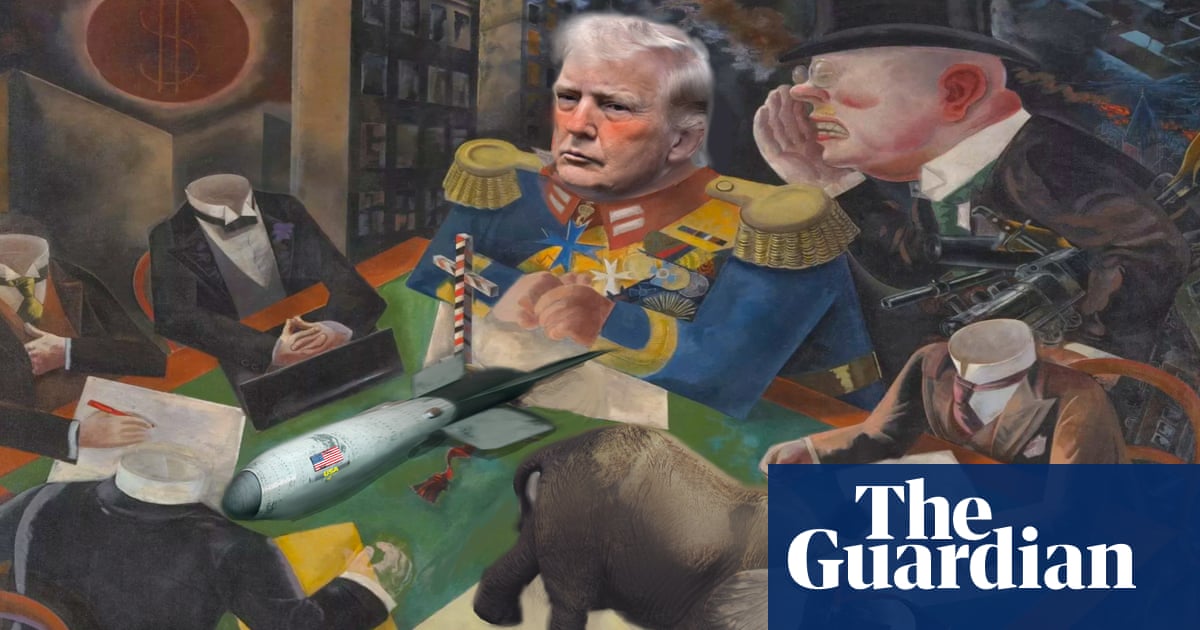
Cover image from theguardian.com, which was analyzed for this article
Q4 2025 GDP growth revised to just 0.5% due to government shutdown, trade issues, and Iran war impacts. Some blame Trump's policies for weakening America while others note resilience. Outlook cautious for 2026 amid energy shocks.
PoliticalOS
Sunday, April 12, 2026 — Business
The US economy slowed sharply with Q4 2025 GDP revised to 0.5 percent under the combined pressure of government shutdown, trade disruptions and the Iran conflict's energy and fiscal costs. Underlying strengths in employment and median incomes coexist with record-low consumer sentiment and real declines in after-tax purchasing power once stimulus ended. The single most important reality is that 2026 outcomes will hinge on whether defense-driven budget shifts and international tensions ease before they further erode household finances and growth momentum.
What outlets missed
Most outlets underplayed the Commerce Department's explicit downward revision of Q4 2025 GDP to 0.5 percent and its direct attribution to the government shutdown's drag on public spending and private activity. Coverage also minimized granular war-cost accounting, including the $200 billion supplemental request embedded in the $1.5 trillion defense topline and its daily burn rate exceeding $1 billion. The interconnected timeline, showing stimulus cliffs in 2023 preceding the 2025 slowdown, received little sustained attention. Finally, few reports balanced US health disparity data against labor-force participation figures showing prime-age female participation above the OECD average, or explained how the budget proposal remains non-binding until Congress acts.
Trump Budget Slashes Health Funding as Americans Die Younger and Feel Poorer
The White House budget proposal for 2027, released last week, would cut more than $15 billion from the Department of Health and Human Services, a 12 percent reduction from current levels. The document continues a pattern set in last year’s “big, beautiful bill,” which imposed strict work requirements on Medicaid and trimmed support for Affordable Care Act marketplaces. Analysts estimate those earlier changes will eventually strip health coverage from as many as 15 million people. At the same time, the Pentagon would receive record funding, widening a gap between national security spending and investment in the daily conditions that shape American life expectancy.
Public health data paint a sobering picture. Deaths from causes that could be prevented or treated with timely care occur in the United States at nearly twice the rate seen in countries such as Spain, France, Japan and Australia. Americans are the most likely among their peers to skip doctor visits, diagnostic tests or prescription drugs because of cost. Out-of-pocket medical expenses remain the highest in the developed world. These patterns have been stable for years; the new budget does not treat them as a policy emergency.
The disconnect between official economic statistics and how people experience daily life has grown unusually wide. Preliminary readings from the University of Michigan’s Consumer Sentiment Index for April hit the lowest level recorded since the survey began in 1952. The number sits below levels seen during the double-dip recessions of the early 1980s, when inflation exceeded 10 percent and mortgage rates topped 15 percent. By conventional measures the economy appears healthy: growth is steady, unemployment rests a full percentage point below its 2012-2019 average, and inflation has moderated despite tariffs and international tensions. Median inflation-adjusted household income has reached its highest point on record.
Yet surveys and anecdotal reporting show many Americans do not feel richer. Part of the gap appears rooted in the cost of basics that do not appear directly in headline economic figures. Childcare expenses, for instance, remain high enough to suppress women’s labor-force participation to levels that lag most other wealthy nations. When one parent must stay home or reduce hours, household earnings suffer even if national productivity rises. Healthcare costs compound the pressure. A serious illness or even routine care can wipe out savings or force impossible choices between medicine and rent. These lived pressures help explain why sentiment remains depressed even as macroeconomic indicators improve.
The budget’s approach to these pressures is to shift more responsibility onto individuals. The expanded work requirements for Medicaid assume that able-bodied adults can find jobs that provide both income and insurance. Evidence from earlier state-level experiments suggests many cannot. Low-wage work often comes without benefits, and the administrative burden of proving compliance can itself cause coverage gaps. The Congressional Budget Office and independent analysts have repeatedly warned that large coverage losses follow such changes. The new proposal doubles down on that strategy while reducing the overall pot of money available to states and safety-net providers.
Military spending, by contrast, faces no similar restraint. The budget continues a pattern of prioritizing defense outlays even as domestic programs face repeated trims. This choice reflects a theory of government that sees national strength primarily in terms of hard power rather than population health or economic security. The result is a shrinking share of public resources directed at the very services that research shows extend life and reduce financial anxiety.
Public reaction has been swift. Advocacy groups for patients with chronic conditions released statements noting that preventable deaths are not abstract statistics but daily occurrences in emergency rooms and county hospitals. Polling conducted after the proposal’s release showed majority opposition to further Medicaid cuts, even among some Republican voters who otherwise support increased defense budgets. The University of Michigan sentiment data, meanwhile, suggest that macroeconomic optimism has not filtered down to kitchen-table conversations.
The administration argues that economic growth itself will eventually ease these burdens by creating better jobs and lifting all boats. Historical evidence on this point is mixed. Previous periods of strong growth have not automatically narrowed the United States’ outlier status on avoidable mortality or family care costs. Structural features of the American economy, from the fragmentation of its health insurance system to the high price of early childhood care, have proven resistant to broad growth alone.
What remains unclear is whether the budget’s blunt reductions will provoke congressional pushback. Moderate Republicans in districts with aging populations have historically resisted deep Medicaid cuts. Senate Democrats have already signaled they will use every procedural tool to highlight the human costs. The coming months will test whether the visible reality of longer wait times, skipped prescriptions and stressed family budgets can overcome the more abstract appeal of deficit reduction and military strength.
For now, the proposal stands as a clear statement of priorities: fewer public dollars for the services that keep Americans alive and employed, more for the institutions that project power abroad. The data suggest many citizens are registering that choice in their assessment of the economy, regardless of what the headline numbers say.
You just read Liberal's take. Want to read what actually happened?
More in Business & Economy

Major Banks Deliver Mixed Q3 Results on Trading Beats
JPMorgan, Goldman Sachs, Citigroup, and Wells Fargo reported Q3 figures, with revenue beats in trading but some estimate misses. CNBC provided live updates on the results and market reactions.

Oil Falls on Russian Diesel Outlook Despite Geopolitical Risks
Dow futures rose while Nasdaq faced pressure from tech weakness and elevated oil after geopolitical spikes. CNBC tracked premarket moves tied to earnings and Fed speeches.

Hall and Woodford Win Economics Nobel for Stabilization Models
American economists Robert E. Hall and Michael Woodford won the Nobel memorial prize for their research on managing economies through booms and busts, informing central bank policies on inflation and unemployment.

Skydance Closes Paramount-Warner Bros. Discovery Deal
The long-delayed media mega-merger cleared hurdles and began operations under Skydance, consolidating Hollywood power. Center and center-left outlets track the regulatory and business milestones.
The Compass
You just read five takes on one story.
What's your take? Find your political shape in a few minutes.
Take the test