
US Orders Naval Blockade of Iranian Ports After Talks Collapse

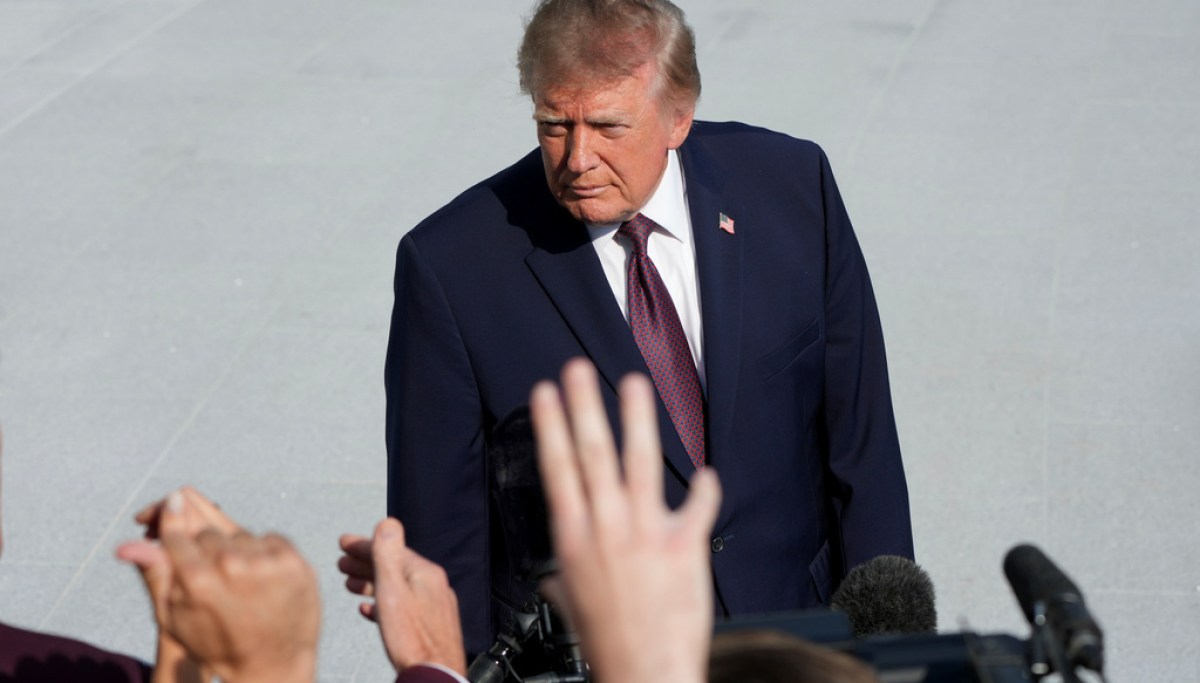
Cover image from aljazeera.com, which was analyzed for this article
President Trump ordered a US naval blockade of Iran's ports and the Strait of Hormuz after 21-hour ceasefire talks in Pakistan collapsed. Iran denounced the move as piracy, while allies like the UK refused to join. The escalation follows VP Vance's failed mediation efforts.
PoliticalOS
Monday, April 13, 2026 — Politics
The collapse of direct talks over Iran's long-term nuclear assurances has produced a calibrated US naval operation aimed at denying Tehran oil revenue and strait leverage, yet it arrives with scant allied participation and heightened risk of retaliation. Oil prices above $100 per barrel signal immediate global costs while the fragile ceasefire's fate remains uncertain. The single most important reality is that economic pressure now substitutes for diplomacy, but whether it produces concessions or wider war depends on actions in the coming week that no outlet can yet predict.
What outlets missed
Most coverage downplayed or omitted the precise CENTCOM clarification that the operation targets only vessels to and from Iranian ports while preserving transit between third countries, a distinction that narrows the action from a total strait closure. Outlets also underplayed the full war timeline beginning with February 28 US-Israeli strikes on nuclear facilities and leadership figures, which preceded Iran's strait restrictions and tolls. Many failed to note US demands during talks that reportedly extended beyond nuclear issues to curbing support for regional proxies such as Hamas, Hezbollah and the Houthis. Iran's pre-talks deployment of sea mines and explicit threats to neighboring ports received inconsistent attention, as did the existence of a fragile two-week ceasefire agreed shortly before the Islamabad meeting. These elements provide essential sequence and scale.
Trump Orders Naval Blockade to Crush Iran After Nuclear Talks Collapse in Pakistan
The high-stakes ceasefire negotiations between the United States and Iran ended in failure after barely a day of talks in Islamabad, prompting President Trump to immediately impose a naval blockade on Iranian ports that will choke off the regime's economic lifeline through the Strait of Hormuz. Vice President JD Vance, who led the American side, made clear the core problem: Tehran showed no genuine willingness to abandon its nuclear weapons ambitions for the long term, despite months of bloodshed and a fragile truce.
The talks, held under heavy security at Islamabad's Serena Hotel, were billed as make-or-break after six weeks of war that saw Iran seize effective control of the vital waterway, extorting tolls from passing ships and disrupting global energy flows. American and Iranian delegations met for 21 grueling hours, but fundamental gaps remained. Vance told reporters the Iranians could not demonstrate "a fundamental commitment of will" to forgo nuclear development now, in two years, or ever. "We haven't seen that yet," he said. The vice president added bluntly that the collapse was "bad news for Iran, much more than it's bad news for the United States of America."
Iranian officials offered a different spin, claiming some progress but citing disagreements over the Strait of Hormuz management and the nuclear program. A government-aligned analyst told The New York Times the Americans demanded zero uranium enrichment, the removal of nearly 900 pounds of stockpiled material, and resolution of the waterway issue. Tehran's foreign ministry complained of an "atmosphere of mistrust" and suggested it was unrealistic to expect a full deal in one round. No follow-up talks are scheduled.
President Trump wasted little time responding. In a statement Sunday, he said the meeting "went well, most points were agreed to, but the only point that really mattered, NUCLEAR, was not." Effective immediately, he ordered the U.S. Navy to begin blockading any ships trying to enter or leave the Strait of Hormuz. "Our Military will finish up the little that is left of Iran," Trump warned, describing Iran's behavior as "WORLD EXTORTION" for charging illegal tolls. U.S. Central Command confirmed the blockade begins Monday at 10 a.m. ET, targeting vessels serving Iranian ports on both the Persian Gulf and Gulf of Oman sides while allowing traffic to and from neighboring countries' ports. Ships must monitor notices to mariners and contact U.S. naval forces directly.
The move is designed to strip the ayatollahs of their strongest leverage. By halting Iran's oil exports, which account for the vast majority of its hard currency, the blockade aims to force Tehran back to the table on American terms or simply watch the regime's economy collapse. Senior fellow Miad Maleki at the Foundation for Defense of Democracies calculated the daily damage at roughly $435 million, or $13 billion per month. More than 90 percent of Iran's $109.7 billion in annual trade moves through the Persian Gulf. Oil and gas make up 80 percent of government export earnings and nearly a quarter of GDP. Kharg Island, handling 92 percent of crude exports, could see $53 billion to $78 billion in annual losses vanish overnight. The regime has been using "dark" tankers with transponders turned off to smuggle oil, largely to China, but the blockade will make even that far riskier.
Markets reacted swiftly to the news. Oil prices surged more than 7 percent, with Brent crude topping $102 per barrel and West Texas Intermediate reaching $104. The ceasefire that paused direct fighting two weeks ago had briefly lowered prices, but those gains evaporated as traders realized large-scale shipping through Hormuz remains unlikely. American drivers already facing pump prices around $4.13 per gallon can expect more pain in the weeks ahead, though the administration views this as necessary pressure on a regime that has destabilized the region for decades.
Trump made clear he is not desperate for another meeting. "I don't care if they come back or not. If they don't come back, I'm fine," he said, adding that the ceasefire is holding for now. He has also raised the possibility of striking Iranian water treatment plants, power facilities, and bridges if the mullahs refuse to scrap their nuclear program. Iran's Revolutionary Guards responded by claiming any warships enforcing the blockade would violate the truce and face strong retaliation.
Notably, Trump's call for other nations to join the effort has so far produced little support. British Prime Minister Keir Starmer ruled out UK involvement. Australia said it was not asked and urged de-escalation. Spain's defense minister called the approach senseless. The lack of allies underscores the familiar pattern: when tough action is required against Iran, the United States often stands largely alone while European capitals lecture about diplomacy.
This latest chapter reflects the hard reality of dealing with a regime that exploited years of American restraint and sanctions relief to advance its nuclear work and regional aggression. Previous administrations' approach of concessions and half-measures only emboldened Tehran, allowing it to harass shipping, fund proxies, and inch closer to a bomb. Trump's decision to impose a targeted blockade rather than endless negotiations or full-scale invasion shows a preference for using American naval power to impose costs directly on the Iranian economy without putting large numbers of U.S. troops on the ground.
Whether the pressure compels the regime to finally yield on enrichment and Hormuz control, or simply accelerates its isolation and internal decay, remains to be seen. For now, the Navy is moving into position, the economic vise is tightening, and the message from Washington is unmistakable: America's patience with nuclear blackmail has run out. The mullahs must choose between survival and their apocalyptic ambitions. History suggests they will test American resolve until they feel real pain. The blockade ensures they will feel it immediately.
You just read America First's take. Want to read what actually happened?
More in Politics

Federal Agents Search Omar Home in Ongoing Immigration Probe
Homeland Security agents searched the Minnesota Democrat's DC residence in a criminal probe, prompting accusations of political intimidation from Omar and Democratic leaders. Coverage spans left-leaning outlets like NPR, BBC, and The Guardian alongside right-leaning criticism from The Federalist and Daily Wire.

Trump Diesel Import Plan Draws Pushback Over Russia Ties
The weekend agreement drew bipartisan congressional pushback and criticism from Ukraine's Zelenskyy, with analysts downplaying US fuel price impacts. Right-leaning outlets like National Review, Dispatch, and Washington Examiner questioned its legality and effectiveness.

Independents Test Voter Appetite for Middle Ground in 2026 Midterms
Nearly 200 independents are running in competitive races as voters weigh ballot measures on housing costs in states like Massachusetts. Left-leaning coverage from NYT, NPR, and Guardian highlights turnout and key races while right outlets focus on GOP strategy.
Trump Rallies in Alaska, Ohio to Bolster GOP Senate Candidates
The president rallied in Wasilla for Sen. Dan Sullivan and faced empty seats at an Ohio event amid midterm concerns. Outlets across the spectrum covered the trips as signals of GOP vulnerability weeks before Election Day.
The Compass
You just read five takes on one story.
What's your take? Find your political shape in a few minutes.
Take the test