
US Orders Naval Blockade of Iranian Ports After Talks Collapse

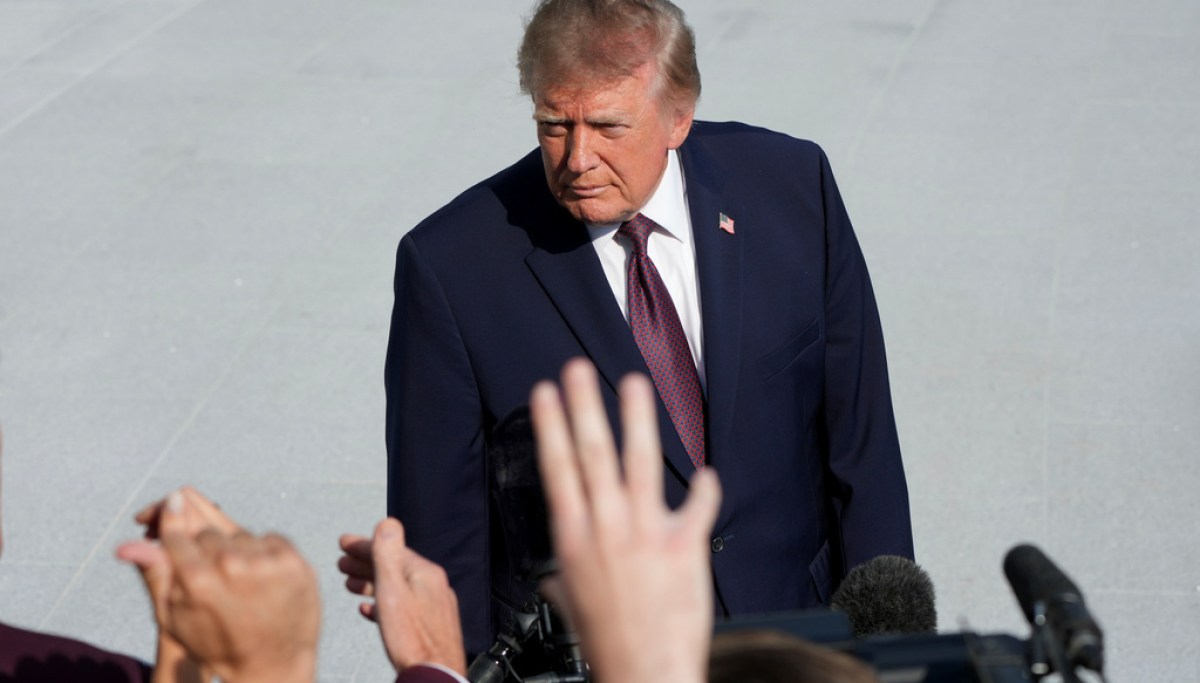
Cover image from aljazeera.com, which was analyzed for this article
President Trump ordered a US naval blockade of Iran's ports and the Strait of Hormuz after 21-hour ceasefire talks in Pakistan collapsed. Iran denounced the move as piracy, while allies like the UK refused to join. The escalation follows VP Vance's failed mediation efforts.
PoliticalOS
Monday, April 13, 2026 — Politics
The collapse of direct talks over Iran's long-term nuclear assurances has produced a calibrated US naval operation aimed at denying Tehran oil revenue and strait leverage, yet it arrives with scant allied participation and heightened risk of retaliation. Oil prices above $100 per barrel signal immediate global costs while the fragile ceasefire's fate remains uncertain. The single most important reality is that economic pressure now substitutes for diplomacy, but whether it produces concessions or wider war depends on actions in the coming week that no outlet can yet predict.
What outlets missed
Most coverage downplayed or omitted the precise CENTCOM clarification that the operation targets only vessels to and from Iranian ports while preserving transit between third countries, a distinction that narrows the action from a total strait closure. Outlets also underplayed the full war timeline beginning with February 28 US-Israeli strikes on nuclear facilities and leadership figures, which preceded Iran's strait restrictions and tolls. Many failed to note US demands during talks that reportedly extended beyond nuclear issues to curbing support for regional proxies such as Hamas, Hezbollah and the Houthis. Iran's pre-talks deployment of sea mines and explicit threats to neighboring ports received inconsistent attention, as did the existence of a fragile two-week ceasefire agreed shortly before the Islamabad meeting. These elements provide essential sequence and scale.
Failed US-Iran Talks Collapse Into Blockade Threat as Global Energy Markets Reel
The high-stakes negotiations between the United States and Iran in Islamabad ended in failure after a single marathon session, prompting President Donald Trump to order a naval blockade of Iranian ports and triggering an immediate surge in global oil prices. What was billed as a make-or-break opportunity to end a six-week war and restore passage through the Strait of Hormuz instead exposed the vast gap between the two sides' core demands, leaving a fragile ceasefire in doubt and raising the prospect of further economic pain for ordinary people far beyond the Middle East.
The talks, held at Islamabad's Serena Hotel under extraordinary security with thousands of Pakistani troops deployed, represented the first direct high-level engagement between the United States and post-revolutionary Iran. American officials, led by Vice President JD Vance, met their Iranian counterparts for 21 hours. Both sides acknowledged some movement on peripheral issues. Yet the fundamental impasse remained unchanged: the United States insists on ironclad, long-term assurances that Iran will never develop a nuclear weapon, including zero uranium enrichment and the removal of nearly 900 pounds of existing stockpile. Iran, for its part, has refused to relinquish its right to enrich uranium and has sought to maintain significant influence over the Strait of Hormuz, including the ability to levy fees on passing vessels after the conflict ends.
Vance emerged from the sessions to tell reporters that Washington had left a deal on the table but that Tehran had failed to demonstrate any "fundamental commitment of will" against nuclear development "not just now, not just two years from now, but for the long term." Iranian officials described an "atmosphere of mistrust" and suggested it was unrealistic to expect resolution in one round. A source close to the Iranian government told The New York Times the American demands amounted to total capitulation on the nuclear file while also seeking to strip Iran of leverage in the strategic waterway that serves as the chokepoint for much of the world's oil.
Within hours of the talks' collapse, Trump announced that the U.S. Navy would begin blockading Iranian ports on both the Persian Gulf and Gulf of Oman sides of the strait starting at 10 a.m. Eastern time Monday. The order, confirmed by U.S. Central Command, targets vessels entering or leaving Iranian facilities while explicitly permitting continued transit between ports in neighboring countries. Trump characterized Iran's wartime control of the strait as "world extortion" and warned that any ship paying Tehran an "illegal toll" would be denied safe passage. He initially floated a more sweeping closure but appeared to scale back to avoid an immediate total shutdown of global energy flows.
The economic logic behind the move is stark. Analysts estimate the blockade could inflict roughly $435 million in daily damage on Iran, or $13 billion per month, by zeroing out the oil and gas revenue that accounts for 80 percent of government export earnings and nearly a quarter of national GDP. More than 90 percent of Iran's trade moves through the Persian Gulf. Kharg Island, which handles 92 percent of the country's crude exports, would be effectively isolated. For a regime already strained by weeks of conflict, the pressure is designed to be crushing.
Yet the strategy carries immediate costs for everyone else. Oil prices jumped more than 7 percent when markets opened, with Brent crude climbing above $102 per barrel and West Texas Intermediate reaching $104. The spike unwound much of the relief that followed last week's ceasefire announcement and will delay any meaningful drop in American gasoline prices, which currently hover around $4.13 per gallon. Shipping through the strait has already fallen below 10 percent of prewar levels amid Iranian threats to attack non-compliant vessels. A prolonged blockade risks further disruption to global supply chains at a moment when energy markets remain jittery.
Trump declared he "doesn't care" whether Iran returns to the negotiating table, adding that the current ceasefire is "holding well." Iranian Revolutionary Guards responded that any warships enforcing the blockade would be treated as a violation of that ceasefire. The discrepancy between the two accounts underscores how quickly symbolic gestures can escalate into direct confrontation.
International support for the American position appears limited. Trump suggested "numerous countries" would join the blockade effort, but early indications point in the opposite direction. British Prime Minister Keir Starmer ruled out UK participation. Australian Prime Minister Anthony Albanese called for de-escalation without committing forces. Spain's defense minister described the episode as part of a broader "downward spiral." The absence of allies willing to share the burden leaves the United States largely isolated in enforcing a policy with global consequences.
The war that began in February has already scrambled trade routes, roiled energy markets, and imposed suffering on civilians on both sides. Iran's use of "dark transit" vessels to export hundreds of millions of barrels of oil, largely to China, has sustained its economy despite the fighting. The United States and Israel, meanwhile, have pursued a campaign of airstrikes and pressure intended to degrade Iranian capabilities. The Islamabad talks were meant to transform that temporary pause into something more durable. Instead, they revealed how differently the two governments define acceptable peace.
For the United States, the priority is unambiguous nonproliferation enforcement and freedom of navigation through a waterway that carries roughly one-fifth of global oil. For Iran, the nuclear program and control of the strait represent core elements of sovereignty and deterrence after decades of isolation and threats. Bridging that gap in a single weekend in a third country was always going to be difficult. The question now is whether the blockade accelerates a return to talks on more realistic terms or simply entrenches positions while ordinary Iranians face shortages and consumers worldwide pay higher prices at the pump.
Pakistani officials, who invested significant diplomatic capital in hosting the talks, have urged both sides to uphold the ceasefire. Yet with mistrust running deep and military posturing accelerating, the path back to diplomacy looks narrower than before the delegations even arrived in Islamabad. The coming days will test whether economic coercion can succeed where direct negotiation failed, or whether the region is entering another dangerous cycle of escalation with consequences that extend well beyond the Persian Gulf.
You just read Liberal's take. Want to read what actually happened?
More in Politics

Federal Agents Search Omar Home in Ongoing Immigration Probe
Homeland Security agents searched the Minnesota Democrat's DC residence in a criminal probe, prompting accusations of political intimidation from Omar and Democratic leaders. Coverage spans left-leaning outlets like NPR, BBC, and The Guardian alongside right-leaning criticism from The Federalist and Daily Wire.

Trump Diesel Import Plan Draws Pushback Over Russia Ties
The weekend agreement drew bipartisan congressional pushback and criticism from Ukraine's Zelenskyy, with analysts downplaying US fuel price impacts. Right-leaning outlets like National Review, Dispatch, and Washington Examiner questioned its legality and effectiveness.

Independents Test Voter Appetite for Middle Ground in 2026 Midterms
Nearly 200 independents are running in competitive races as voters weigh ballot measures on housing costs in states like Massachusetts. Left-leaning coverage from NYT, NPR, and Guardian highlights turnout and key races while right outlets focus on GOP strategy.
Trump Rallies in Alaska, Ohio to Bolster GOP Senate Candidates
The president rallied in Wasilla for Sen. Dan Sullivan and faced empty seats at an Ohio event amid midterm concerns. Outlets across the spectrum covered the trips as signals of GOP vulnerability weeks before Election Day.
The Compass
You just read five takes on one story.
What's your take? Find your political shape in a few minutes.
Take the test