
Trump Warns Iran Ceasefire on Life Support Amid Hormuz Standoff
Cover image from independent.co.uk, which was analyzed for this article
The US-Iran ceasefire hangs in the balance as Trump rejects proposals and warns of fragility, with focus on reopening the Strait of Hormuz amid Saudi alerts. Bipartisan lawmakers grill Defense Secretary Pete Hegseth on escalating war costs and unclear endgame. Pentagon considers renaming operations for political breathing room.
PoliticalOS
Wednesday, May 13, 2026 — Politics
The ceasefire’s survival hinges on whether Iran reopens the Strait of Hormuz or the United States resumes force to compel it. Both sides have incurred significant costs and retain substantial remaining capabilities, leaving the next move dependent on Trump’s red-line decision during his Beijing visit.
What outlets missed
Most coverage omitted the precise sequence of Iranian missile and drone attacks on U.S. destroyers that preceded the February 28 strikes. Few outlets quantified the $29 billion cost figure with attribution to Hegseth’s testimony or noted the 228 structures damaged at 15 U.S. bases. International arms sales disclosures showing a $36.6 billion Middle East surge in Q1 2026 received little attention, as did the fact that Iran has restored access to 30 of 33 missile sites along the strait according to U.S. assessments.
Global energy markets face renewed disruption as the U.S.-Iran ceasefire, in place since April 8 and extended indefinitely on April 21, shows signs of strain over control of the Strait of Hormuz. Roughly 20 percent of the world’s petroleum liquids pass through the waterway, and any sustained closure has already lifted gasoline prices while forcing governments to manage supply shortfalls. President Trump described the truce as on “massive life support” and rejected Iran’s latest proposal as unacceptable, leaving open the possibility of resumed U.S. action to restore shipping.
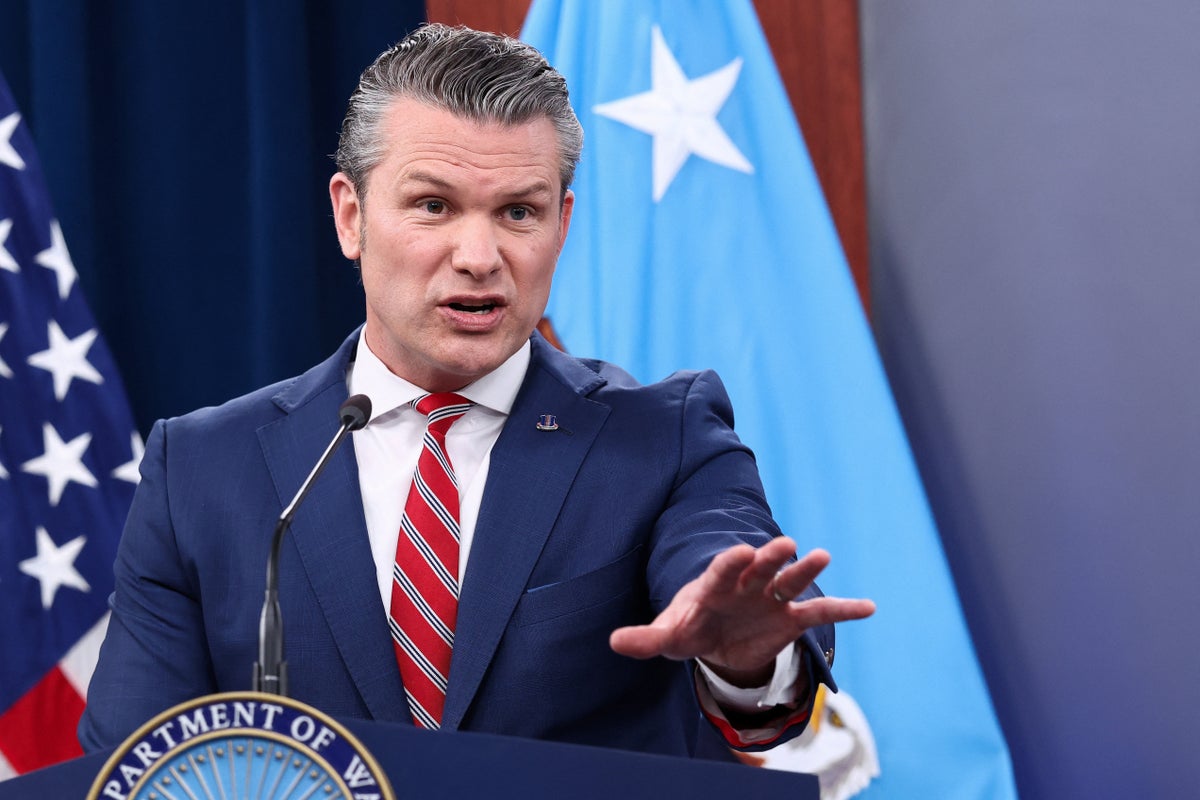
The conflict began February 28 when U.S. and Israeli forces struck Iranian nuclear and military sites. Iran responded by restricting tanker traffic through the strait, prompting a U.S. naval presence and a multinational mission that now includes British drones, Typhoon jets, the destroyer HMS Dragon, and an Australian surveillance aircraft. Defense Secretary Pete Hegseth told the Senate Armed Services Committee that operations have cost at least $29 billion in munitions and equipment. Bipartisan lawmakers pressed him on the absence of a clear endgame and the legal status of the 60-day clock under the War Powers Resolution.
Trump is traveling to Beijing for talks with Chinese President Xi Jinping, where Iran is expected to feature even though the president said he does not need Beijing’s assistance. Pentagon officials have discussed renaming any renewed campaign, with “Operation Sledgehammer” among names under review, partly to reset the congressional clock if major combat resumes. Iran’s parliament speaker warned that its forces are prepared to respond to any new aggression, while Tehran continues to coordinate limited tanker movements under IRGC oversight.
Saudi officials have privately alerted partners that prolonged restrictions threaten regional stability. Meanwhile, the UAE’s main gas-processing complex remains at reduced capacity after earlier damage, and Kuwait has detained four men it accuses of IRGC-linked activity. These developments occur against a backdrop of arms purchases by Gulf states and Israel that defense analysts link to expectations of further strikes. The central unresolved question remains whether diplomatic pressure or renewed force will reopen the strait before the current pause collapses.
Outlets ranged from emphasizing U.S. costs and diplomatic fragility (NPR, Independent) to highlighting Iranian intransigence and military surprises (Federalist, NY Post). Center-right pieces stressed decisive action while left-leaning ones focused on economic burdens; few provided symmetric detail on both sides’ restrictions in the strait.
Behind the Coverage
npr.org
Most biased
thedispatch.com
upi.com
independent.co.uk
aljazeera.com
thefederalist.com
nypost.com
Least biased
What each outlet got wrong
npr.org
The headline frames the conflict as 'the war in Iran,' implying a full-scale invasion rather than targeted strikes, and features a solo interview with Rep. Rosa DeLauro critiquing costs without Republican or administration counterpoints. > 'Rep. Rosa DeLauro, D-Conn., on the cost of the war in Iran'
Our version: The neutral version provides a balanced timeline starting with U.S./Israeli strikes on nuclear sites and includes bipartisan congressional concerns alongside costs.
thedispatch.com
It advances an unverified claim that Iran's counterproposal includes 'the retention of Tehran’s enriched uranium' and uses loaded terms like 'outrageous demands' and 'Iranian regime' to portray Iran as intransigent. > 'the same outrageous demands included in previous proposals: reparations... and the retention of Tehran’s enriched uranium'
Our version: The neutral rewrite avoids unverified nuclear demands, simply noting Trump's rejection of Iran's proposal as unacceptable without inflammatory language.
upi.com
Iran's restrictions are described with loaded phrasing like 'choking off' energy shipments, while the multinational mission is repeatedly called 'defensive.' > 'the choking off of the energy shipments has caused gas prices to surge' and 'defensive mission to protect freedom of navigation'
Our version: The neutral version neutrally states Iran 'restricting tanker traffic' and lists multinational assets without qualifying them as defensive.
independent.co.uk
The title and lead emphasize the aggressive 'Iran war' rename to 'Sledgehammer,' relying heavily on anonymous U.S. officials and framing the conflict as a U.S.-initiated 'war' without triggers. > 'Pentagon considers renaming Iran war ‘Sledgehammer’ if attacks resume'
Our version: The neutral rewrite discusses 'renaming any renewed campaign' like 'Operation Sledgehammer' in the context of resetting the congressional clock, tied to the full timeline.
aljazeera.com
It cites unverified details like Iran retaining '70 percent of its mobile launchers and pre-war missile stockpile' from a NYT report and unconfirmed UAE Habshan damage at 60% capacity. > 'classified US intelligence assessments say Iran still has substantial missile capabilities, with about 70 percent of its mobile launchers and pre-war missile stockpile still in action'
Our version: The neutral version omits unverified military retention claims, focusing on verified developments like costs and diplomatic warnings.
thefederalist.com
It presents unverified claims as fact, such as a WSJ report on an Israeli covert base in Iraq attacked by Israel, inflating the war's scope. > 'The Wall Street Journal reported that the Israeli military built a covert base inside Iraq... then attacked Iraqi troops'
Our version: The neutral rewrite sticks to confirmed arms purchases by Gulf states and Israel linked to expectations of strikes, without unverified base or strike details.
nypost.com
It fabricates threats with unverified quotes from Ghalibaf like 'teach a lesson for any aggression' and inflates losses to 'more than 250 of its leaders' and '90% of its navy.' > 'Our armed forces are ready to respond and to teach a lesson for any aggression'
Our version: The neutral version quotes verified warnings from Iran's parliament speaker on preparedness without exaggeration or unverified threats.
Facts outlets left out
The conflict began February 28, 2026, with U.S. and Israeli strikes on Iranian nuclear and military sites, prompting Iran's Hormuz restrictions.
Omitted by: npr.org, thedispatch.com, independent.co.uk, thefederalist.com
Pentagon costs are precisely $29 billion in munitions and equipment, as testified by Defense Secretary Pete Hegseth.
Omitted by: npr.org, aljazeera.com
Both U.S. and Iran have imposed restrictions/blockades on the Strait of Hormuz, with coordinated limited tanker movements under IRGC oversight.
Omitted by: upi.com, nypost.com, thedispatch.com
UAE’s main gas-processing complex remains at reduced capacity after earlier damage, and Kuwait detained four men accused of IRGC-linked activity.
Omitted by: npr.org, thedispatch.com, independent.co.uk
Framing tricks we caught
Loaded headline
“NPR's 'Rep. Rosa DeLauro, D-Conn., on the cost of the war in Iran' implies full-scale war.”
Neutral alternative: Neutral rewrite uses 'U.S.-Iran ceasefire' and specifies 'struck Iranian nuclear and military sites'.
One-sided sourcing
“NPR features solo progressive Democrat DeLauro without Republican or Trump admin quotes on costs as deterrence.”
Neutral alternative: Neutral includes bipartisan lawmakers pressing on endgame and War Powers, plus Trump/Pentagon views.
Loaded language
“Dispatch calls Iranian demands 'outrageous' and refers to 'Iranian regime.'”
Neutral alternative: Neutral states 'Iran’s latest proposal as unacceptable' per Trump, without adjectives.
Source asymmetry
“UPI prioritizes UK/Australia quotes calling mission 'defensive,' burying Iran's sovereignty claim.”
Neutral alternative: Neutral lists multinational assets factually alongside Iran's warnings without primacy.
Primacy framing
“Independent leads with 'Sledgehammer' rename and Trump weighing attacks, downplaying Rubio's claim Epic Fury objectives met.”
Neutral alternative: Neutral buries rename discussion after timeline, costs, and diplomacy.
Source articles
More in Politics

Trump Rejects Iran's Seven-Day Hormuz Reopening Offer
President Trump dismissed Iran's offer to reopen the Strait of Hormuz in exchange for sanctions relief, calling it unacceptable amid ongoing Middle East tensions. The move follows indirect talks and is tied to midterm political calculations.

Democrats Outline Post-Midterm Oversight of Trump Administration
If Democrats win the midterms, expansive investigations into Trump, his family, and administration are planned, with impeachment as a possible tool.
White House Drops CNN from Air Force One Pool After Court Ruling
The Trump administration barred CNN from the presidential travel pool for a trip to Tennessee, escalating a dispute over media access despite a recent court order restoring some outlets' White House credentials. Left-leaning outlets framed it as a First Amendment crisis while right-leaning sources portrayed it as justified pushback against biased coverage.
Trump Hosts Xi for State Dinner Focused on Pageantry Amid Trade and AI Strains
President Trump welcomed Chinese President Xi Jinping for high-profile talks on trade, tariffs, AI, and bilateral rivalry, featuring a White House tour and state dinner with tech executives. Coverage highlighted symbolic pomp over major breakthroughs, with both sides maintaining a cordial tone amid persistent tensions.
The Compass
You just read five takes on one story.
What's your take? Find your political shape in a few minutes.
Take the test