
Fragile US-Iran Ceasefire Strains Over Strait of Hormuz Tolls and Partial Shipping Halt
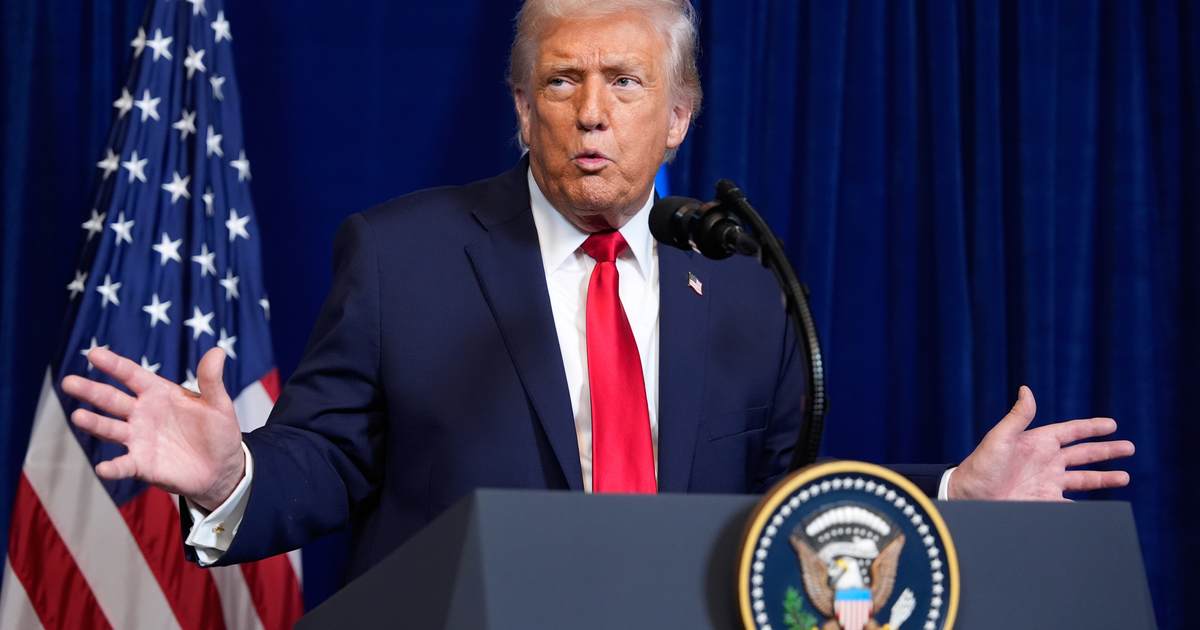
Cover image from redstate.com, which was analyzed for this article
A recently brokered two-week US-Iran ceasefire is under strain as Iran reportedly imposes fees and halts oil traffic through the Strait of Hormuz, prompting Trump warnings of strikes if unresolved. High-level talks led by VP JD Vance are planned in Pakistan amid ongoing disruptions to global shipping. Coverage highlights Republican concerns over war costs and Democratic criticisms of escalation risks.
PoliticalOS
Friday, April 10, 2026 — Politics
The ceasefire's core test is whether Iran and the U.S. can agree on verifiable, toll-free shipping through the Strait of Hormuz without one side dominating the waterway that supplies one-fifth of global oil. Diplomacy led by Vance in Pakistan offers a narrow window to address linked issues like Lebanon strikes, sanctions, and nuclear stocks before economic pain or renewed strikes escalate. Readers should recognize that partial traffic continues under monitored corridors, costs are already hitting households worldwide, and no single actor holds all leverage in this multiparty standoff.
What outlets missed
Most coverage omitted that the ceasefire explicitly required shipping coordination with Iran's armed forces, framing limited IRGC-managed transits near Larak Island as outright violation rather than implementation of agreed terms. Outlets downplayed the full sequence of pre-war provocations, including Iranian proxy attacks and nuclear advances that preceded U.S.-Israeli strikes on February 28, 2026. Human costs received uneven treatment: few quantified U.S. casualties in the hundreds or detailed Iranian civilian deaths near military sites like the Minab school adjacent to an IRGC base. The status of enriched uranium stockpiles and potential for their removal or bargaining was glossed over despite satellite imagery showing hardened underground sites. Finally, Japan's specific reserve releases and Saudi pipeline shifts to Yanbu were rarely tied to concrete barrel-per-day disruptions, leaving readers without a full picture of how global rerouting adds two weeks and 25 percent costs to voyages.
Global energy markets shuddered this week as a two-week ceasefire between the United States and Iran showed early cracks. Oil prices climbed toward $97 per barrel. Thousands of vessels idled. And the risk of renewed conflict loomed over one of the world's most vital shipping chokepoints. The stakes are immediate: higher fuel costs for households, disrupted supply chains for industries, and political pressure on both the Trump administration and its congressional allies ahead of midterm elections.
The mechanism is a fragile truce reached April 8, 2026, after six weeks of U.S. and Israeli strikes codenamed Operation Epic Fury. Pakistan brokered the deal, which included Iran's 10-point proposal. Central to it was reopening the Strait of Hormuz, through which 20 percent of global oil typically flows, according to U.S. Energy Information Administration data. Iran agreed to safe passage but insisted on coordination with its armed forces. The U.S. side, per White House statements, demanded unrestricted access without tolls. Within 48 hours, Iranian state media via Fars News Agency announced suspension of tanker traffic in response to continued Israeli strikes on Hezbollah in Lebanon. Shipping analysts reported a backlog of roughly 3,200 vessels west of the strait, per Kpler data cited across multiple outlets. Only a handful transited daily, many via an IRGC-managed corridor near Larak Island, according to Windward AI maritime tracking.
That gap between paper agreement and on-water reality forms the story's unresolved tension. Is the strait open, restricted, or closed? Iran has floated fees: $1 per barrel paid in cryptocurrency, per Financial Times reporting, or up to $2 million per large vessel in some accounts. President Trump posted on Truth Social that Iran was doing "a very poor job, dishonorable some would say" of allowing oil through and warned such fees "better stop now." He added U.S. forces would remain in position until full compliance, threatening stronger action if not. Vice President JD Vance is scheduled to lead high-level talks with Iranian officials in Pakistan this weekend, joined by envoy Steve Witkoff and Jared Kushner. It marks the highest-level direct contact since 1979.
The war that preceded this pause delivered measurable blows. Defense Secretary Pete Hegseth and Joint Chiefs Chairman Gen. Dan Caine stated at a Pentagon briefing that U.S. strikes sank more than 90 percent of Iran's regular naval fleet, destroyed 95 percent of its naval mines, and functionally eliminated its missile production capacity. Independent analysts offered caveats. Alex Vatanka of the Middle East Institute told The Washington Post that while missile launches dropped sharply, Iran still fires up to 20 per day with improving precision, per a Soufan Center analysis. Nick Carl of the American Enterprise Institute estimated a 90 percent reduction in fire rate but noted residual threats from drones and missiles persist beyond naval assets. On the nuclear front, Trump referenced prior 2025 strikes under Operation Midnight Hammer that set back enrichment. Yet enriched uranium stockpiles remain buried in hardened sites. Seizure would require complex ground operations, according to Joseph Rodgers of the Center for Strategic and International Studies.
Regime change proved elusive. Strikes killed Supreme Leader Ayatollah Ali Khamenei and several top commanders. His son Mojtaba succeeded him, maintaining hard-line continuity with Revolutionary Guard support, Behnam Ben Taleblu of the Foundation for Defense of Democracies told The Post. No broader collapse occurred. Iranian proxies were not directly targeted, though Israeli operations against Hezbollah continued, killing over 300 in Lebanon the day after the ceasefire per local reports. Iran cited those strikes as justification for strait restrictions. The U.S. maintained Lebanon was never part of the deal.
Costs mounted on all sides. The Center for Strategic and International Studies estimated nearly $30 billion in U.S. expenditures so far, driven by over 850 Tomahawk missiles fired at $3.6 million each and roughly $1 billion in lost aircraft, per analyst Mark Cancian. Iranian casualties reached thousands, with millions displaced across the region according to Encyclopaedia Britannica compilations. U.S. personnel losses numbered in the hundreds, with some underreporting allegations from The Intercept. Indirect effects hit harder: gasoline price spikes could cost American households $92 each in April alone, per American Enterprise Institute fellow Roger Pielke Jr. Jet fuel, fertilizer, and food costs rose in tandem. Japan announced emergency oil releases totaling 20 days of reserves, citing 95 percent Gulf dependence. Saudi production shifted to Red Sea ports after capacity cuts of 600,000 barrels per day.
Congress returns to session facing the 1973 War Powers Resolution clock. Republican senators including Susan Collins of Maine, John Curtis of Utah, and Lisa Murkowski of Alaska have publicly questioned open-ended funding or ground troops without approval. Democrats, led by Chuck Schumer and Hakeem Jeffries, attempted procedural votes to limit operations and tied the conflict to domestic affordability. Fiscal conservatives Rand Paul and Thomas Massie signaled opposition to supplemental requests potentially reaching $80-100 billion. The administration has not yet submitted detailed breakdowns.
Analysts differ on leverage. Iran's strait control demonstrated deterrence more potent than its nuclear program in forcing talks, according to Johns Hopkins professor Narges Bajoghli. Yet that same leverage risks alienating partners. Oman denied any joint toll agreement with Iran, citing international maritime obligations. The UN Convention on the Law of the Sea, unsigned by both the U.S. and Iran, codifies innocent passage without hampering. Historical precedents include U.S. naval escorts during the 1980s Tanker War.
Vance enters talks with limited foreign policy experience but direct presidential mandate. He had privately expressed reservations about the war's timing beforehand, per reporting. The delegation must navigate Israeli actions, Iranian demands for sanctions relief and non-aggression pledges, and U.S. insistence on verifiable nuclear limits and unrestricted shipping. One misstep could collapse the pause. Shipping firms cite insurance premiums and mine risks as deterrents even if lanes reopen.
The contradiction sits in plain view: a ceasefire meant to de-escalate has instead spotlighted unresolved control over global energy arteries. Partial traffic continues under Iranian oversight. Tolls remain disputed. Regional conflicts bleed across declared boundaries. Whether diplomacy in Pakistan produces a durable framework or merely resets the clock will shape oil prices, congressional budgets, and the risk of wider war for months ahead.
More in Politics

Federal Agents Search Omar Home in Ongoing Immigration Probe
Homeland Security agents searched the Minnesota Democrat's DC residence in a criminal probe, prompting accusations of political intimidation from Omar and Democratic leaders. Coverage spans left-leaning outlets like NPR, BBC, and The Guardian alongside right-leaning criticism from The Federalist and Daily Wire.

Trump Diesel Import Plan Draws Pushback Over Russia Ties
The weekend agreement drew bipartisan congressional pushback and criticism from Ukraine's Zelenskyy, with analysts downplaying US fuel price impacts. Right-leaning outlets like National Review, Dispatch, and Washington Examiner questioned its legality and effectiveness.

Independents Test Voter Appetite for Middle Ground in 2026 Midterms
Nearly 200 independents are running in competitive races as voters weigh ballot measures on housing costs in states like Massachusetts. Left-leaning coverage from NYT, NPR, and Guardian highlights turnout and key races while right outlets focus on GOP strategy.
Trump Rallies in Alaska, Ohio to Bolster GOP Senate Candidates
The president rallied in Wasilla for Sen. Dan Sullivan and faced empty seats at an Ohio event amid midterm concerns. Outlets across the spectrum covered the trips as signals of GOP vulnerability weeks before Election Day.
The Compass
You just read five takes on one story.
What's your take? Find your political shape in a few minutes.
Take the test