
Fragile US-Iran Ceasefire Strains Over Strait of Hormuz Tolls and Partial Shipping Halt
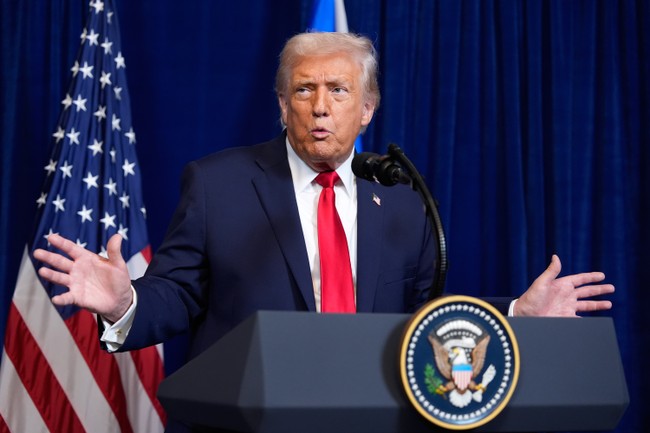
Cover image from redstate.com, which was analyzed for this article
A recently brokered two-week US-Iran ceasefire is under strain as Iran reportedly imposes fees and halts oil traffic through the Strait of Hormuz, prompting Trump warnings of strikes if unresolved. High-level talks led by VP JD Vance are planned in Pakistan amid ongoing disruptions to global shipping. Coverage highlights Republican concerns over war costs and Democratic criticisms of escalation risks.
PoliticalOS
Friday, April 10, 2026 — Politics
The ceasefire's core test is whether Iran and the U.S. can agree on verifiable, toll-free shipping through the Strait of Hormuz without one side dominating the waterway that supplies one-fifth of global oil. Diplomacy led by Vance in Pakistan offers a narrow window to address linked issues like Lebanon strikes, sanctions, and nuclear stocks before economic pain or renewed strikes escalate. Readers should recognize that partial traffic continues under monitored corridors, costs are already hitting households worldwide, and no single actor holds all leverage in this multiparty standoff.
What outlets missed
Most coverage omitted that the ceasefire explicitly required shipping coordination with Iran's armed forces, framing limited IRGC-managed transits near Larak Island as outright violation rather than implementation of agreed terms. Outlets downplayed the full sequence of pre-war provocations, including Iranian proxy attacks and nuclear advances that preceded U.S.-Israeli strikes on February 28, 2026. Human costs received uneven treatment: few quantified U.S. casualties in the hundreds or detailed Iranian civilian deaths near military sites like the Minab school adjacent to an IRGC base. The status of enriched uranium stockpiles and potential for their removal or bargaining was glossed over despite satellite imagery showing hardened underground sites. Finally, Japan's specific reserve releases and Saudi pipeline shifts to Yanbu were rarely tied to concrete barrel-per-day disruptions, leaving readers without a full picture of how global rerouting adds two weeks and 25 percent costs to voyages.
Iran Ceasefire Already Cracking as Iran Chokes Oil Route and Israel Bombs Lebanon
Vice President JD Vance heads to Pakistan this weekend for the highest-level American-Iranian talks since the 1979 hostage crisis, tasked with salvaging a two-week ceasefire that is already buckling under Iranian violations and Israeli escalation. The agreement, announced by President Trump after weeks of intense fighting, hinged on Tehran reopening the Strait of Hormuz to global shipping. Instead, oil traffic has ground to a near-halt, energy prices have spiked 50 percent worldwide, and American consumers are once again paying the price for disorder in the Middle East.
Trump himself blasted the Iranian regime Thursday, writing on Truth Social that Iran is doing “a very poor job, dishonorable some would say, of allowing Oil to go through the Strait of Hormuz. That is not the agreement we have.” Reports from shipping trackers and regional officials confirm the problem. Roughly 3,200 vessels, including 800 tankers, are backed up west of the strait. No meaningful oil has moved in recent days. Iran’s Islamic Revolutionary Guard Corps has even designated special routes near Larak Island and, according to multiple accounts, attempted to levy tolls on passing ships, sometimes demanded in cryptocurrency. Oman, the southern neighbor, has denied any joint toll scheme and pointed to its obligations under international maritime law.
The economic fallout is immediate and broad. Japan announced another emergency draw from its oil reserves. Inflationary pressure is hitting everything from diesel for American farmers to jet fuel for airlines to cooking gas in India. The war’s estimated price tag already approaches $30 billion, according to the Center for Strategic and International Studies. That figure does not include the second-order costs Americans will feel at grocery stores and gas stations. Republicans in Congress, who return from recess next week, face an ugly fight to fund it all while operating under the 1973 War Powers Resolution clock. Senator Susan Collins of Maine has already gone public with criticism of Trump’s “incendiary” rhetoric and called for a swift end to the conflict. Other GOP members are voicing private worries about the open-ended price tag and lack of clear benchmarks.
The ceasefire itself was a roller-coaster production. Trump began the week warning of apocalyptic consequences for Iran, then abruptly declared a pause brokered by Pakistan after receiving what he called a workable 10-point plan from Tehran. Iran promised safe passage through the strait in exchange for a breathing room to negotiate a longer-term deal. Its negotiators are expected to demand ironclad non-aggression guarantees and sanctions relief, pointing to past American broken promises. Tehran’s biggest red line, according to analysts who follow the regime, remains its sovereignty.
Yet almost the moment the ceasefire was announced, Israel escalated airstrikes on Lebanon, killing more than 300 people in a single day. The attacks targeted Hezbollah, which Iran arms and supports. Israeli officials have told reporters that operations in Lebanon are not covered by the U.S.-Iran truce, effectively daring the agreement to hold. The move puts Vance, who privately cautioned against a full-scale war before it began, in an impossible spot. He is joined by special envoy Steve Witkoff and Jared Kushner in the delegation. Their mission is to secure a durable end to hostilities that Trump once described as “total and complete victory.”
How complete that victory was remains debatable. Defense Secretary Pete Hegseth claimed the U.S. and Israel “functionally destroyed” Iran’s missile production, launchers, and stockpiles. Factories were “razed to the ground,” he said. Yet analysts note that Iran retains some launch capability and that its nuclear program, the original stated concern, was never fully dismantled. The conflict also produced undeniable tragedies, including a U.S. strike on an elementary school in Minab that killed more than 175 people, most of them children. Neither Trump nor Hegseth has expressed remorse, instead framing the campaign in stark, providential terms.
The larger picture is one Americans have seen before: a costly entanglement sold as necessary, quickly bogged down in regional hatreds, with the bill sent home. Iran is not a trustworthy partner. Its attempts to extort tolls on a waterway that international law treats as open to innocent passage only confirm that. But the speed with which the ceasefire frayed also raises questions about whether all parties entered it in good faith. Israel’s decision to hammer Lebanon the day after the announcement looks like a deliberate attempt to keep the fire burning. Meanwhile Washington debates supplemental funding and Vance prepares for talks that will test whether American leverage can produce something more lasting than another temporary pause.
For families filling up their trucks or paying higher heating bills, the abstract arguments about missile factories and red lines matter less than the practical reality. Energy shocks like this one ripple through every corner of the economy. The war powers deadline is approaching. And the same voices who cheered the opening salvos are now quiet about the mounting costs. Vance’s mission is narrow but critical: get the strait open, stop the bleeding, and bring American focus back to its own borders before another Middle East conflict becomes permanent. The opening days of this ceasefire suggest that will be harder than advertised.
You just read America First's take. Want to read what actually happened?