
Fragile US-Iran Ceasefire Strains Over Strait of Hormuz Tolls and Partial Shipping Halt
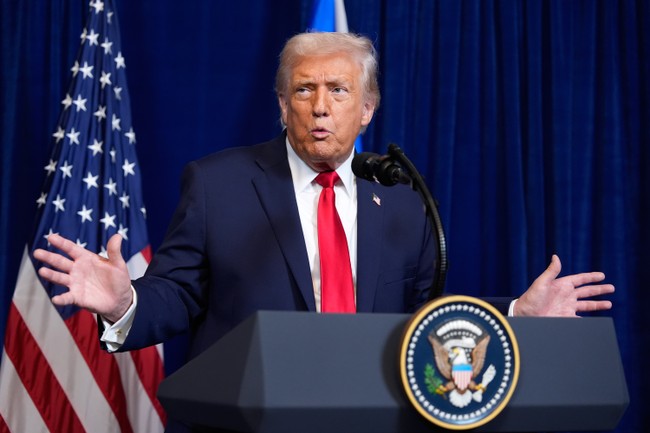
Cover image from redstate.com, which was analyzed for this article
A recently brokered two-week US-Iran ceasefire is under strain as Iran reportedly imposes fees and halts oil traffic through the Strait of Hormuz, prompting Trump warnings of strikes if unresolved. High-level talks led by VP JD Vance are planned in Pakistan amid ongoing disruptions to global shipping. Coverage highlights Republican concerns over war costs and Democratic criticisms of escalation risks.
PoliticalOS
Friday, April 10, 2026 — Politics
The ceasefire's core test is whether Iran and the U.S. can agree on verifiable, toll-free shipping through the Strait of Hormuz without one side dominating the waterway that supplies one-fifth of global oil. Diplomacy led by Vance in Pakistan offers a narrow window to address linked issues like Lebanon strikes, sanctions, and nuclear stocks before economic pain or renewed strikes escalate. Readers should recognize that partial traffic continues under monitored corridors, costs are already hitting households worldwide, and no single actor holds all leverage in this multiparty standoff.
What outlets missed
Most coverage omitted that the ceasefire explicitly required shipping coordination with Iran's armed forces, framing limited IRGC-managed transits near Larak Island as outright violation rather than implementation of agreed terms. Outlets downplayed the full sequence of pre-war provocations, including Iranian proxy attacks and nuclear advances that preceded U.S.-Israeli strikes on February 28, 2026. Human costs received uneven treatment: few quantified U.S. casualties in the hundreds or detailed Iranian civilian deaths near military sites like the Minab school adjacent to an IRGC base. The status of enriched uranium stockpiles and potential for their removal or bargaining was glossed over despite satellite imagery showing hardened underground sites. Finally, Japan's specific reserve releases and Saudi pipeline shifts to Yanbu were rarely tied to concrete barrel-per-day disruptions, leaving readers without a full picture of how global rerouting adds two weeks and 25 percent costs to voyages.
Israeli Assaults Jeopardize Fragile US-Iran Ceasefire as Vance Prepares High-Stakes Talks
Vice President JD Vance arrives in Pakistan this weekend to lead negotiations with Iranian officials aimed at ending a six-week war that has killed thousands, devastated regional energy infrastructure and sent global oil prices soaring by 50 percent. The talks, the highest-level direct contact between the two governments since 1979, come after President Donald Trump announced a two-week ceasefire brokered by Pakistan that hinged on Iran allowing safe passage through the Strait of Hormuz. Yet almost immediately the truce appeared to unravel, with Israeli airstrikes killing more than 300 people in Lebanon the day after the announcement and disputes emerging over whether Iran was attempting to levy tolls on vessels transiting the critical waterway.
The war, which Trump branded “Operation Epic Fury,” began with American and Israeli strikes on Iranian military targets, missile facilities and naval assets. Trump initially threatened catastrophic consequences, writing on social media that “a whole civilization will die tonight, never to be brought back again” if Iran did not capitulate. Hours before a self-imposed deadline, he declared a ceasefire and claimed Tehran had provided a 10-point plan for longer-term negotiations. Iran, for its part, signaled willingness to reopen the strait but has insisted on core demands: a guarantee of non-aggression from Washington and meaningful sanctions relief. Analysts say Tehran’s insistence on ironclad sovereignty guarantees stems from repeated American betrayals, most notably the 2018 withdrawal from the nuclear deal.
The fragile truce has already been tested. Israel, which was not party to the U.S.-Iran agreement, immediately escalated its campaign in Lebanon, striking targets linked to Hezbollah and causing mass casualties in a move that Iranian officials and regional observers say was designed to torpedo diplomacy. The timing could hardly have been more provocative: the Lebanese deaths came within 24 hours of Trump’s ceasefire declaration. Meanwhile, reports emerged that Iran was attempting to charge fees on tankers, prompting Trump to lash out on Truth Social, calling Tehran’s conduct “dishonorable” and warning that such behavior violated the agreement to keep the strait open without limitation. Conservative outlets amplified the charge, accusing Iran of extortion. Yet other reporting suggests the original ceasefire understanding may have contemplated limited revenue-sharing for reconstruction, though Oman, the southern guardian of the strait, has rejected any tolling authority under international maritime law.
The economic fallout has been severe. Roughly 3,200 vessels, including 800 tankers, are now idling west of Hormuz, with virtually no oil moving through the passage in recent days. Japan announced another emergency release of strategic reserves as Asian economies absorb punishing energy price spikes. The conflict has disrupted supplies of liquefied natural gas, aluminum, cooking gas, helium and jet fuel, compounding global inflationary pressures at a moment when American voters are already anxious about costs ahead of midterm elections.
At home, Republicans who control Congress are bracing for a bruising battle over war funding. The price tag already approaches $30 billion according to estimates from the Center for Strategic and International Studies, and the 1973 War Powers Resolution looms: military operations must receive congressional approval within 60 days or face termination, though the president may claim a 30-day extension. Senator Susan Collins of Maine has publicly criticized Trump’s “incendiary” rhetoric and called for a swift end to the conflict, signaling fractures even within the GOP. Democrats are expected to demand detailed accounting and question the strategic wisdom of the entire campaign.
The war’s human toll has been staggering. A U.S. Tomahawk missile strike on an elementary school in Minab, Iran, killed more than 175 people, most of them children. Neither Trump nor Defense Secretary Pete Hegseth has expressed remorse. Instead Hegseth, whose personal pastor has preached monthly Christian services at the Pentagon framing the conflict in providential terms, continues to describe the war as aligned with “God’s almighty providence.” Critics see in this rhetoric a crusading theology that treats collateral damage, including the slaughter of schoolchildren, as part of a divine plan rather than a tragedy demanding accountability.
Questions also linger about whether Trump achieved any of his stated objectives. The president claimed “total and complete victory,” asserting that Iran’s missile program had been “functionally destroyed.” Pentagon officials echoed that assessment, yet independent experts note that Tehran retains launch capability and that command-and-control damage may prove temporary. Iran’s navy was battered, but its government remains in place and its nuclear program, the original ostensible concern, was never the central target of sustained strikes. The war appears instead to have strengthened hardliners in Tehran while handing the Islamic Republic a propaganda victory as a nation resisting American and Israeli aggression.
Vance, who privately warned against a full-scale war before it began, now finds himself tasked with salvaging a diplomatic off-ramp. Accompanying him will be Steve Witkoff and Jared Kushner. The vice president faces an Iranian side burned by past U.S. duplicity and determined to secure concrete guarantees rather than vague promises. Whether the talks can produce a durable agreement or simply paper over a pause before the next round of violence remains uncertain. What is clear is that the ceasefire is already soaked in Lebanese and Iranian blood, strained by economic warfare over one of the world’s most vital energy chokepoints, and burdened by a legacy of mistrust that no amount of last-minute diplomacy may easily erase.
You just read Progressive's take. Want to read what actually happened?