
Fragile US-Iran Ceasefire Tested by Hormuz Blockade and Islamabad Talks
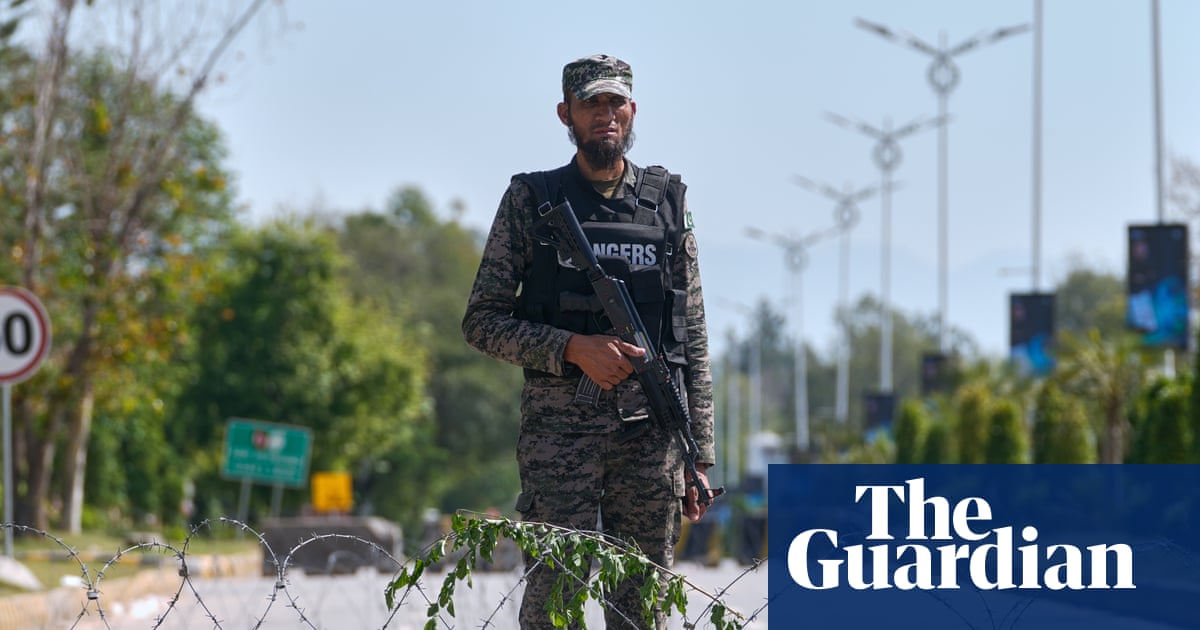
Cover image from theguardian.com, which was analyzed for this article
President Trump announced a two-week ceasefire with Iran following airstrikes, but Iran continues to block the Strait of Hormuz, keeping oil flows disrupted and straining the truce. High-level US-Iran talks are set for Islamabad amid accusations of violations, with VP Vance tasked to lead negotiations. Fighting persists between Israel and Hezbollah in Lebanon, further complicating the agreement as Netanyahu rejects including them.
PoliticalOS
Friday, April 10, 2026 — Politics
The two-week ceasefire is under immediate pressure from Iran's restricted Hormuz access, ongoing Israel-Hezbollah fighting and unresolved disputes over nuclear materials and sanctions. Islamabad talks led by Vance offer the first high-level diplomatic opening since 1979 but face steep obstacles given both sides' claims of victory alongside accusations of bad faith. Readers should recognize that while U.S. strikes significantly degraded Iranian capabilities, Tehran retains disruptive tools that could prolong economic pain and risk renewed conflict if talks collapse.
What outlets missed
Most outlets underplayed the February 28 origins of the conflict, when U.S. and Israeli strikes killed Supreme Leader Ayatollah Ali Khamenei and targeted nuclear and military sites following proxy attacks and enrichment advances. Full casualty figures across all sides, including over 3,400 Iranian and Lebanese dead plus 13 U.S. service members, were rarely aggregated or attributed to specific sources like health ministries and Central Command. The exact terms of Iran's 10-point proposal and Pakistan's mediation role, which explicitly tied Hormuz reopening to coordination with Iranian forces, received scant detail despite shaping the current impasse. Prior U.S. Operation Midnight Hammer in June 2025, which set back Iran's nuclear program by two years according to CSIS assessments, was mentioned only in passing if at all.
Global energy markets shuddered this week as a two-week ceasefire between the United States and Iran showed immediate cracks. Oil prices jumped more than 30 percent. Tankers stacked up by the thousands. The pause in direct fighting, announced by President Trump on April 8 after six weeks of U.S. and Israeli strikes, now hinges on whether high-level talks in Islamabad this weekend can overcome mutual accusations of bad faith.
The agreement, brokered by Pakistan after Iran submitted a 10-point proposal, required Tehran to reopen the Strait of Hormuz in coordination with its forces. It excluded Israeli operations against Hezbollah in Lebanon. Yet shipping data from Kpler and Windward shows almost no oil tankers have passed since the truce took effect, with only a handful of dry bulk carriers and Iranian vessels using a designated corridor near Larak Island. Trump posted on Truth Social that Iran was doing "a very poor job" of allowing oil flows, calling it a violation. Iranian officials countered that continued Israeli strikes in Lebanon, which killed more than 300 in Beirut on April 9 according to Lebanon's Health Ministry, justified the restrictions. Vice President JD Vance, accompanied by special envoy Steve Witkoff and Jared Kushner, is scheduled to lead the U.S. delegation in Islamabad on Saturday against Iranian Parliament Speaker Mohammad Bagher Qalibaf.
At the center of the tension sits a contradiction: both sides claim victory in a conflict that began February 28 with U.S. and Israeli strikes killing Supreme Leader Ayatollah Ali Khamenei and degrading Iran's navy and missile production, yet neither appears ready to fully de-escalate. Pentagon officials, including Defense Secretary Pete Hegseth and Gen. Dan Caine, stated that more than 90 percent of Iran's regular naval fleet and 95 percent of its naval mines were destroyed, with missile launches dropping 90 percent early in the campaign. Independent analysts from the Soufan Center and the American Enterprise Institute noted that Iran still fires up to 20 missiles daily at Israel using preserved stockpiles and homegrown production lines dating to the 1980s. Enriched uranium stocks remain buried in hardened sites; Trump has said the U.S. will work with Iran to remove them, though Tehran has not confirmed cooperation and experts from the Center for Strategic and International Studies describe any seizure as a "massive operation."
The Lebanon front adds another layer. Netanyahu rejected including Hezbollah in the truce and authorized new talks with Lebanon next week in Washington focused on disarming the group. Israeli strikes continued Thursday, hitting 10 rocket launchers after Hezbollah fired at northern Israel, according to the Israeli military and Times of Israel reports. Iran and Pakistan insist Lebanon was part of the original deal. This disagreement prompted Iranian threats to withdraw entirely.
Casualties remain difficult to verify fully but span thousands. Iranian and Lebanese health authorities report over 3,400 dead across both countries, including civilians. The U.S. has acknowledged losses of aircraft worth roughly $1 billion and at least 13 service members killed, per Central Command summaries and congressional briefings. Millions have been displaced. Economically, the Hormuz disruption, which normally carries 20 percent of global oil and LNG, has rerouted cargo through Oman and the UAE, adding two weeks and 25 percent to costs for some voyages. Japan announced further oil reserve releases. Brent crude hovered near $97 per barrel.
Reactions split along predictable lines. Senate Republicans including Susan Collins and John Curtis have voiced concerns about costs, estimated by the Center for Strategic and International Studies at $29 billion so far, and invoked the War Powers Resolution's 60-day limit. Democrats led by Chuck Schumer and Hakeem Jeffries attempted votes to constrain funding and tied the conflict to rising gas prices. Pro-administration voices highlight the destruction of Iran's naval capabilities and the killing of its former supreme leader as historic setbacks for Tehran, now led by his son Mojtaba Khamenei. Experts like Behnam Ben Taleblu of the Foundation for Defense of Democracies and Alex Vatanka of the Middle East Institute caution that leadership succession does not equal regime change and that Iran's proxies retain disruptive power.
The Islamabad talks represent the highest-level U.S.-Iranian contact since 1979. Their agenda includes sanctions relief, nuclear limits, non-aggression guarantees and regional de-escalation. Success is far from assured. Failure could see renewed strikes, further economic pain and a test of whether the fragile pause was ever more than a pause.
More in Politics

Federal Agents Search Omar Home in Ongoing Immigration Probe
Homeland Security agents searched the Minnesota Democrat's DC residence in a criminal probe, prompting accusations of political intimidation from Omar and Democratic leaders. Coverage spans left-leaning outlets like NPR, BBC, and The Guardian alongside right-leaning criticism from The Federalist and Daily Wire.

Trump Diesel Import Plan Draws Pushback Over Russia Ties
The weekend agreement drew bipartisan congressional pushback and criticism from Ukraine's Zelenskyy, with analysts downplaying US fuel price impacts. Right-leaning outlets like National Review, Dispatch, and Washington Examiner questioned its legality and effectiveness.

Independents Test Voter Appetite for Middle Ground in 2026 Midterms
Nearly 200 independents are running in competitive races as voters weigh ballot measures on housing costs in states like Massachusetts. Left-leaning coverage from NYT, NPR, and Guardian highlights turnout and key races while right outlets focus on GOP strategy.

Trump Rallies in Alaska, Ohio to Bolster GOP Senate Candidates
The president rallied in Wasilla for Sen. Dan Sullivan and faced empty seats at an Ohio event amid midterm concerns. Outlets across the spectrum covered the trips as signals of GOP vulnerability weeks before Election Day.
The Compass
You just read five takes on one story.
What's your take? Find your political shape in a few minutes.
Take the test