
Fragile US-Iran Ceasefire Tested by Hormuz Blockade and Islamabad Talks
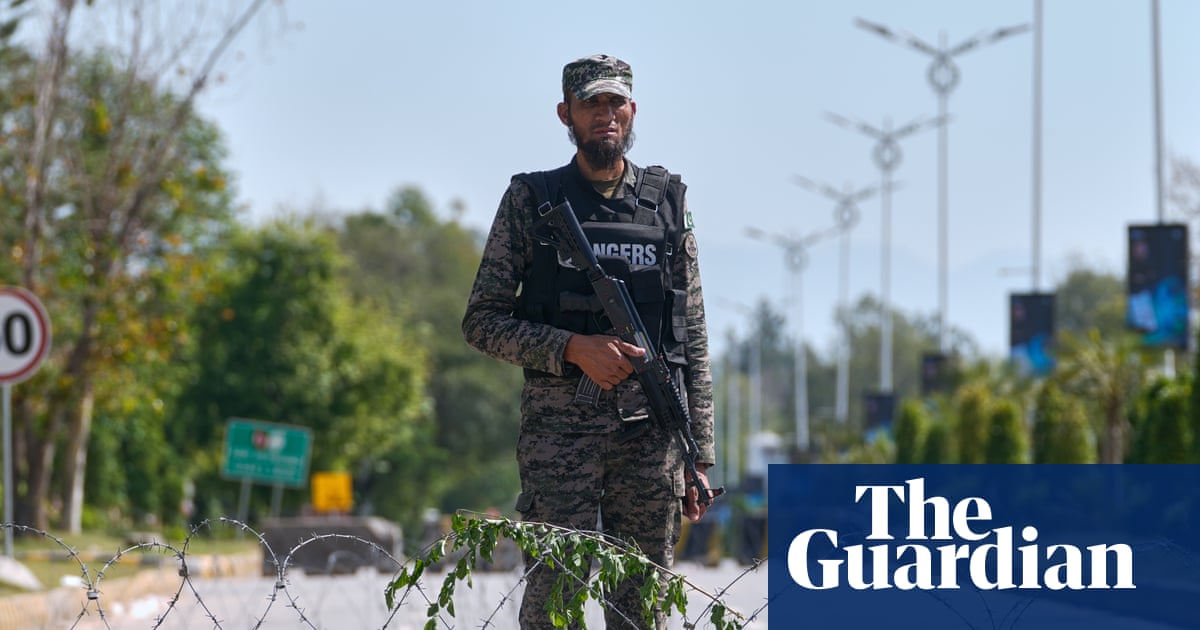
Cover image from theguardian.com, which was analyzed for this article
President Trump announced a two-week ceasefire with Iran following airstrikes, but Iran continues to block the Strait of Hormuz, keeping oil flows disrupted and straining the truce. High-level US-Iran talks are set for Islamabad amid accusations of violations, with VP Vance tasked to lead negotiations. Fighting persists between Israel and Hezbollah in Lebanon, further complicating the agreement as Netanyahu rejects including them.
PoliticalOS
Friday, April 10, 2026 — Politics
The two-week ceasefire is under immediate pressure from Iran's restricted Hormuz access, ongoing Israel-Hezbollah fighting and unresolved disputes over nuclear materials and sanctions. Islamabad talks led by Vance offer the first high-level diplomatic opening since 1979 but face steep obstacles given both sides' claims of victory alongside accusations of bad faith. Readers should recognize that while U.S. strikes significantly degraded Iranian capabilities, Tehran retains disruptive tools that could prolong economic pain and risk renewed conflict if talks collapse.
What outlets missed
Most outlets underplayed the February 28 origins of the conflict, when U.S. and Israeli strikes killed Supreme Leader Ayatollah Ali Khamenei and targeted nuclear and military sites following proxy attacks and enrichment advances. Full casualty figures across all sides, including over 3,400 Iranian and Lebanese dead plus 13 U.S. service members, were rarely aggregated or attributed to specific sources like health ministries and Central Command. The exact terms of Iran's 10-point proposal and Pakistan's mediation role, which explicitly tied Hormuz reopening to coordination with Iranian forces, received scant detail despite shaping the current impasse. Prior U.S. Operation Midnight Hammer in June 2025, which set back Iran's nuclear program by two years according to CSIS assessments, was mentioned only in passing if at all.
Fragile Ceasefire Strains Under Economic Pressure Ahead of Vance Led Iran Talks
Vice President JD Vance arrives in Pakistan this weekend to lead negotiations aimed at converting a tenuous two week ceasefire with Iran into a durable agreement ending a conflict that has already imposed substantial costs on American taxpayers and global energy markets. The talks follow six weeks of fighting that began Feb. 28 and produced what President Trump called a total victory but left unresolved questions about strategic achievements and exposed the predictable trade offs of military entanglement in the Middle East.
The ceasefire announced April 7 and brokered by Pakistan required Iran to reopen the Strait of Hormuz to commercial shipping in exchange for a pause in U.S. and Israeli strikes. That waterway carries roughly one fifth of global oil and liquefied natural gas trade. Yet oil traffic remains effectively halted. Data from Kpler shows no oil tankers have transited the strait in recent days while a backlog of more than 3 200 vessels including 800 tankers sits idle. President Trump posted on Truth Social that Iran is doing a very poor job of honoring the agreement and warned against any tolls on shipping. Iranian officials have spoken of cryptocurrency fees and rerouting vessels near Larak Island to avoid claimed mine risks.
These disruptions have triggered the worst energy shock in memory. Oil prices have risen about 50 percent. Japan announced further releases from its strategic reserves while supply chains for cooking gas diesel jet fuel and components used in semiconductors face delays. Inflationary effects are rippling outward hitting Asian buyers and American consumers already sensitive to price pressures. The war has also damaged Gulf energy infrastructure stranded nearly 20 000 mariners and curtailed shipments of aluminum helium and other basics. Such outcomes illustrate how quickly regional conflicts can impose diffuse costs that markets transmit to households far from the battlefield.
Iranian officials insist the ceasefire encompassed Israeli operations against Hezbollah in Lebanon. Israel disagrees. Prime Minister Benjamin Netanyahu stated there is no ceasefire in Lebanon and authorized continued strikes. In the first full day after the truce announcement Israeli airstrikes killed more than 300 people in Lebanon according to Lebanese health authorities. Additional exchanges occurred this week with Hezbollah firing rockets toward Haifa and Israel responding against launchers. Tehran has cited these actions as justification for maintaining its near total blockade of the strait. The dispute highlights the difficulty of disentangling Iran from its proxy networks once conflict begins.
At home the fiscal burden is sharpening partisan tensions. Estimates from the Center for Strategic and International Studies place direct costs near 30 billion dollars so far with more expected. Republicans who control Congress face a looming deadline under the 1973 War Powers Resolution which requires approval for operations beyond 60 days. When lawmakers return from recess next week they must address supplemental funding amid internal GOP skepticism. Senator Susan Collins of Maine publicly criticized the presidents incendiary rhetoric and called for a swift end to the conflict. Other Republicans have questioned both the price tag and the absence of detailed cost breakdowns from the White House. These debates reflect broader concerns about committing resources without clear metrics for success or exit.
The administrations stated objectives evolved during the fighting. Trump initially cited preventing Iran from obtaining nuclear weapons destroying its missile production and navy and creating conditions for internal regime change. Defense Secretary Pete Hegseth claimed U.S. and Israeli strikes functionally destroyed Iranian missile infrastructure and stockpiles. Yet analysts note that while production facilities suffered damage Iran retains launch capability and command structures though degraded. Its nuclear sites appear largely intact according to preliminary assessments. Whether these results justify the expenditure and the ensuing energy shock remains a matter of empirical debate rather than declarative victory.
Vance enters the talks with a complicated record. The vice president who served as a Marine in Iraq built his political profile on skepticism of open ended foreign commitments. Reports indicate he privately cautioned against full scale war arguing it risked regional chaos and division within the presidents coalition. Publicly he has supported the operation while maintaining a lower profile. His selection to lead the high level delegation alongside special envoy Steve Witkoff and Jared Kushner places him at the center of what one scholar called a high risk high reward assignment. The agenda includes Iranian demands for future non aggression guarantees and sanctions relief. Iranian officials emphasize sovereignty as a non negotiable red line citing past U.S. policy reversals.
Preparations in Islamabad continue despite the frictions. Pakistani diplomats describe the venue as a neutral venue for direct dialogue the highest level face to face contact between Washington and Tehran since 1979. Success would require verifiable reopening of the strait clear understandings on Lebanese hostilities and a framework that prevents recurrence without open ended American presence. Failure could see renewed escalation with further economic consequences.
The episode underscores recurring patterns in foreign policy. Interventions launched with specific goals often expand in scope and cost while secondary effects such as energy market disruptions impose burdens on those least able to absorb them. As Vance sits down with Iranian counterparts the measurable results of the past six weeks the lives lost the dollars spent the price spikes at the pump will shape the bargaining. Whether the negotiations produce a stable equilibrium or merely a pause before renewed friction will test whether lessons about restraint and precise objectives have been absorbed. For now the ceasefire holds uneasily while the meter on both human and economic costs continues to run.
You just read Conservative's take. Want to read what actually happened?