
Fragile US-Iran Ceasefire Tested by Hormuz Blockade and Islamabad Talks
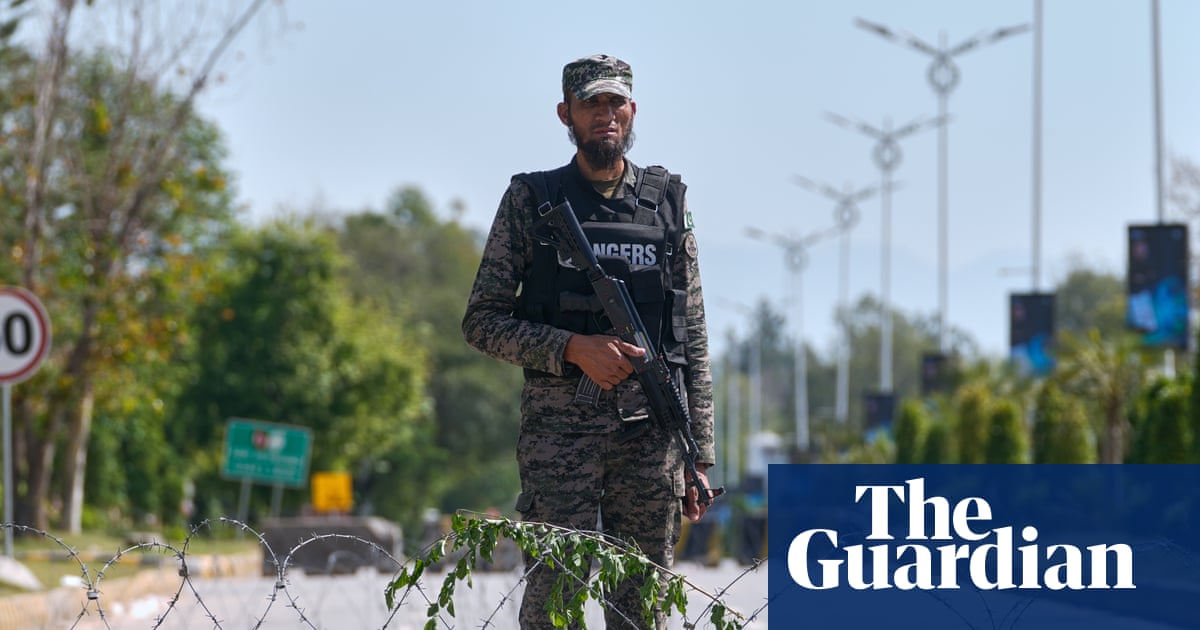
Cover image from theguardian.com, which was analyzed for this article
President Trump announced a two-week ceasefire with Iran following airstrikes, but Iran continues to block the Strait of Hormuz, keeping oil flows disrupted and straining the truce. High-level US-Iran talks are set for Islamabad amid accusations of violations, with VP Vance tasked to lead negotiations. Fighting persists between Israel and Hezbollah in Lebanon, further complicating the agreement as Netanyahu rejects including them.
PoliticalOS
Friday, April 10, 2026 — Politics
The two-week ceasefire is under immediate pressure from Iran's restricted Hormuz access, ongoing Israel-Hezbollah fighting and unresolved disputes over nuclear materials and sanctions. Islamabad talks led by Vance offer the first high-level diplomatic opening since 1979 but face steep obstacles given both sides' claims of victory alongside accusations of bad faith. Readers should recognize that while U.S. strikes significantly degraded Iranian capabilities, Tehran retains disruptive tools that could prolong economic pain and risk renewed conflict if talks collapse.
What outlets missed
Most outlets underplayed the February 28 origins of the conflict, when U.S. and Israeli strikes killed Supreme Leader Ayatollah Ali Khamenei and targeted nuclear and military sites following proxy attacks and enrichment advances. Full casualty figures across all sides, including over 3,400 Iranian and Lebanese dead plus 13 U.S. service members, were rarely aggregated or attributed to specific sources like health ministries and Central Command. The exact terms of Iran's 10-point proposal and Pakistan's mediation role, which explicitly tied Hormuz reopening to coordination with Iranian forces, received scant detail despite shaping the current impasse. Prior U.S. Operation Midnight Hammer in June 2025, which set back Iran's nuclear program by two years according to CSIS assessments, was mentioned only in passing if at all.
Fragile Ceasefire Teeters as Vance Prepares to Broker Iran Peace Talks
Vice President JD Vance arrives in Pakistan this weekend for the highest-level direct negotiations between American and Iranian officials since the 1979 revolution, tasked with transforming a shaky two-week ceasefire into a durable end to the month-long U.S.-Israel war against Iran. The talks come amid mounting evidence that the truce, announced by President Donald Trump on April 7 after intense back-channel diplomacy involving Pakistan, is already unraveling under pressure from multiple fronts.
The ceasefire hinged on Iran reopening the Strait of Hormuz, the narrow chokepoint through which one-fifth of global oil and liquefied natural gas typically flows. Trump had issued an ultimatum demanding safe passage by a Tuesday evening deadline, warning of catastrophic consequences if unmet. Iran agreed to allow transit in exchange for a pause in strikes, but the waterway remains effectively paralyzed. Shipping data shows barely any oil tankers have moved in recent days, with roughly 3,200 vessels backed up and nearly 20,000 mariners stranded. Oil prices have surged 50 percent, triggering emergency reserve releases from Japan and rippling inflationary shocks through Asian economies, Indian cooking gas supplies, European jet fuel, and even helium for semiconductor manufacturing.
Trump has publicly accused Iran of violating the agreement, posting on Truth Social that Tehran is doing “a very poor job” of allowing oil through the strait and demanding it stop any tolls on passing ships. Iranian officials have countered that Israel’s continued military campaign in Lebanon nullifies the deal. The day after the ceasefire announcement, Israeli airstrikes killed more than 300 people in Lebanon, according to local health authorities. Israeli Prime Minister Benjamin Netanyahu has insisted there is “no ceasefire in Lebanon” and that strikes against Hezbollah will continue. Iran, which backs the group, has cited these attacks as justification for maintaining its near-total blockade. On Friday, Israel reported striking rocket launchers in Lebanon while Hezbollah claimed a missile attack on Israeli infrastructure in Haifa.
The entanglement of the Iran ceasefire with the Israel-Hezbollah conflict illustrates the central challenge facing Vance: forging agreement among actors with fundamentally divergent interests. Vance, who privately warned against launching the war because it risked regional chaos and fracturing Trump’s political base, now finds himself as the administration’s diplomatic point man. The 41-year-old vice president, who built his brand on opposition to endless Middle East entanglements, has maintained a low public profile during the fighting. His assignment carries obvious political risk ahead of midterm elections, particularly as energy-driven inflation undercuts Republican messaging on the cost of living.
Domestic political pressure is building on another front. Republicans controlling Congress return from recess next week confronting the need to fund a conflict whose price tag is climbing toward tens of billions of dollars. The Center for Strategic and International Studies estimates costs so far near $30 billion, but the White House has provided few detailed figures. Under the 1973 War Powers Resolution, military operations must receive congressional approval after 60 days or face termination, with only a 30-day extension available. Sen. Susan Collins of Maine has publicly criticized Trump’s “incendiary” rhetoric and called for a swift end to the conflict, signaling potential fissures within the GOP.
Questions also linger about what the United States actually accomplished in six weeks of strikes. Trump declared “total and complete victory,” claiming the campaign prevented Iran from obtaining nuclear weapons, destroyed its navy and missile production capacity, and created conditions for regime change. Defense Secretary Pete Hegseth asserted that Iran’s missile infrastructure had been “razed to the ground” and that Tehran could no longer manufacture new systems at scale. Independent analysts are more skeptical, noting that while production facilities suffered heavy damage, Iran retains significant stockpiles and the ability to reconstitute over time. Its nuclear program, the original stated concern, appears to have been set back but not eliminated.
For Iran, the red lines are clear: any final agreement must include credible guarantees of non-aggression from the United States and meaningful sanctions relief. Tehran has been burned by previous American withdrawals from deals and insists on protections for its sovereignty. Narges Bajoghli, a Johns Hopkins University professor of Middle East studies, notes that Iran views these elements as non-negotiable after years of maximum-pressure campaigns.
The stakes extend beyond the region. A failure to stabilize the ceasefire could reignite direct U.S.-Iran conflict at enormous human and economic cost. Global energy markets remain on edge, and the war has already damaged infrastructure across the Gulf. Yet the very act of returning to talks, brokered by Pakistan and now led by a vice president who questioned the war’s wisdom, suggests recognition in Washington that military escalation has limits.
Vance’s success or failure in Islamabad will reverberate through American politics, global energy security, and the fragile balance of power in the Middle East. With Israel continuing operations in Lebanon and Iran maintaining its leverage over the world’s most important energy corridor, the path from temporary truce to lasting agreement appears narrow and fraught. The coming days will test whether diplomacy can succeed where force has produced only temporary pauses and dangerous unintended consequences.
You just read Liberal's take. Want to read what actually happened?