
US-Iran Ceasefire Frays as Israel Strikes Lebanon, Hormuz Disputes Mount
Cover image from democracynow.org, which was analyzed for this article
The US-Iran ceasefire brokered by President Trump is teetering as Israel rejects its applicability and launches massive airstrikes on Hezbollah in Lebanon, killing over 250, while Iran insists on tolls for the Strait of Hormuz. Trump warns of resuming strikes if no 'real deal' is reached, with VP Vance set to lead talks in Pakistan. Regional tensions rise as Netanyahu threatens further action, straining the truce.
PoliticalOS
Thursday, April 9, 2026 — Politics
The U.S.-Iran ceasefire is under immediate strain because its primary authors never agreed on whether it covered Israel's campaign against Hezbollah in Lebanon, while Iran has layered on demands for Hormuz tolls and uranium enrichment rights that Washington rejects. Israeli strikes killed more than 250 on the first full day of the supposed pause, Hezbollah resumed rocket fire, and shipping through the strategic strait remains minimal. Saturday's talks in Pakistan will test whether diplomats can bridge these contradictions before the two-week window collapses entirely.
What outlets missed
Most outlets underplayed or omitted Hezbollah's March 2 rocket barrage into Israel that restarted major fighting in Lebanon, as well as documented mutual violations of the November 2024 ceasefire totaling more than 1,900 incidents according to Israeli figures. Few noted Netanyahu's simultaneous authorization of direct Lebanon talks in Washington next week, a diplomatic opening that complicates narratives of pure escalation. Iran's specific demands for cryptocurrency tolls on every barrel of Hormuz oil and explicit acceptance of uranium enrichment were often glossed over or presented only through Iranian statements without U.S. rebuttals. The precise targeting of over 100 Hezbollah command sites, including an aide to the group's leader, received minimal attention outside Israeli-sourced reporting, as did the fact that the U.S.-Iran deal was explicitly limited by its primary parties from the outset.
A two-week pause in direct hostilities between the United States and Iran has begun to unravel within hours of its announcement. The agreement, mediated by Pakistan, promised de-escalation after five weeks of conflict that killed Iran's supreme leader and drew in regional proxies. Yet fresh Israeli airstrikes killed more than 250 in Lebanon, Iran restricted shipping through the Strait of Hormuz, and both sides offered incompatible accounts of what they had actually agreed to. Oil prices jumped. Markets wavered. The central tension now is whether any deal can hold when its core participants disagree on whether it even applies to the deadliest fighting on the ground.
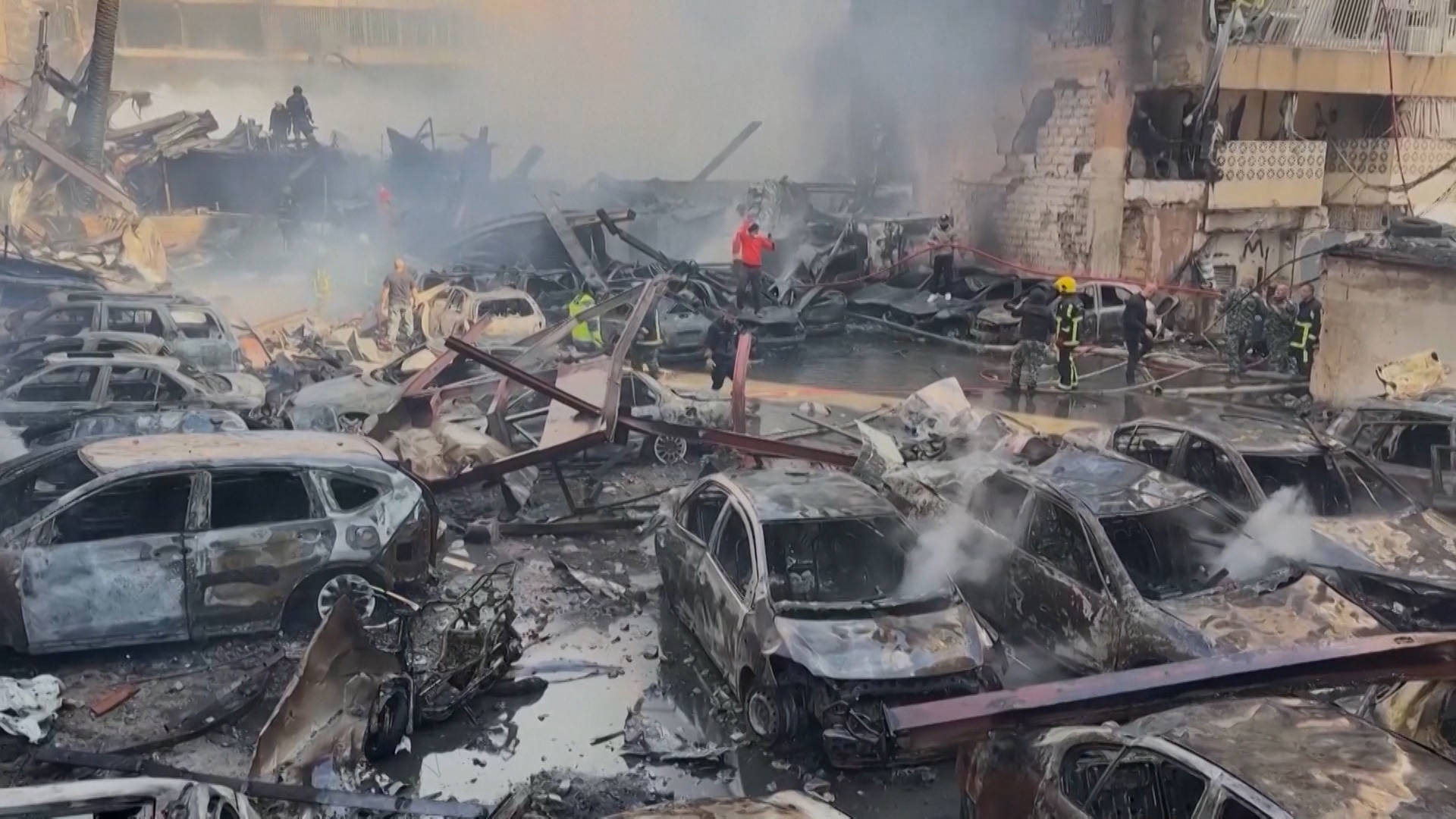
The sequence unfolded quickly. On April 8, Pakistani Prime Minister Shehbaz Sharif announced an immediate ceasefire "everywhere, including Lebanon." Iran echoed that language and warned the U.S. it must restrain Israel or forfeit the truce. Hours later Israeli jets struck more than 100 targets across Beirut, the Bekaa Valley and southern Lebanon. Lebanon's Health Ministry reported at least 203 dead and over 1,000 wounded; civil defense put the toll above 250. Israel said the operation hit Hezbollah command centers and killed an aide to the group's leader. It maintained the U.S.-Iran deal never covered its separate campaign against the Iran-backed militia.
President Trump reinforced that view. He described Lebanon as "a separate skirmish" and posted on Truth Social that U.S. forces would remain deployed until a "REAL AGREEMENT" is reached. If not, he wrote, "the 'Shootin' Starts,' bigger, and better, and stronger than anyone has ever seen before." Vice President JD Vance, tapped to lead talks with Iran in Islamabad on Saturday, called Iran's expectation that Lebanon was included a "legitimate misunderstanding." He added that it would be "dumb" for Tehran to let negotiations collapse over an issue Washington never accepted as part of the package.
Iran's parliament speaker, Mohammad Bagher Ghalibaf, countered that continued strikes on Lebanon carried "explicit costs and STRONG responses." Foreign Minister Abbas Araghchi said the U.S. must choose between ceasefire or "continued war via Israel." President Masoud Pezeshkian accused Israel of "renewed aggression" that rendered talks meaningless. At the same time, Iranian officials signaled they expect to charge $1 per barrel of oil transiting the Strait of Hormuz, payable in cryptocurrency, and retain the right to enrich uranium. Ship traffic through the waterway remained a fraction of normal levels; the White House denied Iranian claims of a renewed closure.
Netanyahu's government took a dual track. It insisted the truce "does not bind Israel in Lebanon" and vowed to keep striking Hezbollah until northern Israeli communities are secure. Yet Netanyahu also authorized direct negotiations with Lebanon, to begin next week in Washington, aimed at disarming Hezbollah and normalizing ties between the two countries technically at war since 1948. Lebanese officials have not yet responded.
The strikes hit densely populated neighborhoods, including areas with no apparent Hezbollah presence. Hospitals overflowed. Lebanon's parliament speaker called the attacks a "full-fledged war crime." The United Nations human rights chief labeled the destruction "horrific" and warned the violence endangered the larger U.S.-Iran truce. Qatar, Egypt, Turkey, Spain, France and the UK all condemned the scale of the assault and urged Lebanon's inclusion in any ceasefire. The UK foreign secretary told the BBC that continued strikes on Lebanon were "completely wrong."
Background matters for context. The wider conflict began February 28 with U.S. and Israeli strikes on Iran that killed Supreme Leader Ayatollah Ali Khamenei. Hezbollah, which had observed a November 2024 ceasefire with Israel despite mutual accusations of violations, launched rockets into northern Israel on March 2. That opened the current round of Lebanon fighting. Both sides have traded blame for breaching the 2024 deal more than 1,900 times according to Israeli counts. More than 1.2 million Lebanese have been displaced.
Unresolved issues loom over Saturday's talks. The fate of Iran's enriched uranium stockpile, its support for regional militias, and any future missile capability remain sticking points. Trump has insisted Iran will never be allowed nuclear weapons and that the strait must stay open without tolls. Iran has published versions of a 10-point plan that contradict those red lines. Gulf states, hit by Iranian drones and missiles during the fighting, are pressing for security guarantees and reparations while quietly diversifying defense ties beyond Washington.
One fact sits beside another. Israel struck Lebanon the same day the larger ceasefire was declared. Iran linked its restraint in the strait to an end to those strikes. The U.S. and Israel say the issues are separate. Hezbollah has resumed rocket fire. Negotiators head to Pakistan anyway. Whether diplomacy can outrun the contradictions remains unproven.
Outlets on the left such as Democracy Now, New Republic and Al Jazeera emphasized civilian casualties, Israeli aggression and Iranian warnings, often omitting Hezbollah's March rocket attacks and the explicit U.S.-Israeli exclusion of Lebanon from the start. Center outlets like NPR and the Guardian balanced reactions but still led with Lebanese suffering and UN criticism. Wire-service reporting carried by HuffPost offered the most even treatment of the ceasefire-scope dispute and Netanyahu's dual track of continued strikes alongside new talks, while the Washington Post focused on diplomatic contradictions without resolving them.
Behind the Coverage
aljazeera.com
Most biased
newrepublic.com
theguardian.com
huffpost.com
democracynow.org
npr.org
washingtonpost.com
Least biased
What each outlet got wrong
aljazeera.com
Framed Israeli strikes as deliberate sabotage of the ceasefire by leading with 'The attacks came just hours after the announcement... raised hopes of a de-escalation on all fronts,' implying unprovoked violation while burying US/Israel clarifications that the deal excludes Lebanon. Stacked sources heavily with critics like Lebanese Speaker Berri calling strikes a 'full-fledged war crime' and 10+ condemnatory quotes versus brief US/Israel responses.
Our version: The neutral version presents the sequence factually, noting Pakistani announcement included Lebanon but US/Israel explicitly excluded it, and balances quotes from all parties including Trump, Vance, Netanyahu, and Iranian officials.
newrepublic.com
Adopted loaded Iranian language like 'massacres in Lebanon' and 'Renewed aggression by the Zionist regime' without qualifiers, leading with three Iranian officials' quotes to portray Israel as primary aggressor while briefly mentioning Netanyahu/Vance later.
Our version: The neutral version uses neutral phrasing like 'Israeli airstrikes killed more than 250 in Lebanon' and equally presents incompatible accounts from US, Israel, and Iran without endorsing any side's terminology.
theguardian.com
Used aggressive verbs like 'Israel assaults Lebanon' and 'unleashed their heaviest attack' in the headline and body, pairing it with passive phrasing for Iran ('Iran blocks oil tankers'), while quoting Iran's speaker at length on violations but giving brief mentions to Netanyahu/Trump denials.
Our version: The neutral version describes events symmetrically, e.g., 'fresh Israeli airstrikes killed more than 250 in Lebanon, Iran restricted shipping through the Strait of Hormuz,' and details all parties' positions equally.
democracynow.org
Headlined 'Israel Launches Devastating Attacks on Lebanon, Killing Over 250 and Imperiling Iran Ceasefire Deal' and '10 Minutes, 100 Airstrikes: Israel Rejects Ceasefire for Lebanon,' framing strikes as unprovoked rejection using emotive terms like 'devastating' and 'barbaric' from Lebanese sources, with no Israeli military rationale.
Our version: The neutral version notes strikes targeted Hezbollah command centers per Israel, maintains the disputed ceasefire scope without declaring rejection, and includes background on Hezbollah's rocket fire resumption.
npr.org
Led with emotive photo of Beirut responders and vivid details like 'church bells rang... warplanes tore the skies' for Lebanese mourning (250+ killed), while burying Israeli explanation that Hezbollah dispersed among civilians; unverified claim of Gulf drone/missile attacks post-ceasefire.
Our version: The neutral version reports casualties from Lebanon's sources without primacy emotional visuals, includes Israeli targeting claims upfront, and sticks to verified escalations like Hezbollah rocket resumption.
washingtonpost.com
Framed as 'Trump’s Iran truce faces confusion, contradictions and fresh strain,' prioritizing Iranian rebuttals and unverified Netanyahu aide quote 'This is not a victory! This is a disgrace!' to depict disarray, while omitting Pakistani mediation details.
Our version: The neutral version acknowledges 'incompatible accounts' and unresolved issues but highlights the mediated pause holding amid talks, with balanced unresolved sticking points like uranium and proxies.
Facts outlets left out
Hezbollah launched rockets into northern Israel on March 2, initiating the current round of Lebanon fighting after US/Israeli strikes killed Khamenei.
Omitted by: aljazeera.com, newrepublic.com, theguardian.com, democracynow.org, npr.org
Strikes targeted over 100 Hezbollah command centers and killed an aide to Hezbollah leader Naim Qassem.
Omitted by: aljazeera.com, newrepublic.com, democracynow.org, theguardian.com
Both sides traded blame for over 1,900 breaches of the November 2024 Israel-Hezbollah ceasefire.
Omitted by: aljazeera.com, newrepublic.com, democracynow.org
Netanyahu authorized direct Israel-Lebanon negotiations next week in Washington to disarm Hezbollah and normalize ties.
Omitted by: aljazeera.com, newrepublic.com, theguardian.com, democracynow.org, npr.org
Iran signaled expectations for $1 per barrel oil tolls via cryptocurrency through Strait of Hormuz, with ship traffic at fraction of normal.
Omitted by: aljazeera.com, democracynow.org
Framing tricks we caught
Loaded headline
“Al Jazeera: 'Why Israel’s attacks on Lebanon could cripple US-Iran ceasefire'; Democracy Now: 'Israel Rejects Ceasefire for Lebanon, Kills 250+ in Massive Attack'”
Neutral alternative: Neutral version uses descriptive title 'Fragile US-Iran Ceasefire Faces Collapse Amid Israel-Lebanon Escalation and Strait of Hormuz Disputes,' highlighting mutual tensions without blame.
Source stacking
“New Republic leads with three Iranian quotes ('massacres in Lebanon,' 'STRONG responses') vs. brief Vance; Guardian quotes Iran extensively on 'violations' with minimal Netanyahu.”
Neutral alternative: Neutral version quotes equally from Trump, Vance, Netanyahu, Ghalibaf, Araghchi, and Pezeshkian to show incompatible accounts.
Emotional asymmetry
“NPR vivid Lebanese details ('church bells rang... warplanes tore the skies,' mourning photo) with no Israeli impacts; Al Jazeera 'bloodiest day,' 'entire neighbourhoods devastated.'”
Neutral alternative: Neutral version reports casualties factually from sources without emotive primacy, includes market/oil impacts affecting all sides.
Buried lede
“Al Jazeera buries Trump 'Lebanon... separate skirmish' after implying sabotage; WaPo leads with 'confusion, contradictions' burying mediation success.”
Neutral alternative: Neutral version leads with unraveling pause and core tension of disagreed scope, sequencing events chronologically with all views.
Source articles
More in Politics

Federal Agents Search Omar Home in Ongoing Immigration Probe
Homeland Security agents searched the Minnesota Democrat's DC residence in a criminal probe, prompting accusations of political intimidation from Omar and Democratic leaders. Coverage spans left-leaning outlets like NPR, BBC, and The Guardian alongside right-leaning criticism from The Federalist and Daily Wire.

Trump Diesel Import Plan Draws Pushback Over Russia Ties
The weekend agreement drew bipartisan congressional pushback and criticism from Ukraine's Zelenskyy, with analysts downplaying US fuel price impacts. Right-leaning outlets like National Review, Dispatch, and Washington Examiner questioned its legality and effectiveness.

Independents Test Voter Appetite for Middle Ground in 2026 Midterms
Nearly 200 independents are running in competitive races as voters weigh ballot measures on housing costs in states like Massachusetts. Left-leaning coverage from NYT, NPR, and Guardian highlights turnout and key races while right outlets focus on GOP strategy.
Trump Rallies in Alaska, Ohio to Bolster GOP Senate Candidates
The president rallied in Wasilla for Sen. Dan Sullivan and faced empty seats at an Ohio event amid midterm concerns. Outlets across the spectrum covered the trips as signals of GOP vulnerability weeks before Election Day.
The Compass
You just read five takes on one story.
What's your take? Find your political shape in a few minutes.
Take the test