
US Growth Slows to 0.5% in Q4 as Incomes Fall but Spending Holds
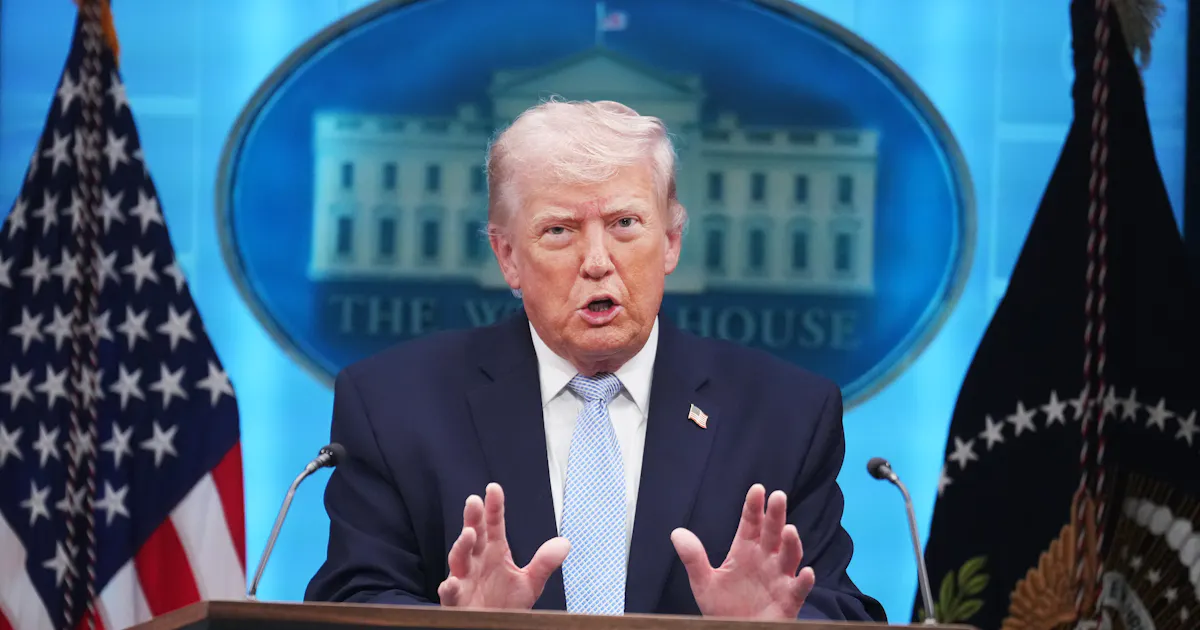
Cover image from newrepublic.com, which was analyzed for this article
Q4 GDP revised to sluggish 0.5%, personal income dipped 0.1% or $18.2B in February amid 3% inflation, but consumer spending rose solidly. Signals pre-war softening with labor steady. Philly Fed data awaited for more employment insights.
PoliticalOS
Thursday, April 9, 2026 — Business
The U.S. economy decelerated in late 2025 with GDP at 0.5 percent in Q4 and a modest February income drop, yet consumer spending rose solidly at 0.5 percent even as core inflation held at 3 percent. These mixed signals arrived amid a bipartisan shutdown and just before a fragile Iran ceasefire, showing resilience in household demand and wages but raising questions about sustainability if external shocks intensify. Readers should focus on the full BEA dataset and upcoming labor indicators rather than single metrics or political blame.
What outlets missed
Most coverage omitted that the 43-day government shutdown was a bipartisan congressional failure over spending bills rather than unilateral executive action, with both parties trading blame. Outlets also underplayed that wages and salaries continued rising in February even as overall income fell, and that real consumer spending posted a respectable 2.8 percent year-over-year gain. The absence of any NBER-defined recession, despite positive but slowing GDP, received little emphasis, as did the fact that the Iran conflict context involved a fragile two-week ceasefire with ongoing Lebanon disputes rather than sustained U.S. combat operations. Finally, few noted the upcoming Philadelphia Fed survey as a key upcoming indicator for employment trends in the manufacturing sector, which could clarify whether labor markets are truly steady or beginning to soften.
American households face thinner paychecks and prices that refuse to ease. Yet they continue spending at a solid pace. That tension runs through the latest economic reports: slowing growth, a dip in incomes, resilient consumers, all arriving just before heightened tensions with Iran.
The Bureau of Economic Analysis revised fourth-quarter 2025 GDP growth to an annual rate of 0.5 percent, down from its prior estimate of 0.7 percent and well below the third quarter's 4.4 percent surge. For the full year 2025 the economy expanded 2.1 percent, according to the agency, compared with 2.8 percent in 2024. A 43-day government shutdown spanning October and November, triggered by a congressional impasse over spending legislation that included Affordable Care Act subsidies, cut federal spending and investment by an estimated 16.6 percent and subtracted 1.16 percentage points from Q4 growth, per secondary analyses citing BEA figures. The latest revision also reflected weaker private inventory investment, especially in wholesale trade, based on updated Census Bureau data. Gains in information services, healthcare and wholesale trade partially offset declines in federal government activity and nondurable goods manufacturing. Thirty-five states saw GDP rise, led by North Dakota at 3.8 percent; the District of Columbia fell 8.3 percent.
February 2026 brought more mixed signals. Personal income dropped $18.2 billion, or 0.1 percent, the BEA reported. Disposable income fell at the same rate. The decline stemmed from lower personal dividend income, down $39.7 billion, and reduced current transfer receipts, including a $34.4 billion drop in other government social benefits linked to Affordable Care Act enrollment estimates. Wages and salaries rose. Consumer spending, by contrast, increased $103.2 billion, or 0.5 percent, after a 0.3 percent gain the prior month. Purchases of goods rose $58.7 billion and services $44.5 billion, with motor vehicles and parts adding $32.6 billion, healthcare $15.7 billion and financial services $10.4 billion. Year-over-year nominal spending climbed 5.34 percent; real spending, after inflation, rose 0.1 percent in the month and 2.8 percent from a year earlier. The personal saving rate slipped to 4.0 percent from 4.5 percent.
Inflation held steady above the Federal Reserve's target. The core personal consumption expenditures price index, which excludes food and energy, stood at 3.0 percent year-over-year. The headline PCE index rose 2.8 percent from the prior year. The report, delayed more than a week by lingering shutdown effects, covers the period immediately before the U.S. and Iran entered a two-week ceasefire agreement that included reopening the Strait of Hormuz. Labor markets remained steady, with unemployment at 4.4 percent and private-sector job gains continuing, though analysts await the Philadelphia Fed's business outlook survey for fresher regional employment and manufacturing signals.
The numbers paint no simple picture. Growth has clearly decelerated. Incomes softened outside of wages. Consumers nevertheless kept buying, suggesting underlying confidence supported by low layoffs and prior real wage gains. Whether that resilience persists amid geopolitical friction, sticky prices and the risk of further federal spending volatility remains the open question. The BEA itself offered no recession call; the National Bureau of Economic Research defines such periods by sustained, broad declines rather than any arbitrary sub-2-percent threshold. Full-year growth stayed positive. The data releases, stripped of later political overlays, show an economy losing speed yet not stalled, with households still powering demand even as external shocks loomed.
Coverage ranged from outright partisan attack to measured data recitation to upbeat business optimism. New Republic pinned the entire slowdown on Trump, invented a recession and pivoted to unrelated culture-war topics. UPI outlets stayed closest to the BEA release, offering dry, sourced summaries with only light framing on worker impacts or elevation of inflation. Breitbart highlighted consumer strength and market positives, minimizing sticky prices and confidence risks to portray underlying health. The result is a classic split: one side sees crisis and culpability, another sees resilience worth celebrating, while wire reporting occupies the factual middle.
Behind the Coverage
newrepublic.com
Most biased
upi.com
upi.com
breitbart.com
Least biased
What each outlet got wrong
newrepublic.com
Used hyperbolic title and framing to blame Trump alone for GDP slowdown, claiming 'Trump Has Sent America’s GDP Into a Downward Spiral' and 'America’s economic growth is officially in free fall,' while falsely stating 'If GDP growth is beneath 2 percent annually, that can typically be considered a recession.' Also exaggerated into 'Trump’s increasingly expensive war in Iran' despite a ceasefire.
Our version: Described the GDP revision neutrally as deceleration from 4.4% in Q3 to 0.5% due to bipartisan shutdown and inventory adjustments, with full-year growth at 2.1%, explicitly noting no recession per NBER definition and ceasefire context without political blame.
upi.com
In GDP article, framed slowdown 'due largely to slower-than-expected investment' quoting BEA on private inventory, but included unverified state income declines like 'North Dakota... down 4%'; income article led with 'Personal incomes of American workers fell' emphasizing worker impact despite non-wage causes.
Our version: Detailed precise BEA causes like shutdown subtracting 1.16 points, dividend/transfer drops, and wage rises, with balanced sectoral offsets and state GDP data without unverified income claims or worker-specific framing.
breitbart.com
Applied rosy framing to mixed data with title 'Consumer Spending Rose At Solid Pace in February' and claims of 'strong consumer demand, undermining suggestions that consumers have been exhausted,' despite income dip and 3.0% core inflation, using unverified details like '$32.6 billion rise in motor vehicles.'
Our version: Presented spending resilience ($103.2 billion rise) alongside income drop, saving rate slip to 4.0%, and steady above-target inflation (core PCE 3.0%) as part of 'no simple picture' without optimistic spin or unsubstantiated breakdowns.
Facts outlets left out
Bipartisan 43-day government shutdown over congressional spending impasse including ACA subsidies subtracted 1.16 points from Q4 GDP
Omitted by: newrepublic.com, upi.com
Full-year 2025 GDP expanded 2.1% (positive growth); wages/salaries rose despite overall income dip; 35 states saw GDP gains
Omitted by: newrepublic.com, upi.com
Core PCE inflation at 3.0% YoY exceeds Fed's 2% target; real spending up 0.1% MoM/2.8% YoY; no NBER recession call
Omitted by: breitbart.com, upi.com
Framing tricks we caught
Loaded headline
“newrepublic.com: 'Trump Has Sent America’s GDP Into a Downward Spiral'”
Neutral alternative: Neutral rewrite uses descriptive lede on 'slowing growth, a dip in incomes, resilient consumers' without blame.
Hyperbolic causal attribution
“newrepublic.com: 'The surprising economic slow-down... can be attributed to the government shutdown' tied directly to Trump, ignoring bipartisan context”
Neutral alternative: Neutral rewrite attributes to shutdown (with congressional details), inventory data, and offsets without naming politicians.
Rosy spin on mixed data
“breitbart.com: 'strong consumer demand... undermining suggestions that consumers have been exhausted by persistent inflation'”
Neutral alternative: Neutral rewrite notes 'consumers nevertheless kept buying, suggesting underlying confidence' amid 'sticky prices' and open questions.
Source articles
More in Business & Economy

Major Banks Deliver Mixed Q3 Results on Trading Beats
JPMorgan, Goldman Sachs, Citigroup, and Wells Fargo reported Q3 figures, with revenue beats in trading but some estimate misses. CNBC provided live updates on the results and market reactions.

Oil Falls on Russian Diesel Outlook Despite Geopolitical Risks
Dow futures rose while Nasdaq faced pressure from tech weakness and elevated oil after geopolitical spikes. CNBC tracked premarket moves tied to earnings and Fed speeches.

Hall and Woodford Win Economics Nobel for Stabilization Models
American economists Robert E. Hall and Michael Woodford won the Nobel memorial prize for their research on managing economies through booms and busts, informing central bank policies on inflation and unemployment.

Skydance Closes Paramount-Warner Bros. Discovery Deal
The long-delayed media mega-merger cleared hurdles and began operations under Skydance, consolidating Hollywood power. Center and center-left outlets track the regulatory and business milestones.
The Compass
You just read five takes on one story.
What's your take? Find your political shape in a few minutes.
Take the test