
US Enforces Full Blockade on Iranian Ports, Halting All Seaborne Trade

Cover image from aljazeera.com, which was analyzed for this article
The US military announced the complete enforcement of the naval blockade on Iranian ports and the Strait of Hormuz, turning back ships and stopping all seaborne trade including oil exports. This move intensifies economic pressure on Iran during the ongoing conflict. Coverage spans concerns over escalation risks and strategic implications.
PoliticalOS
Wednesday, April 15, 2026 — Politics
The U.S. blockade has demonstrably disrupted Iran's maritime trade within days, applying acute economic pressure after nuclear talks collapsed, yet the action rests on unverified long-term success claims and coincides with signals that diplomacy may resume before the ceasefire lapses. Readers should understand this as the latest phase in a conflict triggered by February strikes on Iranian sites, where Iran's prior strait restrictions and enrichment stance formed core disputes. The single most important reality is the narrow margin between intensified isolation that could force concessions and the genuine risk of escalation that disrupts global energy flows for everyone.
What outlets missed
Most coverage omitted or downplayed the precise operational scope clarified by CENTCOM: the blockade targets Iranian-flagged or Iran-bound vessels and ports along the full southern coastline but explicitly permits inspected neutral shipping through the Strait of Hormuz itself, plus humanitarian exemptions. Few outlets noted early unverified reports from day-two video footage suggesting three vessels may have evaded full enforcement, a detail that challenges the "complete halt" claim without independent satellite confirmation. Analyses also underplayed Iran's pre-blockade restrictions on Hormuz traffic that began in March, which already disrupted 98 percent of its oil exports to China and contributed directly to the price surge. Broader war context, including specific Iranian proxy actions and nuclear enrichment levels cited by the IAEA prior to the February 28 strikes, received uneven treatment, leaving readers without a full timeline of escalation. Finally, U.S. and allied casualties, estimated at 13-15 American troops killed and hundreds wounded, were rarely quantified alongside Iranian and Lebanese figures.
US Blockade Chokes Iranian Economy as Trump Claims Progress on Talks
The United States announced Wednesday that its naval blockade has completely halted all maritime trade to and from Iran, a drastic escalation that comes even as President Donald Trump expressed optimism that direct negotiations with Tehran could resume within days. The move, involving more than 10,000 American troops, warships, fighter jets and surveillance aircraft, underscores the persistent gap between Washington's diplomatic rhetoric and its military actions in a conflict that has already devastated the region.
U.S. Central Command, which is overseeing the operation, declared the blockade "fully implemented" just 36 hours after it began on Monday. Admiral Brad Cooper, CENTCOM commander, said in a statement that American forces had turned back vessels from multiple nations attempting to enter or leave Iranian ports along the southern coastline, including those in the Persian Gulf and the Gulf of Oman. Six merchant ships complied with orders to return to Iranian ports in the first day alone, according to military officials. A U.S. Navy destroyer intercepted two oil tankers departing from Iran's Chabahar port on Tuesday.
The blockade effectively seals off the Strait of Hormuz, the chokepoint through which much of the world's oil supply passes. Roughly 90 percent of Iran's economy depends on seaborne trade, meaning the action amounts to a near-total economic siege on a country already battered by more than a month of U.S. and Israeli military strikes. Oil prices, which had surged above $104 a barrel amid the fighting, fluctuated Wednesday as markets weighed the blockade against Trump's latest comments on talks.
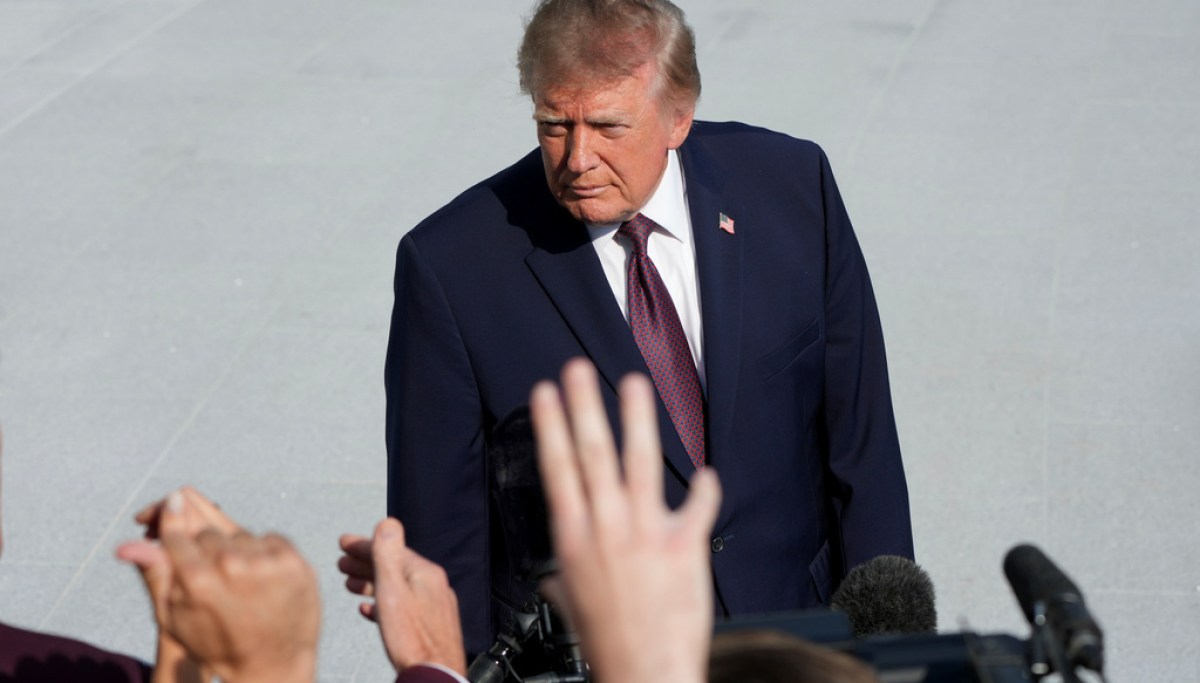
Speaking to reporters, Trump said negotiations between U.S. and Iranian officials could restart in Pakistan as soon as this week. He told ABC News that he did not expect to extend a two-week ceasefire due to expire on April 21, adding that a deal would allow Iran to "rebuild" under what he described as a "different regime" following the removal of "radicals." Vice President JD Vance, who led the American side in last weekend's talks in Islamabad that ended without agreement, struck a similarly positive tone, saying he was encouraged by the direction of discussions.
Pakistani, Iranian and Gulf officials confirmed that negotiating teams may return to Islamabad soon, though one senior Iranian source cautioned that no firm date has been set. The talks represent the first direct high-level contact between Washington and Tehran in nearly five decades, mediated by Pakistan in a rare display of regional diplomacy. For critics of U.S. policy, the timing of the blockade raises serious questions about whether military pressure is being used to sabotage these fragile efforts rather than support them.
The Pentagon's decision to enforce the blockade with overwhelming force recalls the 1980s Tanker War, when the Reagan administration intervened to protect shipping in the Gulf. Yet the current context is markedly different. This is not a limited escort mission but part of a broader U.S.-Israeli campaign against Iran that has left its infrastructure in ruins and its population under immense strain. Retired diplomat Chas Freeman recently described the Trump administration's approach as that of "an untrustworthy expansionist power that substitutes unilateral diktats, intimidation, and the use of force for diplomacy."
That critique resonates as the blockade risks triggering a wider confrontation. The Strait of Hormuz has long been considered one of the most dangerous flashpoints in global politics. Any Iranian attempt to challenge the American presence, whether through mines, missiles or proxy forces, could rapidly escalate into a naval clash with unpredictable consequences for the global economy. Already the operation has drawn condemnation from those who argue that regional actors, not Washington, should lead efforts to de-escalate.
The blockade also fits a larger pattern in Trump's second-term foreign policy, one marked by simultaneous confrontations with multiple nations. Venezuela, another oil-producing state long targeted with sanctions and regime-change rhetoric, has found itself grouped with Iran in administration rhetoric. Both countries have endured crippling economic pressure justified in the name of countering terrorism and weapons proliferation, with ordinary citizens bearing the heaviest costs.
Supporters of the administration's hard line point to Iran's past interference with shipping and its nuclear program as justification for decisive action. They argue that only maximum pressure can force genuine concessions. Yet the weekend talks in Pakistan suggested Tehran was open to engagement, only for the U.S. military to tighten its grip before diplomats could return to the table. Vice President Vance claimed the American side had shown flexibility while Iran rejected core demands, including verifiable commitments not to pursue nuclear weapons. Iranian officials have countered that Washington's shifting goalposts and continued military escalation make agreement impossible.
As the ceasefire deadline approaches, the world is left watching a familiar script: American officials speak of peace while their forces implement what amounts to economic warfare. The human toll is already severe. Iran's economy, long hobbled by sanctions, now faces total isolation by sea. Global energy markets remain on edge. And the risk of miscalculation in the narrow waters of the Strait of Hormuz looms larger than ever.
Whether the coming days in Pakistan bring a genuine breakthrough or merely more broken promises will determine if this blockade becomes a temporary lever or the opening act of a protracted naval campaign. For now, the message from Washington appears unambiguous: diplomacy may be discussed, but American military power will continue to dictate terms in the Gulf. The people of Iran, caught between their own government's choices and relentless external pressure, will pay the price as they have for years.
You just read Progressive's take. Want to read what actually happened?
More in Politics

Federal Agents Search Omar Home in Ongoing Immigration Probe
Homeland Security agents searched the Minnesota Democrat's DC residence in a criminal probe, prompting accusations of political intimidation from Omar and Democratic leaders. Coverage spans left-leaning outlets like NPR, BBC, and The Guardian alongside right-leaning criticism from The Federalist and Daily Wire.

Trump Diesel Import Plan Draws Pushback Over Russia Ties
The weekend agreement drew bipartisan congressional pushback and criticism from Ukraine's Zelenskyy, with analysts downplaying US fuel price impacts. Right-leaning outlets like National Review, Dispatch, and Washington Examiner questioned its legality and effectiveness.

Independents Test Voter Appetite for Middle Ground in 2026 Midterms
Nearly 200 independents are running in competitive races as voters weigh ballot measures on housing costs in states like Massachusetts. Left-leaning coverage from NYT, NPR, and Guardian highlights turnout and key races while right outlets focus on GOP strategy.
Trump Rallies in Alaska, Ohio to Bolster GOP Senate Candidates
The president rallied in Wasilla for Sen. Dan Sullivan and faced empty seats at an Ohio event amid midterm concerns. Outlets across the spectrum covered the trips as signals of GOP vulnerability weeks before Election Day.
The Compass
You just read five takes on one story.
What's your take? Find your political shape in a few minutes.
Take the test