
US Strike Kills Two on Suspected Drug Vessel in Eastern Pacific
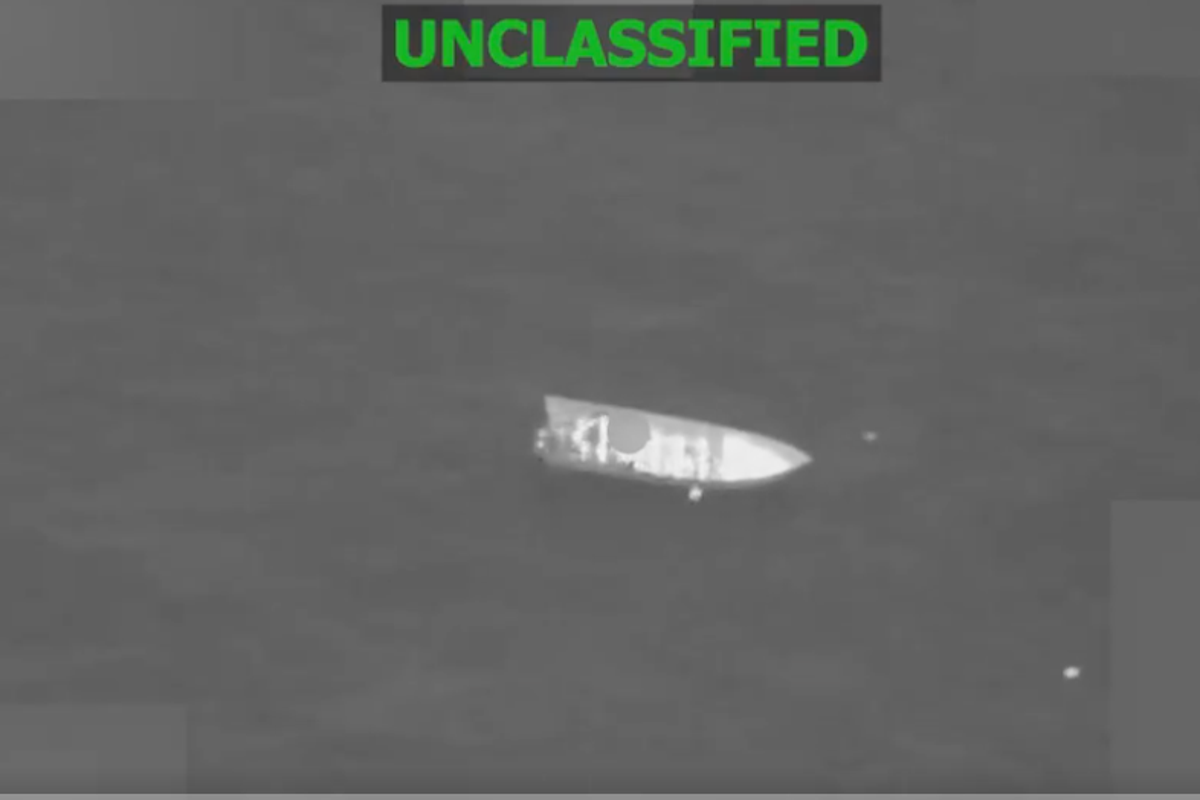
Cover image from independent.co.uk, which was analyzed for this article
US military targeted another alleged drug-trafficking vessel in the Pacific Ocean, resulting in two deaths. This continues operations against narco networks. The action underscores ongoing counter-drug efforts.
PoliticalOS
Tuesday, April 14, 2026 — Politics
The United States has now killed at least 170 people in nearly seven months of strikes on vessels suspected of drug trafficking under Operation Southern Spear, relying on intelligence about narco-routes and links to designated terrorist organizations. No outlet has reported physical drugs recovered from these specific vessels, and legal experts continue to question whether lethal force against suspected criminals at sea meets international standards. Readers should weigh the military's stated goal of disrupting networks that feed the U.S. overdose crisis against the absence of transparent evidence and the mounting death toll.
What outlets missed
All three outlets underplayed or omitted the formal designation of targeted vessels as operated by Designated Terrorist Organizations, a detail repeatedly included in primary Southern Command releases that reframes the actions as counter-terrorism as much as counter-narcotics. Coverage also varied widely on the precise name and scope of Operation Southern Spear, with some skipping its September 2025 launch tied to executive decisions designating cartels as foreign terrorist organizations. Legal debates received one-sided treatment: skeptical outlets highlighted extrajudicial concerns without noting any countervailing government legal justifications, while the pro-military account ignored documented human rights hearings entirely. Finally, discrepancies in exact strike counts (46 versus 49) and the absence of recovered narcotics across multiple actions went unaddressed, leaving readers without a clear picture of evidentiary standards applied in real time.
U.S. Military Intensifies Campaign Against Narco Trafficking in Pacific Killing Two More
The U.S. military conducted another lethal strike Monday against a vessel suspected of drug trafficking in the eastern Pacific, killing two men and adding to a sustained campaign that has now claimed at least 170 lives since early September. The operation, part of what the Pentagon calls Joint Task Force Southern Spear, reflects a consistent policy of disrupting smuggling routes that have long fed the deadly flow of narcotics into American communities.
U.S. Southern Command, led by Marine Corps Gen. Francis L. Donovan, announced the strike on social media and its website, describing the target as a vessel operated by designated terrorist organizations. Intelligence indicated the boat was traveling along established narco-trafficking corridors and actively engaged in such operations, the command said. An 18-second video posted to X showed a small vessel floating calmly before a powerful explosion engulfed it in smoke and debris.
The action marked the third announced strike in April and the 49th since the campaign began. Just one day earlier, Southern Command reported destroying two boats on Saturday, killing five suspected traffickers with one survivor whose condition remains unknown. That brings the toll to seven deaths in the past three days alone. The pace has accelerated even as the military devoted six weeks to operations involving Iran, demonstrating that the effort against Latin American smuggling networks has become a persistent priority rather than a temporary surge.
President Trump has framed these actions as part of an armed conflict with cartels that function as sophisticated criminal enterprises preying on U.S. demand for drugs. The administration links the interdictions directly to the toll of fatal overdoses that have devastated families across the country. This latest strike occurred months after the January raid that captured former Venezuelan President Nicolás Maduro, who faces drug trafficking charges in New York and has pleaded not guilty. The boat interdiction program predates that high-profile operation but fits within the same logic of applying pressure at the source.
Military statements emphasize that the targets are not random fishermen but participants in networks that move cocaine, fentanyl precursors, and other substances northward. The command has repeatedly used the term "narco-terrorists" to describe those killed, underscoring the view that these organizations operate with the violence and organizational reach once associated with terrorist groups. Evidence of actual drugs on each vessel has not always been publicly displayed, a point critics have noted, but officials maintain that intelligence and pattern-of-life analysis along known routes provide sufficient confirmation.
The campaign has drawn legal objections. Specialists in the law of armed conflict argue that deliberately targeting individuals suspected of criminal activity, without an imminent threat of violence, stretches the bounds of what military force may lawfully do against civilians. The Trump administration rejects that characterization, treating the cartels as belligerents in an ongoing threat to national security rather than mere domestic criminals operating beyond U.S. borders.
The human stakes driving the policy are clear. Cartels have industrialized the production and distribution of synthetic opioids, contributing to overdose rates that have strained hospitals, morgues, and families in both urban and rural areas. Previous strategies relying heavily on interdiction at the border or demand-reduction programs have shown limited success against maritime smuggling that exploits vast ocean spaces and fast boats. By taking the fight to the vessels before their cargo reaches Central American shores or the U.S. southwest border, the current approach seeks to impose what Southern Command calls "total systemic friction" on cartel logistics.
Whether the body count will ultimately reduce the supply of drugs on American streets remains an open empirical question, one that future data on overdose statistics and price fluctuations may help answer. For now, the operations continue methodically. Gen. Donovan's command shows no sign of letting the tempo slacken, issuing each announcement with similar language that highlights intelligence-driven targeting along predictable routes.
The Monday strike fits a pattern established over seven months. Small vessels, often go-fast boats with limited crew, are engaged far from land. The use of precision munitions minimizes risk to U.S. personnel while sending an unambiguous message that the transit lanes once considered relatively safe for traffickers now carry mortal risk. One survivor from the previous day's operations may offer investigators additional information, though Southern Command has released few details about his custody or cooperation.
As the campaign enters its eighth month, it operates alongside diplomatic and law enforcement efforts against cartel leadership. The capture of Maduro signaled that even heads of state allegedly entangled in the trade enjoy no immunity. Taken together, these steps represent a shift from treating drug trafficking primarily as a policing matter to addressing it as a hybrid threat requiring military tools.
Critics who focus solely on the legality of strikes against non-state actors overlook the daily reality confronting U.S. authorities: shipments that evade detection contribute directly to the poison killing thousands of Americans each month. Supporters counter that sovereignty includes the right to defend one's citizens from external predators who have turned parts of Latin America into narco-states. The military's video evidence, however stark, leaves little doubt about the finality of the outcome once a target is engaged.
The latest deaths will likely add to the running tally without fanfare in most American cities, yet each disruption carries cumulative weight. If the policy succeeds in raising the cost of smuggling enough to shrink the volume of drugs reaching U.S. shores, the trade-off of lethal force against committed traffickers may come to be seen as a grim but necessary calculation. For the families who have lost loved ones to overdoses, the abstract legal debates matter less than whether the next shipment makes it through. The Southern Command's latest strike keeps the pressure on, one vessel at a time.
You just read Conservative's take. Want to read what actually happened?
More in Politics

Federal Agents Search Omar Home in Ongoing Immigration Probe
Homeland Security agents searched the Minnesota Democrat's DC residence in a criminal probe, prompting accusations of political intimidation from Omar and Democratic leaders. Coverage spans left-leaning outlets like NPR, BBC, and The Guardian alongside right-leaning criticism from The Federalist and Daily Wire.

Trump Diesel Import Plan Draws Pushback Over Russia Ties
The weekend agreement drew bipartisan congressional pushback and criticism from Ukraine's Zelenskyy, with analysts downplaying US fuel price impacts. Right-leaning outlets like National Review, Dispatch, and Washington Examiner questioned its legality and effectiveness.

Independents Test Voter Appetite for Middle Ground in 2026 Midterms
Nearly 200 independents are running in competitive races as voters weigh ballot measures on housing costs in states like Massachusetts. Left-leaning coverage from NYT, NPR, and Guardian highlights turnout and key races while right outlets focus on GOP strategy.
Trump Rallies in Alaska, Ohio to Bolster GOP Senate Candidates
The president rallied in Wasilla for Sen. Dan Sullivan and faced empty seats at an Ohio event amid midterm concerns. Outlets across the spectrum covered the trips as signals of GOP vulnerability weeks before Election Day.
The Compass
You just read five takes on one story.
What's your take? Find your political shape in a few minutes.
Take the test