
US Strike Kills Two on Suspected Drug Vessel in Eastern Pacific
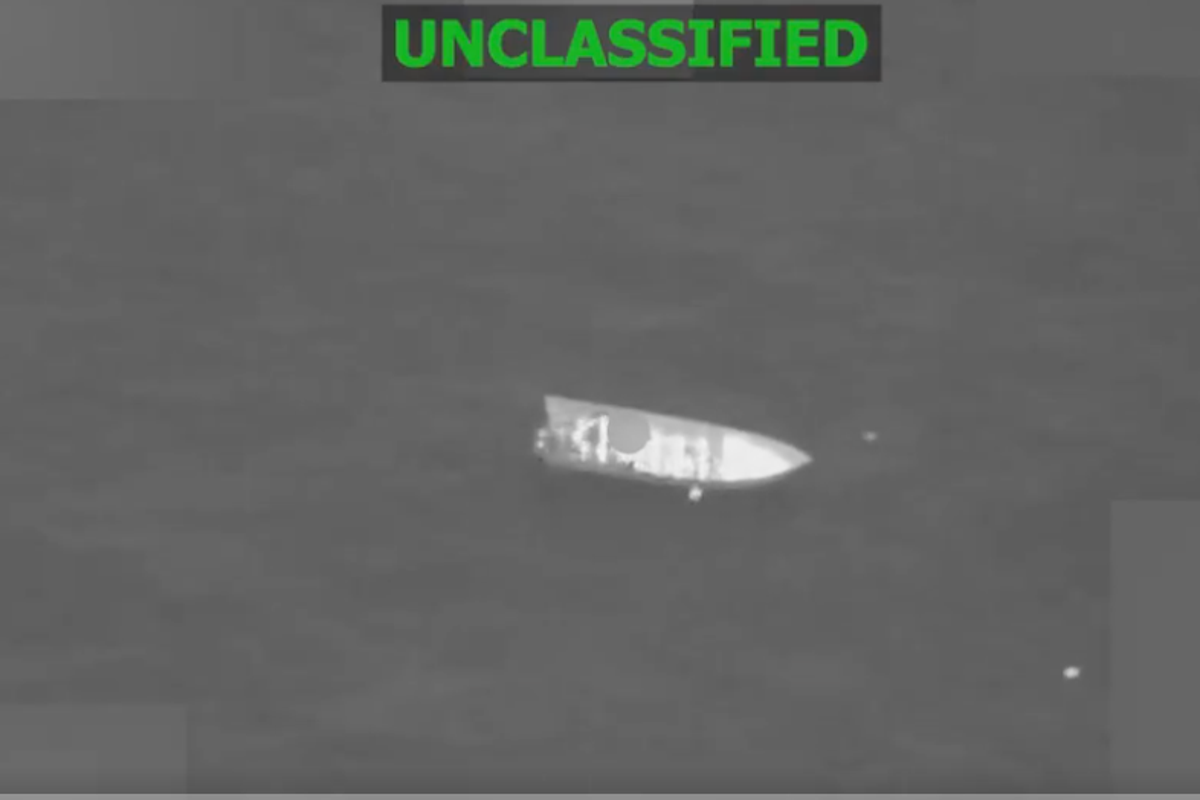
Cover image from independent.co.uk, which was analyzed for this article
US military targeted another alleged drug-trafficking vessel in the Pacific Ocean, resulting in two deaths. This continues operations against narco networks. The action underscores ongoing counter-drug efforts.
PoliticalOS
Tuesday, April 14, 2026 — Politics
The United States has now killed at least 170 people in nearly seven months of strikes on vessels suspected of drug trafficking under Operation Southern Spear, relying on intelligence about narco-routes and links to designated terrorist organizations. No outlet has reported physical drugs recovered from these specific vessels, and legal experts continue to question whether lethal force against suspected criminals at sea meets international standards. Readers should weigh the military's stated goal of disrupting networks that feed the U.S. overdose crisis against the absence of transparent evidence and the mounting death toll.
What outlets missed
All three outlets underplayed or omitted the formal designation of targeted vessels as operated by Designated Terrorist Organizations, a detail repeatedly included in primary Southern Command releases that reframes the actions as counter-terrorism as much as counter-narcotics. Coverage also varied widely on the precise name and scope of Operation Southern Spear, with some skipping its September 2025 launch tied to executive decisions designating cartels as foreign terrorist organizations. Legal debates received one-sided treatment: skeptical outlets highlighted extrajudicial concerns without noting any countervailing government legal justifications, while the pro-military account ignored documented human rights hearings entirely. Finally, discrepancies in exact strike counts (46 versus 49) and the absence of recovered narcotics across multiple actions went unaddressed, leaving readers without a clear picture of evidentiary standards applied in real time.
US Forces Hammer Another Cartel Drug Boat in Pacific Killing Two More Narco Terrorists
The United States military destroyed another suspected cartel vessel in the eastern Pacific on Monday killing two men described as narco-terrorists and pushing the death toll in President Trump's campaign against drug smugglers past 170. This latest strike comes as the Pentagon ramps up operations even while American forces remain heavily committed to the conflict with Iran showing that the administration is determined to treat the cartels as the national security threat they have become.
U.S. Southern Command announced the action on social media complete with an 18-second video that shows a small boat floating calmly before a massive explosion rips through it sending smoke billowing into the air. Officials said the strike was carried out at the direction of Gen. Francis L. Donovan commander of Southern Command and its Joint Task Force Southern Spear. Intelligence indicated the vessel was moving along established narco-trafficking routes and actively engaged in smuggling operations they said. No evidence of actual drugs was publicly presented just as in previous strikes.
The pace has clearly picked up. This was the third announced strike in April alone. Seven suspected traffickers have been killed in the past three days. Sunday's operation took out two boats and five people with one survivor whose status remains unknown. The Monday strike marked the 49th since the campaign began in early September. What started as a focused effort has now stretched into a sustained armed conflict with the cartels just as Trump has described it.
The human cost on the American side is what makes these operations hard to dismiss. Fentanyl and other poisons manufactured in cartel labs and shipped north have killed hundreds of thousands of our fellow citizens. Entire communities have been hollowed out by overdoses that hit young people hardest. For years politicians talked about the problem while doing little to stop the flow. Trump has taken a different approach treating the cartels as the terrorist organizations they are rather than mere criminals who deserve lawyers and Miranda rights.
Critics including some legal specialists have complained that these strikes amount to extrajudicial killings. They argue the military cannot target people at sea who do not pose an immediate violent threat even if those people are moving product that will later kill Americans. The administration has shown little patience for such arguments. Cartels do not fill out customs forms or respect maritime law. They operate as sophisticated criminal armies with submarines speed boats and encrypted communications that laugh at traditional law enforcement. Waiting for them to reach our borders before acting has already proven disastrous.
This latest round of strikes predates the daring January raid that captured Nicolás Maduro the former Venezuelan leader now facing drug trafficking charges in New York. Maduro has pleaded not guilty but his removal from power only underscored how deeply the cartels had penetrated governments across Latin America. The boats targeted in the Pacific are part of the same network moving cocaine methamphetamine and fentanyl precursors that fuel violence in Mexico and addiction in American cities from Portland to Philadelphia.
Southern Command has repeatedly emphasized that it applies "total systemic friction" on the cartels. The phrase sounds bureaucratic but the results are not. Boats are being blown out of the water along routes long used by smugglers who once operated with near impunity. The campaign continues despite the immense demands placed on the military by events in the Middle East. That fact alone should quiet critics who claim the administration is distracted or unserious about the border.
Trump himself appeared to link the Latin American operations to his warnings against Tehran on Monday suggesting a consistent view that threats must be met with decisive force rather than diplomatic gestures that achieve nothing. The video evidence released by the military leaves little doubt about the effectiveness of the strikes even if the full intelligence picture remains classified. A stationary vessel disappears in a fireball. Another link in the chain is broken.
Whether 170 deaths will ultimately break the cartels remains an open question. These organizations have shown remarkable ability to adapt replacing lost boats and personnel with ruthless efficiency. Yet doing nothing was never an option. Previous administrations spent decades chasing minimal interdiction rates while overdose deaths skyrocketed. The current approach at least acknowledges the scale of the emergency. Americans are not sending their sons and daughters to fight in endless desert wars anymore. Instead the military is striking at the source of a poison killing us at home.
The administration has framed these actions as self-defense and it is difficult to argue with the underlying logic. When foreign criminal enterprises flood your country with deadly narcotics while raking in billions the response cannot be limited to press conferences and funding for treatment centers. The cartels understand force. For the first time in years they appear to be facing some of it directly at sea where they once operated freely.
As the campaign enters its eighth month the Pentagon shows no signs of letting up. More strikes are likely along the same routes. Each one carries risks and each one raises the same questions about long-term strategy. But with American lives still being lost to cartel poison every single day the alternative of returning to the old hands-off approach looks increasingly indefensible. The boats keep coming. For now at least so do the American missiles.
You just read America First's take. Want to read what actually happened?
More in Politics

Federal Agents Search Omar Home in Ongoing Immigration Probe
Homeland Security agents searched the Minnesota Democrat's DC residence in a criminal probe, prompting accusations of political intimidation from Omar and Democratic leaders. Coverage spans left-leaning outlets like NPR, BBC, and The Guardian alongside right-leaning criticism from The Federalist and Daily Wire.

Trump Diesel Import Plan Draws Pushback Over Russia Ties
The weekend agreement drew bipartisan congressional pushback and criticism from Ukraine's Zelenskyy, with analysts downplaying US fuel price impacts. Right-leaning outlets like National Review, Dispatch, and Washington Examiner questioned its legality and effectiveness.

Independents Test Voter Appetite for Middle Ground in 2026 Midterms
Nearly 200 independents are running in competitive races as voters weigh ballot measures on housing costs in states like Massachusetts. Left-leaning coverage from NYT, NPR, and Guardian highlights turnout and key races while right outlets focus on GOP strategy.

Trump Rallies in Alaska, Ohio to Bolster GOP Senate Candidates
The president rallied in Wasilla for Sen. Dan Sullivan and faced empty seats at an Ohio event amid midterm concerns. Outlets across the spectrum covered the trips as signals of GOP vulnerability weeks before Election Day.
The Compass
You just read five takes on one story.
What's your take? Find your political shape in a few minutes.
Take the test