
US Strike Kills Two on Suspected Drug Vessel in Eastern Pacific
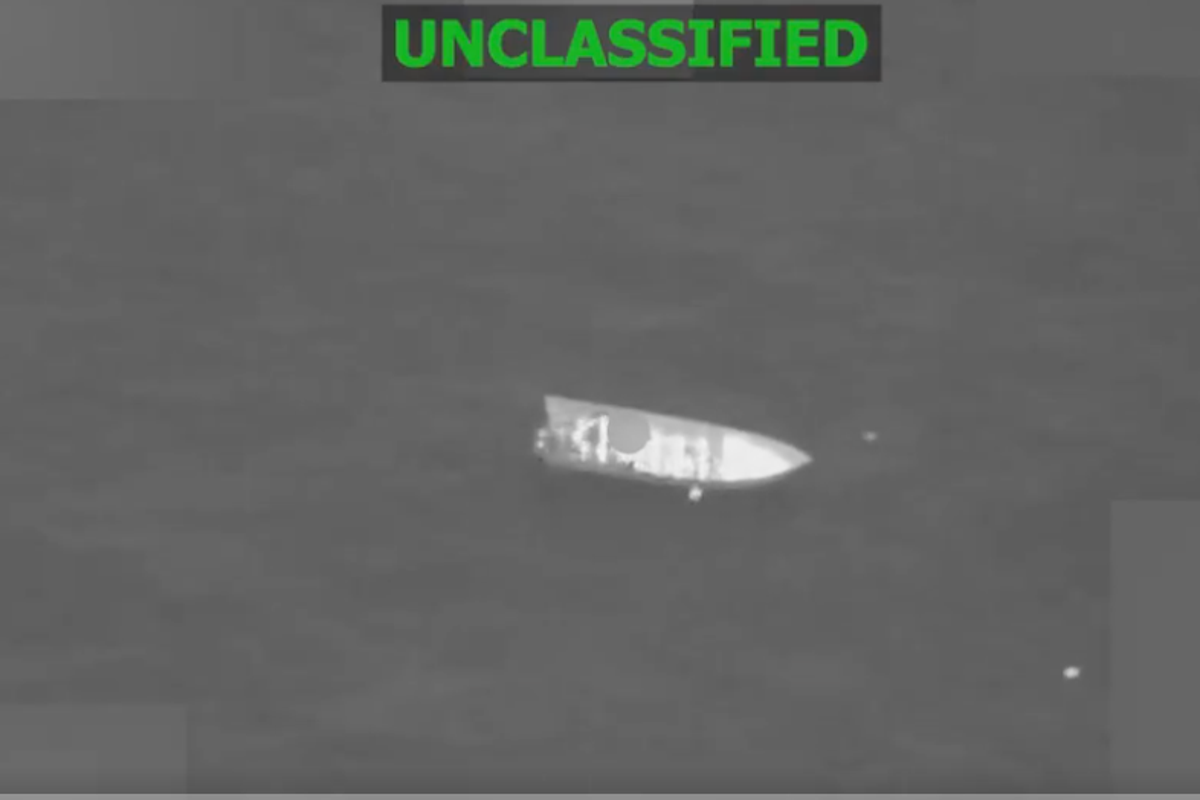
Cover image from independent.co.uk, which was analyzed for this article
US military targeted another alleged drug-trafficking vessel in the Pacific Ocean, resulting in two deaths. This continues operations against narco networks. The action underscores ongoing counter-drug efforts.
PoliticalOS
Tuesday, April 14, 2026 — Politics
The United States has now killed at least 170 people in nearly seven months of strikes on vessels suspected of drug trafficking under Operation Southern Spear, relying on intelligence about narco-routes and links to designated terrorist organizations. No outlet has reported physical drugs recovered from these specific vessels, and legal experts continue to question whether lethal force against suspected criminals at sea meets international standards. Readers should weigh the military's stated goal of disrupting networks that feed the U.S. overdose crisis against the absence of transparent evidence and the mounting death toll.
What outlets missed
All three outlets underplayed or omitted the formal designation of targeted vessels as operated by Designated Terrorist Organizations, a detail repeatedly included in primary Southern Command releases that reframes the actions as counter-terrorism as much as counter-narcotics. Coverage also varied widely on the precise name and scope of Operation Southern Spear, with some skipping its September 2025 launch tied to executive decisions designating cartels as foreign terrorist organizations. Legal debates received one-sided treatment: skeptical outlets highlighted extrajudicial concerns without noting any countervailing government legal justifications, while the pro-military account ignored documented human rights hearings entirely. Finally, discrepancies in exact strike counts (46 versus 49) and the absence of recovered narcotics across multiple actions went unaddressed, leaving readers without a clear picture of evidentiary standards applied in real time.
US Military Strike in Pacific Kills Two More Suspected Drug Smugglers as Campaign Death Toll Hits 170
The United States military conducted yet another lethal strike on a small boat in the eastern Pacific Ocean, killing two people it accused of drug trafficking, according to an announcement from U.S. Southern Command on Monday. The attack, which the military described as a "lethal kinetic strike," marks the latest escalation in a seven-month campaign that has now claimed at least 170 lives, raising fresh questions about the legality and transparency of the Trump administration's aggressive approach to combating narcotics at sea.
The strike occurred on April 13, the military said, targeting what it called a vessel operated by "Designated Terrorist Organizations" traveling along "known narco-trafficking routes." Southern Command, led by Marine Gen. Francis L. Donovan, released an 18-second video on social media platforms showing a small boat floating motionless in the water before a massive explosion engulfs it in smoke and flames. No evidence was provided to corroborate the claims that the boat was carrying drugs, consistent with the administration's pattern throughout the operation.
This latest incident comes one day after strikes destroyed two other boats on Saturday, killing five people and leaving one survivor whose condition remains unknown. Seven suspected traffickers have been killed in the past three days alone, according to military statements. The operation, dubbed Joint Task Force Southern Spear, has carried out at least 49 strikes since it began in early September, a period that has outlasted even the U.S. military's recent six-week emphasis on the conflict with Iran.
President Donald Trump has repeatedly framed these actions as part of an "armed conflict" with Latin American cartels, describing those targeted as "narcoterrorists" whose activities fuel the deadly overdose crisis in the United States. The campaign predates the controversial U.S. raid that captured former Venezuelan President Nicolás Maduro, who now faces drug trafficking charges in New York and has pleaded not guilty. Trump and his administration have pointed to the need to disrupt smuggling routes as justification for what they term "applying total systemic friction on the cartels."
Yet the strikes have drawn sharp criticism from legal experts who argue they constitute extrajudicial killings. Specialists in the laws of war and human rights have stated that the military has no authority to deliberately target individuals who do not pose an imminent threat of violence, even if they are suspected of criminal activity. The administration's refusal to publicly disclose intelligence supporting its claims has only intensified concerns that these operations bypass due process and international legal standards.
The vessels targeted are typically small, wooden boats known as "go-fast" vessels or pangas, often operated by low-level crew members rather than cartel leaders. Critics have long questioned whether the campaign is truly disrupting major drug flows or simply adding to a mounting body count with little verifiable impact on the availability of fentanyl or other drugs in American communities. Overdose deaths in the United States remain devastatingly high, yet there is scant public data linking these specific maritime strikes to any measurable reduction.
The pace of operations appears to have accelerated in recent weeks, with Southern Command issuing frequent updates that emphasize intelligence assessments while offering no independent verification. The military's headquarters near Miami oversees a vast area encompassing Latin America and the Caribbean, where U.S. forces have increasingly taken on direct combat roles against non-state actors.
This approach reflects a significant shift in U.S. policy under Trump, who has authorized far more aggressive tactics than previous administrations. While the Pentagon maintains that all targets are valid military objectives, the absence of transparency, combined with the high death toll, has prompted human rights advocates to call for greater oversight and accountability. As the campaign enters its eighth month, the latest deaths bring into sharper focus the human cost of a strategy that treats suspected criminals as battlefield enemies, often with no opportunity for surrender, arrest, or judicial review.
The two men killed in Monday's strike, like the scores before them, remain unidentified in official statements. Their deaths add to a ledger that the U.S. military tracks with clinical precision but which receives little scrutiny beyond periodic announcements. Whether this latest action will yield any meaningful progress against powerful cartels remains uncertain, as the flow of drugs northward continues unabated despite the expanding list of casualties in the Pacific.
You just read Progressive's take. Want to read what actually happened?
More in Politics

Federal Agents Search Omar Home in Ongoing Immigration Probe
Homeland Security agents searched the Minnesota Democrat's DC residence in a criminal probe, prompting accusations of political intimidation from Omar and Democratic leaders. Coverage spans left-leaning outlets like NPR, BBC, and The Guardian alongside right-leaning criticism from The Federalist and Daily Wire.

Trump Diesel Import Plan Draws Pushback Over Russia Ties
The weekend agreement drew bipartisan congressional pushback and criticism from Ukraine's Zelenskyy, with analysts downplaying US fuel price impacts. Right-leaning outlets like National Review, Dispatch, and Washington Examiner questioned its legality and effectiveness.

Independents Test Voter Appetite for Middle Ground in 2026 Midterms
Nearly 200 independents are running in competitive races as voters weigh ballot measures on housing costs in states like Massachusetts. Left-leaning coverage from NYT, NPR, and Guardian highlights turnout and key races while right outlets focus on GOP strategy.
Trump Rallies in Alaska, Ohio to Bolster GOP Senate Candidates
The president rallied in Wasilla for Sen. Dan Sullivan and faced empty seats at an Ohio event amid midterm concerns. Outlets across the spectrum covered the trips as signals of GOP vulnerability weeks before Election Day.
The Compass
You just read five takes on one story.
What's your take? Find your political shape in a few minutes.
Take the test