
Vance Leads US-Iran Talks in Pakistan as Fragile Ceasefire Strains
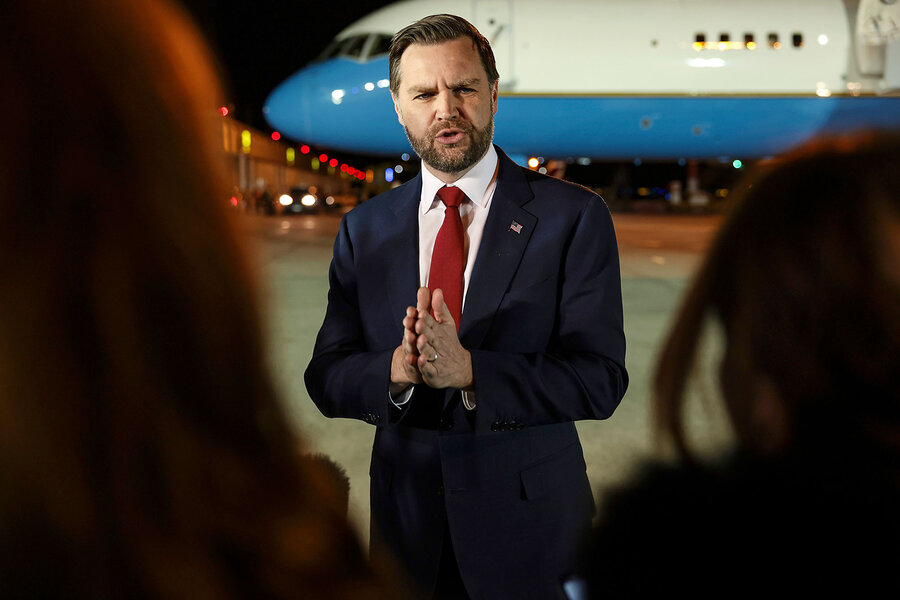
Cover image from csmonitor.com, which was analyzed for this article
President Trump assigned VP JD Vance to lead upcoming US-Iran talks in Pakistan, testing his negotiating skills amid ceasefire strains. Vance faces a high-risk assignment as sides trade accusations over Hormuz violations. The move highlights internal dynamics in Trump's foreign policy team.
PoliticalOS
Friday, April 10, 2026 — Politics
Vice President Vance's leadership of the Islamabad talks represents the Trump administration's direct effort to transform a narrow, Pakistan-brokered ceasefire into a durable arrangement addressing Iran's nuclear program, missiles and control of the Strait of Hormuz. The outcome will test whether military pressure can produce verifiable concessions on proliferation and navigation rights amid mutual accusations of violations. Readers should recognize that success or failure carries immediate consequences for global energy markets, regional stability and the political trajectory of a vice president who must balance loyalty with his long-held skepticism of prolonged Middle East engagements.
What outlets missed
All three outlets underplayed the specific triggers that preceded U.S. and Israeli military action, including documented Iranian and Hezbollah attacks on American bases and Israeli targets throughout 2024-2025, Iran's rapid nuclear enrichment beyond previous limits, and the precise sequence of Operation Epic Fury that began with strikes killing Supreme Leader Ali Khamenei on February 28, 2026. They gave minimal attention to Pakistan's central mediation role, with Prime Minister Shehbaz Sharif and military chief General Asim Munir directly brokering the April 7-8 ceasefire and issuing Iran's 10-point proposal that Trump publicly called workable. Coverage also omitted polling data showing majority Republican support for the initial strikes despite vocal MAGA dissent from figures like Tucker Carlson, and provided little detail on the concrete objectives under discussion: verifiable limits on Iranian missiles, nuclear transparency measures, phased sanctions relief and guaranteed freedom of navigation in the Strait of Hormuz.
Soaring energy prices from disruptions in the Strait of Hormuz have hit American drivers and factories in an election year, while the risk of renewed fighting between the United States, Israel and Iran threatens wider regional instability. Vice President JD Vance arrives in Islamabad this weekend to lead negotiations aimed at converting a two-week-old ceasefire into a broader agreement on Iran's nuclear program, ballistic missiles and sanctions relief. The assignment, directed by President Trump, places Vance at the center of the administration's most complex foreign policy test since taking office.
The talks, scheduled to begin Saturday, follow a ceasefire brokered April 7-8 by Pakistani Prime Minister Shehbaz Sharif and army chief General Asim Munir after six weeks of conflict. U.S. and Israeli strikes under Operation Epic Fury began February 28, 2026, following the collapse of nuclear negotiations, Iranian-backed attacks on U.S. bases and Israeli targets, and advances in Tehran's nuclear enrichment. Those strikes included the killing of Supreme Leader Ali Khamenei; his son has since assumed the role. Iran responded by throttling traffic through the Strait of Hormuz, the route for roughly one-fifth of global oil supply, and demanding tolls on tankers. The ceasefire paused direct U.S.-Iran hostilities but left unresolved Israel's continued operations against Iran-backed Hezbollah in Lebanon, which Tehran calls a violation.
Vance will be joined by special envoy Steve Witkoff and Jared Kushner. The gathering would mark the highest-level direct contact between U.S. and Iranian officials since the 1979 Islamic Revolution. Pakistani officials specifically sought Vance's participation, according to two people familiar with the discussions. Trump then designated him to lead. Vance has described his contribution so far as extensive phone diplomacy. "I sat on the phone a lot," he told reporters before departing Hungary on Wednesday. He added that Trump "has struck a good deal for the American people" but that Iran must take the next step or face renewed military options.
The central tension is whether Vance can secure Iranian commitments to reopen the strait fully, limit its nuclear activities and curb missile development in exchange for sanctions relief and security assurances, while managing a ceasefire both sides accuse the other of undermining. Iran has submitted a 10-point proposal that Trump described as containing workable elements. Previous rounds involving Witkoff and Kushner failed to prevent the initial outbreak of fighting. Administration officials say the delegation collaborates closely with Secretary of State Marco Rubio.
Vance, who served as a Marine public affairs officer in Iraq, has long criticized "forever wars" and what he called deceptive promises from the foreign policy establishment. He voiced private reservations in prewar meetings about potential backlash from Trump's domestic base and regional chaos, according to multiple officials who spoke on condition of anonymity. Publicly he has supported the president's decisions, defending the airstrikes last June on X as earned trust after years of flawed policy. His allies describe the vice president's role as adding formal authority to the fast-moving efforts of Witkoff and Kushner, who often work through rapid proposals and calls back to Washington.
Experts differ on prospects. Philip Gordon, a former national security adviser to Vice President Kamala Harris, called the original ceasefire "a very narrow agreement with everything else T.B.D." and predicted "an ugly, messy and incomplete process." Mitchell Reiss, who served as a special envoy under President George W. Bush, warned that Iranians remain deeply skeptical after the 2018 U.S. withdrawal from the Obama-era nuclear deal and may view prior talks as delay tactics. Barbara Slavin of the Stimson Center said the sides' demands remain far apart and questioned whether the truce would hold even two weeks. Marc Short, former chief of staff to Vice President Mike Pence, noted the midterm leverage Iran holds through energy prices.
Trump has a precedent of assigning his vice president difficult diplomatic tasks. In 2019 he dispatched Mike Pence to Ankara to negotiate with Turkey over northern Syria; the resulting ceasefire allowed Turkish gains and displacement of Kurds. Vance's involvement comes as he balances preparations for midterm messaging on the economy with this unexpected international role. The outcome could shape perceptions of his readiness for higher office, particularly as Trump has mentioned Rubio as a potential future contender.
Unresolved questions include the format of the Islamabad meetings, direct or mediated, and whether any deal can address Hezbollah operations and Iran's support for regional proxies. White House Press Secretary Karoline Leavitt called Vance's role "very significant" from the beginning. Principal Deputy Press Secretary Anna Kelly stated Trump remains "optimistic that a deal can be reached that can lead to lasting peace in the Middle East." Failure would return the region to active combat with unpredictable consequences for oil markets, U.S. domestic politics and Vance's standing.
More in Politics

Federal Agents Search Omar Home in Ongoing Immigration Probe
Homeland Security agents searched the Minnesota Democrat's DC residence in a criminal probe, prompting accusations of political intimidation from Omar and Democratic leaders. Coverage spans left-leaning outlets like NPR, BBC, and The Guardian alongside right-leaning criticism from The Federalist and Daily Wire.

Trump Diesel Import Plan Draws Pushback Over Russia Ties
The weekend agreement drew bipartisan congressional pushback and criticism from Ukraine's Zelenskyy, with analysts downplaying US fuel price impacts. Right-leaning outlets like National Review, Dispatch, and Washington Examiner questioned its legality and effectiveness.

Independents Test Voter Appetite for Middle Ground in 2026 Midterms
Nearly 200 independents are running in competitive races as voters weigh ballot measures on housing costs in states like Massachusetts. Left-leaning coverage from NYT, NPR, and Guardian highlights turnout and key races while right outlets focus on GOP strategy.
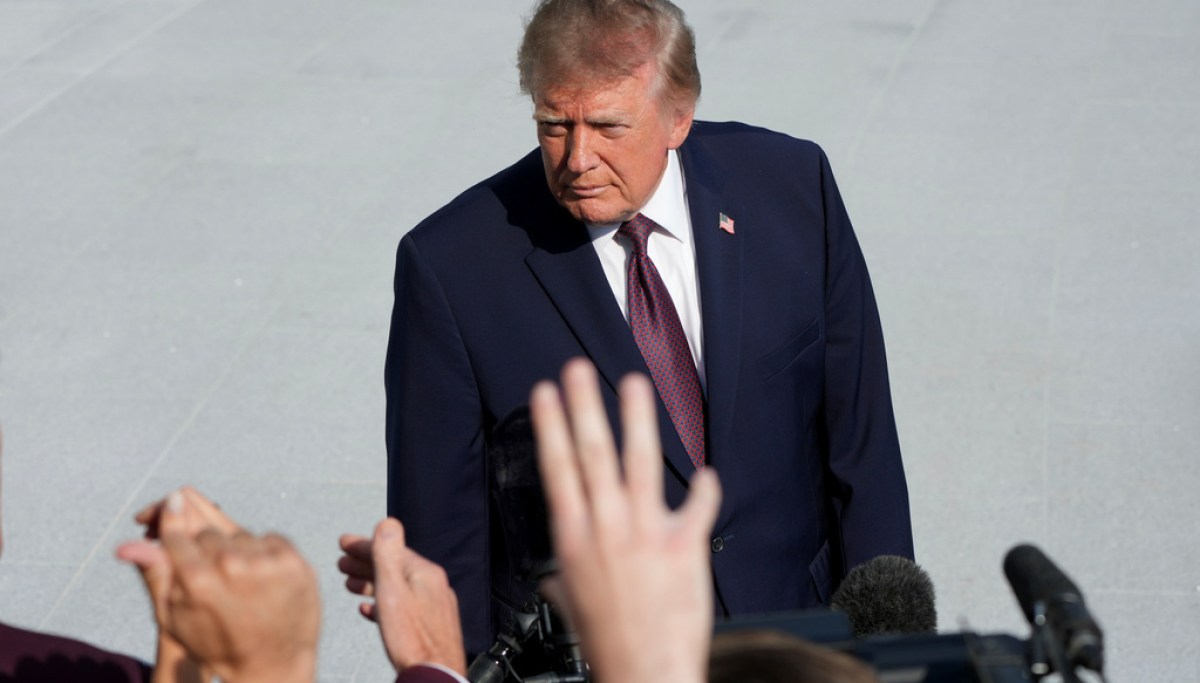
Trump Rallies in Alaska, Ohio to Bolster GOP Senate Candidates
The president rallied in Wasilla for Sen. Dan Sullivan and faced empty seats at an Ohio event amid midterm concerns. Outlets across the spectrum covered the trips as signals of GOP vulnerability weeks before Election Day.
The Compass
You just read five takes on one story.
What's your take? Find your political shape in a few minutes.
Take the test