
Vance Leads High-Stakes US-Iran Talks in Pakistan as Ceasefire Frays
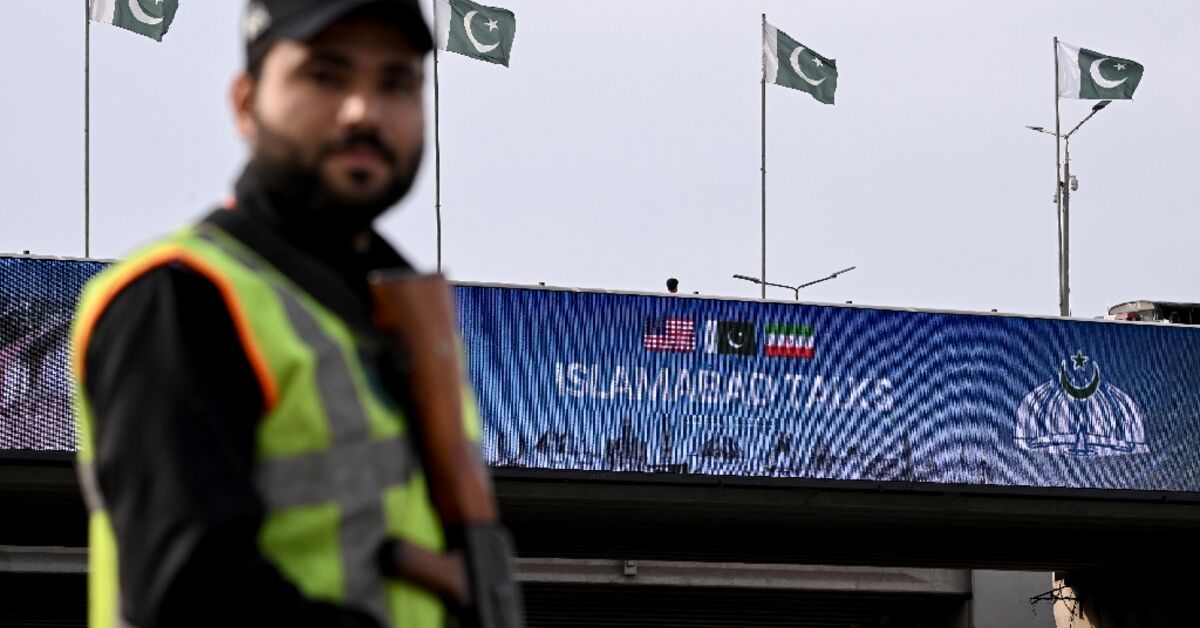
Cover image from al-monitor.com, which was analyzed for this article
VP JD Vance is tasked with leading delicate US-Iran talks in Islamabad as Trump expresses doubts on ceasefire viability. Analysts describe it as Vance's toughest challenge yet amid Hormuz tensions. Coverage focuses on negotiation risks and potential outcomes.
PoliticalOS
Friday, April 10, 2026 — Politics
These negotiations represent the most serious diplomatic effort to end a conflict that has already killed thousands, disrupted global energy flows and raised gasoline prices for American families. Vance's success or failure will hinge on bridging disputes over the Strait of Hormuz, Iran's nuclear ambitions and Israeli operations in Lebanon, none of which are fully resolved by the current fragile truce. Readers should recognize that the outcome carries consequences far beyond Washington or Tehran, affecting everything from midterm politics to the risk of wider regional war.
What outlets missed
Most accounts underplayed the specific sequence that triggered the February 28, 2026 military campaign, including the breakdown of nuclear negotiations, Iranian and Hezbollah attacks on U.S. bases and Israeli territory, and the assassination of Supreme Leader Ali Khamenei during initial strikes. Coverage also gave limited attention to Pakistan's proactive mediation, with Prime Minister Shehbaz Sharif and military chief Asim Munir directly involved in brokering the April 7-8 ceasefire and pressing for Vance's participation. Iran's formal 10-point proposal, which Trump described as containing workable elements, received scant detail despite shaping the talks' agenda on sanctions, security guarantees and nuclear limits. Economic data on the Hormuz disruption, such as precise shipping counts and price spikes attributed to sources like the International Energy Agency, were often generalized rather than quantified. Finally, Vance's own denial that he was aware of any specific Iranian request for his involvement was rarely contrasted with claims that his anti-interventionist record made him more acceptable to Tehran.
Global energy markets are reeling and the risk of renewed conflict hangs over the Middle East as Vice President JD Vance prepares to lead the highest-level American-Iranian negotiations since 1979. The talks, set for Islamabad this weekend, aim to convert a two-week-old ceasefire into a broader agreement on Iran's nuclear program, missile capabilities, sanctions relief and secure passage through the Strait of Hormuz. What began as a limited military operation has escalated into a crisis disrupting one-fifth of the world's oil supply, driving up gasoline prices at a moment when American voters are already focused on costs ahead of midterm elections.
The central tension is whether diplomacy can hold when both sides accuse the other of violating the truce. Iran complains that Israeli strikes in Lebanon, which killed more than 300 people in a single day according to Lebanese authorities, breach the agreement; Washington insists Lebanon falls under separate negotiations. President Trump has publicly stated on social media that Iran is doing "a very poor job" of reopening the strait and has threatened to resume military operations if terms collapse. Vance, arriving with special envoy Steve Witkoff and Jared Kushner, must navigate these disputes while representing an administration that launched strikes against Iran on February 28, 2026, following the collapse of nuclear talks, Iranian-backed attacks on U.S. and Israeli targets, and the targeted killing of Supreme Leader Ali Khamenei.
Pakistan, which helped broker the April 7-8 ceasefire through Prime Minister Shehbaz Sharif and its military leadership, is hosting the sessions at its own urging. Iranian officials have signaled that their participation depends on a halt to Israeli action in Lebanon. A senior Iranian Revolutionary Guards commander told state media the force remains committed to the truce and has not attacked any country since it took effect. Yet an Iranian delegation's arrival remained unconfirmed as of Friday, and Tehran's ambassador to Pakistan deleted a social media post announcing its imminent travel.
Vance has described his contribution so far in understated terms. "I sat on the phone a lot," he told reporters before departing Hungary, where he had been campaigning for Prime Minister Viktor Orban. He added that Trump "has struck a good deal for the American people" but that Iran must now take the next step or face renewed conflict. The vice president, who served as a Marine in Iraq and has long criticized "forever wars" and interventions that he says misled the public, enters these talks with no formal diplomatic portfolio yet carrying the full weight of presidential authority.
The delegation's composition itself reflects the unusual structure of this effort. Witkoff and Kushner had conducted earlier rounds of indirect contacts that failed to prevent the initial outbreak of fighting. Their style, according to people familiar with the process, relies on rapid proposals circulated by phone and text. Vance's presence adds a layer of formality. As one former vice-presidential national security adviser noted, the office allows its occupant to "pull all the strands together like no other cabinet member."
Unresolved questions abound. Will the meetings be direct or mediated? Can the sides bridge gaps on Iran's nuclear enrichment levels and its demand for security guarantees? What happens if Israel continues operations against Hezbollah, which Tehran views as linked to the original conflict? European governments, Gulf states and Egypt have quietly pressed Israel to de-escalate after what some diplomats called "Black Wednesday" in Lebanon. The U.S. State Department announced parallel talks next week on the Israel-Lebanon track, though neither Israel nor Lebanon has publicly confirmed participation.
The economic stakes are immediate. With only a trickle of tankers moving through the strait since the ceasefire, global oil prices have surged, rippling into higher costs at the pump and complicating the administration's domestic messaging. Analysts tracking shipping data attribute the shortfall to Iranian threats to impose tolls and lingering fears of renewed attacks. Trump has tied the ceasefire's success explicitly to Hormuz traffic, stating the U.S. had achieved its core military objectives but would not tolerate continued disruption.
Vance's political future adds another layer. At 41, he is seen as a leading contender for the 2028 Republican nomination, yet he must operate alongside Secretary of State Marco Rubio, who has been more closely aligned with the president's foreign policy approach. Past vice presidents have been dispatched on difficult missions; in 2019 Mike Pence secured a short-lived Syria ceasefire that ultimately allowed Turkish gains. The current assignment is larger in scale and comes in a compressed timeline, given Trump's term limits. Success could burnish Vance's credentials. Failure, particularly if Iran walks away or the truce collapses, could raise questions about his effectiveness.
Iranian public sentiment captured by reporters on the ground in Tehran mixes fear of renewed war with deep distrust of the regime. One resident told AFP she worried both about conflict restarting and the government remaining in place. Another dismissed much of Trump's rhetoric as "pure noise and nonsense" aimed at manipulating a deal. Such voices illustrate the domestic pressures on both leaderships.
The coming days will test whether the narrow ceasefire, described by one former U.S. official as leaving "everything else T.B.D.," can be expanded into something durable. Vance's team carries no illusions about the difficulty. Iranian skepticism runs deep after the 2018 withdrawal from the Obama-era nuclear agreement. Yet the very fact of the meeting, requested in part because of Vance's public record of opposing open-ended Middle East conflicts, represents a rare opening. The world is watching to see if phone calls, proposals and personal diplomacy can prevent a return to full-scale war.
More in Politics

Federal Agents Search Omar Home in Ongoing Immigration Probe
Homeland Security agents searched the Minnesota Democrat's DC residence in a criminal probe, prompting accusations of political intimidation from Omar and Democratic leaders. Coverage spans left-leaning outlets like NPR, BBC, and The Guardian alongside right-leaning criticism from The Federalist and Daily Wire.

Trump Diesel Import Plan Draws Pushback Over Russia Ties
The weekend agreement drew bipartisan congressional pushback and criticism from Ukraine's Zelenskyy, with analysts downplaying US fuel price impacts. Right-leaning outlets like National Review, Dispatch, and Washington Examiner questioned its legality and effectiveness.

Independents Test Voter Appetite for Middle Ground in 2026 Midterms
Nearly 200 independents are running in competitive races as voters weigh ballot measures on housing costs in states like Massachusetts. Left-leaning coverage from NYT, NPR, and Guardian highlights turnout and key races while right outlets focus on GOP strategy.
Trump Rallies in Alaska, Ohio to Bolster GOP Senate Candidates
The president rallied in Wasilla for Sen. Dan Sullivan and faced empty seats at an Ohio event amid midterm concerns. Outlets across the spectrum covered the trips as signals of GOP vulnerability weeks before Election Day.
The Compass
You just read five takes on one story.
What's your take? Find your political shape in a few minutes.
Take the test