
Young Men Drive Religious Uptick, Closing Gender Gap Amid U.S. Secular Decline

Cover image from thefederalist.com, which was analyzed for this article
Polls indicate a sharp rise in young men viewing religion as very important, stirring a Gen Z resurgence. Coverage notes shifting cultural trends amid broader religious debates. Conservatives and centrists highlight the phenomenon's potential impact.
PoliticalOS
Thursday, April 16, 2026 — Politics
A measurable increase has occurred: 42 percent of young men now say religion is very important to them, up from 28 percent, closing a longstanding gender gap for the first time in decades. This shift sits inside a larger story of American secularization, with Gen Z retaining the highest unaffiliation rates on record and national religiosity near all-time lows. The single most important reality is that any resurgence remains narrowly concentrated, politically inflected and unproven at scale; whether it produces lasting institutional change or simply reflects polarization is the open question.
What outlets missed
Most outlets underplayed or omitted the precise partisan driver documented in AP reporting on the same Gallup data: the rise is concentrated among young Republican men while young Democratic men continued declining, lending a clear political tint to what some frame as purely spiritual. Coverage also gave short shrift to the fact that young men's 42 percent "very important" figure merely returns to early-2000s levels rather than setting new highs, and that national religiosity has stayed flat at historic lows. The Federalist piece barely engaged the poll numbers at all, instead folding the trend into a larger opinion argument about Catholic-Protestant unity that introduced separate unverified claims about a Trump-Pope Leo conflict and record conversions not corroborated elsewhere. Few stories fully reconciled the tension between visible anecdotal interest in specific parishes and PRRI's data showing 38 percent of Gen Z men never attending services.
Young men are signaling that faith matters in a world that often dismisses it. A Gallup poll has captured a sharp rise in the share of men aged 18 to 29 who say religion is very important to their lives, reversing a gender pattern that social scientists treated as settled fact for generations. The finding arrives as American religious institutions face record unaffiliation, projected church closures and debates over whether this shift represents countercultural pushback, political realignment or the first tremors of something larger.
The poll, conducted with more than 4,000 U.S. adults, found 42 percent of young men now call religion "very important," up from 28 percent in 2023. Their reported monthly religious attendance climbed to 40 percent from 33 percent. Young women in the same age group stood at 30 percent on the importance measure and showed only modest attendance gains, according to Gallup senior scientist Frank Newport. The gender gap that long showed women more religious than men has essentially disappeared in this cohort.
That 42 percent figure matches levels last seen in 2000 and 2001. It does not exceed them. Nationally, the share of all Americans who say religion is very important remains near historic lows at 47 percent with no recent increase. Gen Z retains the highest unaffiliation rate of any generation: PRRI's 2024 survey placed it at 34 percent overall for the cohort, with some breakdowns showing 36 to 38 percent for those 18-29. Just 11 percent of Gen Z adults attend services weekly; 38 percent never attend.
The trend is not uniform. Multiple outlets reporting on the same Gallup data, including the Associated Press, noted the increase concentrates among young Republican men, whose monthly attendance rose from 40 percent in 2019 to 52 percent. Young Democratic men continued a two-decade slide, falling to 26 percent from 40 percent in 2000. Axios and others observed that anecdotes of packed pews in conservative evangelical and certain Catholic parishes, along with online "Theobro" discourse, have fueled speculation of revival. Pastors describe young men seeking structure, community and clear values.
Experts differ on scale. Newport described the closing gender gap as noteworthy. PRRI CEO Melissa Deckman told Axios the pattern may reflect Gen Z's decline simply slowing rather than reversing, calling much of the visible interest anecdotal. Virginia Commonwealth University professor Andrew Chesnut similarly cautioned against declaring a national revival, noting data do not support comparisons to earlier Great Awakenings or postwar booms. Tens of thousands of churches are still projected to close in coming years.
Some coverage linked the shift to religion becoming countercultural for a subset of young men raised in an increasingly secular environment. In that reading, professing faith can function as identity and mild rebellion. Conservative commentators have framed it as young men rejecting progressive cultural norms. The Federalist argued rising religiosity underscores the need for Catholics and Protestants to set aside theological differences and present a united front against what it called coercive secular policies from the left, citing lawsuits involving Catholic nuns in New York facing state gender-identity mandates and other religious-liberty disputes.
Those liberty cases are real and ongoing. The Dominican Sisters of Hawthorne are suing New York over requirements that conflict with their faith while operating a hospice for the poor. A 2021 Supreme Court ruling protected Catholic Social Services in Philadelphia from similar exclusion over same-sex foster placements. Yet comprehensive national data on adult conversions or sustained attendance growth remain limited and, where cited as "record" levels, have not been independently corroborated by major surveys.
The central tension is unresolved. One data point shows young men moving toward faith. The larger picture shows American religion near its lowest ebb, with Gen Z still leading the exit. Whether the male uptick reshapes church strategy, influences culture-war politics or fades as economic pressures and life stage change remains unknown. For now it stands as a measurable exception within a broader decline, visible in certain congregations and online spaces but not yet scaling to national revival.
More in Politics

Federal Agents Search Omar Home in Ongoing Immigration Probe
Homeland Security agents searched the Minnesota Democrat's DC residence in a criminal probe, prompting accusations of political intimidation from Omar and Democratic leaders. Coverage spans left-leaning outlets like NPR, BBC, and The Guardian alongside right-leaning criticism from The Federalist and Daily Wire.

Trump Diesel Import Plan Draws Pushback Over Russia Ties
The weekend agreement drew bipartisan congressional pushback and criticism from Ukraine's Zelenskyy, with analysts downplaying US fuel price impacts. Right-leaning outlets like National Review, Dispatch, and Washington Examiner questioned its legality and effectiveness.

Independents Test Voter Appetite for Middle Ground in 2026 Midterms
Nearly 200 independents are running in competitive races as voters weigh ballot measures on housing costs in states like Massachusetts. Left-leaning coverage from NYT, NPR, and Guardian highlights turnout and key races while right outlets focus on GOP strategy.
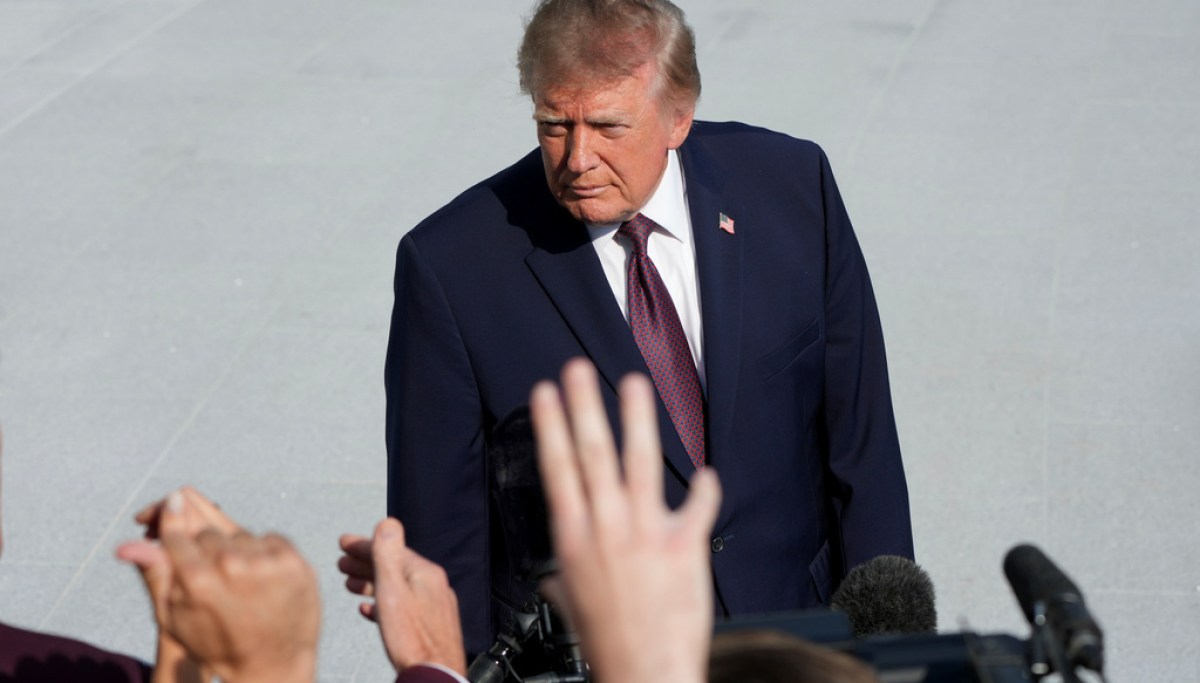
Trump Rallies in Alaska, Ohio to Bolster GOP Senate Candidates
The president rallied in Wasilla for Sen. Dan Sullivan and faced empty seats at an Ohio event amid midterm concerns. Outlets across the spectrum covered the trips as signals of GOP vulnerability weeks before Election Day.
The Compass
You just read five takes on one story.
What's your take? Find your political shape in a few minutes.
Take the test