
Young Men Drive Religious Uptick, Closing Gender Gap Amid U.S. Secular Decline
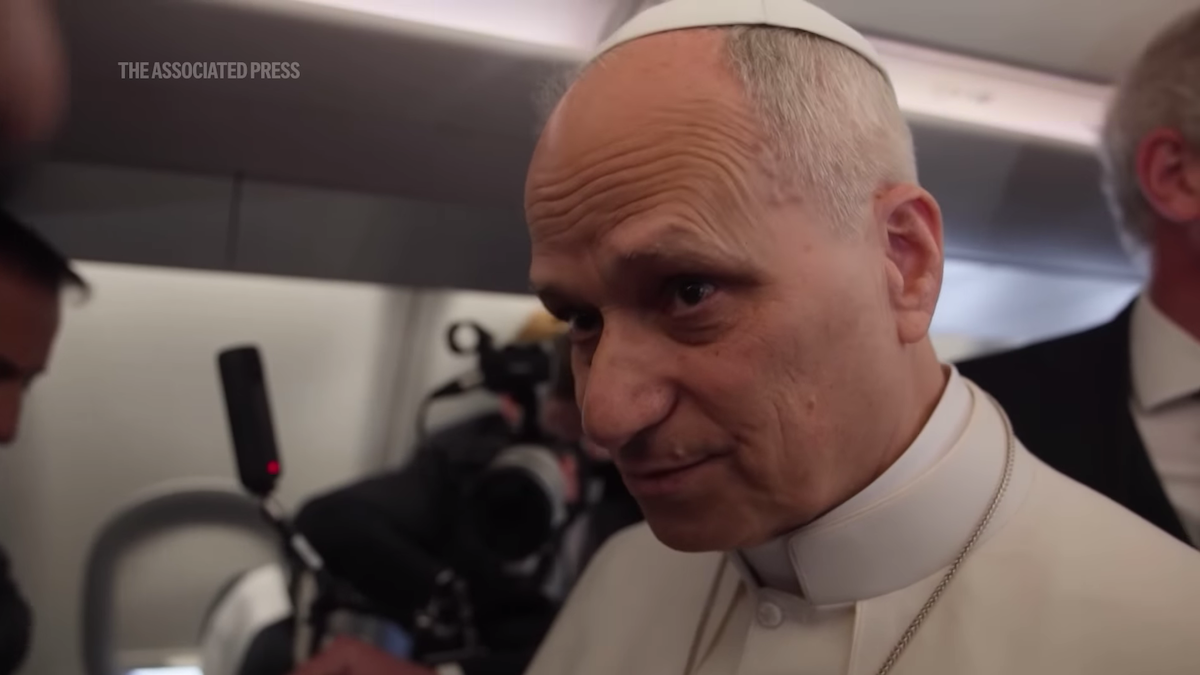
Cover image from thefederalist.com, which was analyzed for this article
Polls indicate a sharp rise in young men viewing religion as very important, stirring a Gen Z resurgence. Coverage notes shifting cultural trends amid broader religious debates. Conservatives and centrists highlight the phenomenon's potential impact.
PoliticalOS
Thursday, April 16, 2026 — Politics
A measurable increase has occurred: 42 percent of young men now say religion is very important to them, up from 28 percent, closing a longstanding gender gap for the first time in decades. This shift sits inside a larger story of American secularization, with Gen Z retaining the highest unaffiliation rates on record and national religiosity near all-time lows. The single most important reality is that any resurgence remains narrowly concentrated, politically inflected and unproven at scale; whether it produces lasting institutional change or simply reflects polarization is the open question.
What outlets missed
Most outlets underplayed or omitted the precise partisan driver documented in AP reporting on the same Gallup data: the rise is concentrated among young Republican men while young Democratic men continued declining, lending a clear political tint to what some frame as purely spiritual. Coverage also gave short shrift to the fact that young men's 42 percent "very important" figure merely returns to early-2000s levels rather than setting new highs, and that national religiosity has stayed flat at historic lows. The Federalist piece barely engaged the poll numbers at all, instead folding the trend into a larger opinion argument about Catholic-Protestant unity that introduced separate unverified claims about a Trump-Pope Leo conflict and record conversions not corroborated elsewhere. Few stories fully reconciled the tension between visible anecdotal interest in specific parishes and PRRI's data showing 38 percent of Gen Z men never attending services.
Young Men Reject Secular Emptiness and Flock Back to Church in Striking Reversal
A Gallup poll released this week delivers one of the most encouraging data points in a generation: young American men are turning to religion in numbers not seen in years, with 42 percent of those under 30 now saying faith is "very important" to them. That is up sharply from just 28 percent in 2023. The findings suggest something profound is happening among males who came of age during the worst excesses of elite-driven cultural decay, smartphone addiction, economic stagnation, and relentless propaganda telling them their very nature is toxic.
This marks a genuine reversal of the longstanding pattern in which women reliably outpaced men in religious devotion. For generations, social scientists treated the gender gap as an unshakeable fact. No longer. Young women under 30 remain stuck at 30 percent saying religion matters deeply to them, trailing older female cohorts by wide margins. Young men, by contrast, now report levels of religiosity similar to middle-aged men and not far behind seniors. The shift is impossible to dismiss as statistical noise.
The evidence extends beyond polling questions. Pastors in both Catholic parishes and evangelical congregations describe the same phenomenon: more young men showing up, sitting in the pews, and staying afterward to talk. Outlets across the spectrum from the New York Times to the Wall Street Journal have chronicled packed services, viral online conversions, and what some have labeled "Theobro" culture, in which young males treat serious Christianity not as outdated custom but as a radical alternative to the hollow promises of progressive ideology. On TikTok and other platforms that usually peddle distraction and degeneracy, videos extolling traditional faith, self-discipline, and rejection of modern nihilism are finding receptive audiences among males who appear fed up with being told they must apologize for existing.
The broader context makes this development even more significant. America as a whole remains mired near record lows in religious identification, with nearly three in ten adults claiming no affiliation whatsoever. Thousands of churches are forecast to close in the years ahead as the post-war religious boom fades into memory. Yet something different is stirring among the youngest adult men. They are not simply drifting back to the faith of their grandparents. Many are embracing it as a deliberate act of defiance against a culture that has elevated every form of confusion and self-indulgence while scorning restraint, duty, and transcendence.
This resurgence arrives at a moment when faith is once again occupying a more visible place in national life. President Trump's return to the National Prayer Breakfast and the prominence of religious themes in his second term have underscored the shift. At the same time, theological differences that once fractured Christian communities have been largely subordinated to a clearer threat. Both Catholics and Protestants increasingly recognize that the secular left's project goes beyond policy disagreements. It seeks to exile Christian belief from the public square entirely and replace it with what amounts to a neopagan moral order that celebrates the destruction of the family, the blurring of sex distinctions, and the worship of the self.
Recent friction between the Trump administration and Catholic leadership over issues such as immigration enforcement and foreign policy served as a reminder that real disagreements persist. Traditional Catholic teaching on just war and the dignity of the vulnerable will not bend to any political agenda, and Protestants have their own longstanding objections to certain Catholic doctrines. Yet the larger reality is impossible to ignore. When one side of the political spectrum openly works to drive prayer out of schools, redefine biological reality in law, and treat dissenting Christians as obstacles to progress, the old intramural fights matter less. The near enemy is the radical secularism that views faithful Christians of any stripe as the primary obstacle to its total cultural victory.
Whether this uptick among young men becomes a lasting revival remains to be seen. Gallup itself cautions that overall religiosity has not yet surged. But the direction is unmistakable. Young men who have lived through the failures of elite institutions, the collapse of meaning in a hyper-materialist society, and the daily assault on their instincts are looking for something solid. They are finding it where their fathers and grandfathers once did, in the ancient faith that demands courage, offers forgiveness, and promises that life has purpose beyond pleasure or status.
The political implications could prove substantial. A generation of men grounded in religious conviction is far less likely to accept the premises of the diversity-industrial complex or the idea that national identity must be dissolved in the name of globalism. They are more inclined to value the family formation and community cohesion that the regime has spent decades undermining. If the trend continues, the culture wars that have defined American life for a quarter century may be entering a new phase, one in which the counterculture is no longer what leaves the church but what fills it.
You just read America First's take. Want to read what actually happened?
More in Politics

Trump at 32% Approval as Gas Prices Test GOP Midterm Hopes
NYT/Siena polling showed Trump's approval at historic lows around 32 percent with Democrats leading by double digits in key districts. Early voting has surged in battleground states.

Record Early Voting Hits Battlegrounds, Shifting Partisan Shares
AP analysis found hundreds of thousands more early ballots than in 2022 in states including Texas, Ohio, Kansas, Maine, and North Carolina, shifting partisan dynamics.

Trump Backs Marshall in Kansas Senate Race Tightened by Farm Costs
President Trump rallied in deep-red Kansas for GOP Sen. Roger Marshall in a competitive race, announcing an $8 billion farm fuel relief program amid high diesel prices. Democrats see an opening to end 94 years of GOP dominance in the state.

Trump Pauses Russia Sanctions Amid Ukraine Tensions and Missile Strikes
Trump waived sanctions on Russia and floated trilateral talks with Putin and Xi as part of ending the Ukraine war, while tensions rose with Zelenskyy over Starlink and arms. Bipartisan senators engaged Zelenskyy amid the shifts.
The Compass
You just read five takes on one story.
What's your take? Find your political shape in a few minutes.
Take the test