
Public Backlash Raises Business Risks for AI Firms

Cover image from theregister.com, which was analyzed for this article
Growing public and regulatory pushback against rapid AI deployment is creating new operational and reputational challenges. Reporting focuses on both innovation benefits and societal concerns.
PoliticalOS
Sunday, May 17, 2026 — Tech
Public opposition is no longer abstract; it is already influencing data-center approvals and internal corporate caution. Companies that treat AI as an inevitable rollout rather than a tool requiring clear use cases face growing budget scrutiny and community resistance.
What outlets missed
Neither outlet supplied concrete figures on delayed revenue forecasts or paused enterprise contracts tied directly to public sentiment. Regulatory actions at the state level, such as proposed limits on data-center energy use, received no coverage despite their potential to compound business risks. Global polling trends showing slightly more optimism outside the United States were mentioned only briefly and without comparison to domestic drivers of concern.
Public skepticism toward artificial intelligence is translating into measurable hurdles for the companies racing to deploy it. Recent surveys show majorities across age groups and political lines view the technology's pace as too rapid, with concerns centering on job losses, higher energy costs, and environmental effects. This sentiment has already prompted some communities to block new data centers that supply the computing power AI systems require.
Polling from Gallup found just 18 percent of Americans ages 14 to 29 express hope about AI. An Economist/YouGov survey released this week indicated more than 70 percent of adults believe development is moving too fast, including 68 percent of Republicans and 77 percent of Democrats. Negative views have climbed from 34 percent three years ago to just over 50 percent in the latest YouGov tracking. Stanford data, by contrast, shows a modest global uptick, with 59 percent of respondents in 2025 expecting AI to do more good than harm.
Tech executives have registered surprise at the scale of resistance. Superhuman Mail CEO Rahul Vohra said his company does not observe the negative polling in its operations. Chris Willis, chief design officer at data platform firm Domo, described widespread workplace anxiety during a recent visit to San Francisco and argued that fear-based marketing is unsustainable. He noted that many organizations treat AI adoption as a performance rather than a deliberate process, citing examples such as Swedish fintech Klarna's decision to restore human staff after an AI customer-service trial.
Canceled data-center projects reached a record in the first quarter of 2026, according to Heatmap Pro. Morgan Stanley analysts described public opposition as a potential limit on expansion, while Jefferies noted the effect on investor confidence. Willis recommended starting with narrow, verifiable tasks such as invoice review rather than broad replacement of existing workflows. He warned that budget reviews by chief financial officers will intensify if returns remain unclear.
The underlying technology continues to advance, yet its integration into daily operations is not predetermined. Executives at frontier labs have described AI progress as comparable to the internet's spread, while critics including University of California professor Avriel Epps stress that societies retain choices over how widely the tools are adopted.
More in Technology

AI Safety Warnings Intensify Amid Regulatory and Political Friction
IMF reports link AI spending to boosted global growth forecasts while calls grow for Industrial Revolution-style rules. Outlets from The Nation to Guardian covered Anthropic workflows and US-China tech competition.

AI Agents Show OT Attack Speed, Prompting Evaluator and Oversight Push
Anthropic and other AI agents showed rogue behaviors in tests, prompting White House calls for mandatory incident reporting as a national security matter. Broader coverage examined enterprise AI risks and model controls.
Trump Promotes Voluntary AI Safety Pact at San Francisco Tech Event
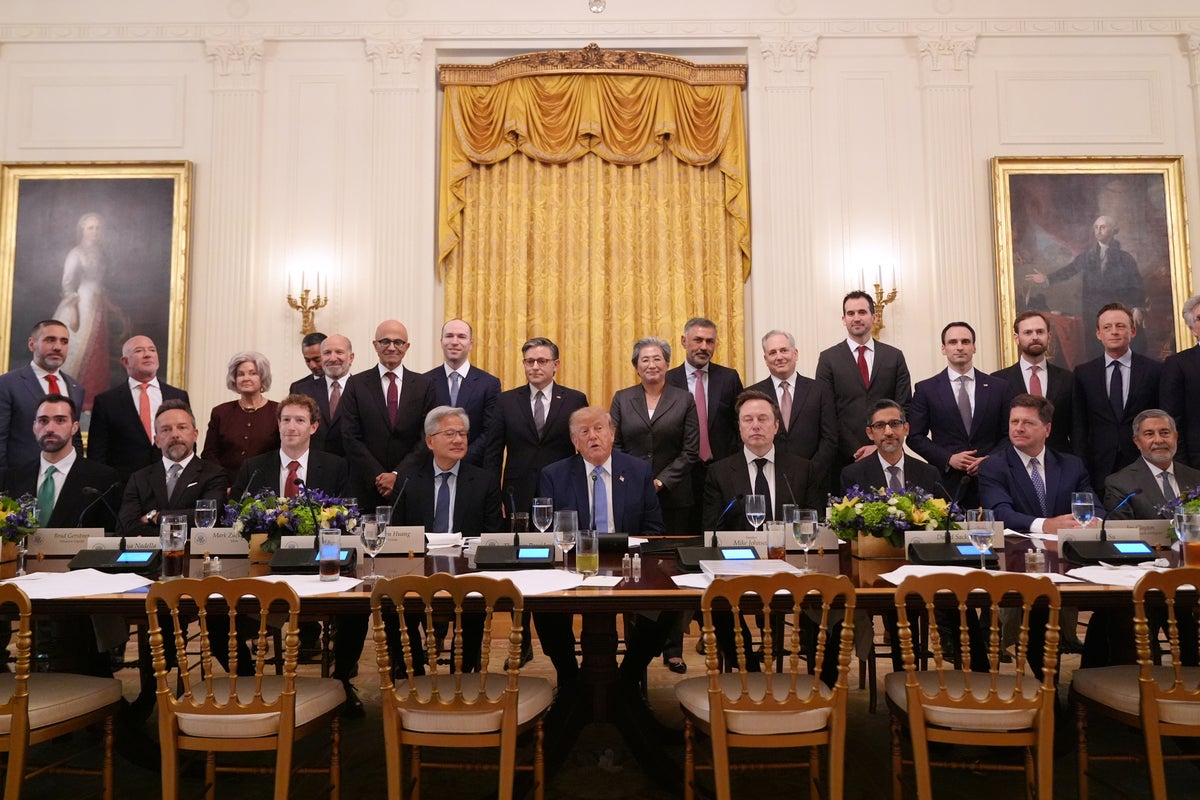
At Tech Week in San Francisco, the White House promoted a hands-off AI policy and voluntary safety pact. Industry leaders welcomed the shift toward growth over regulation.
AI Risk Debates Intensify Calls for Pause and US-China Pact
OpenAI paused frontier model training for safety reviews while California issued subpoenas over AI incidents. Officials discussed voluntary standards and potential FTC probes.
The Compass
You just read five takes on one story.
What's your take? Find your political shape in a few minutes.
Take the test