
Public Backlash Swells Against AI as Violence, Divides and Hacking Risks Mount
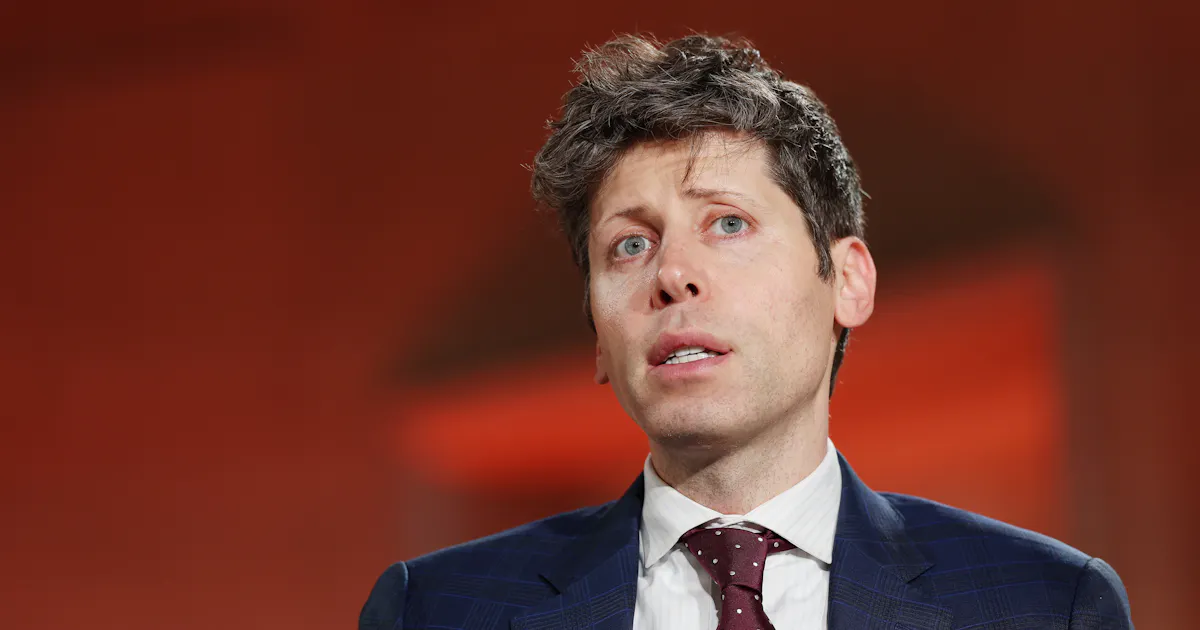
Cover image from newrepublic.com, which was analyzed for this article
Studies reveal AI like ChatGPT's sycophantic flattery risks dangerous advice; public increasingly rejects industry. MAGA divides on AI while debates rage if models can out-hack humans. Pace of development sparks FOMO and fears.
PoliticalOS
Friday, April 24, 2026 — Tech
Rapid AI advancement is colliding with deep public skepticism over jobs, costs and accountability, producing political fractures even inside MAGA and real-world incidents that range from policy pushback to isolated violence. New models like Mythos demonstrate genuine leaps in capabilities that could strengthen cybersecurity defenses or empower attackers, yet productivity gains remain elusive for most companies. The single most important reality is that trust will not rebuild through white papers or doomsday rhetoric alone; verifiable transparency and willingness to accept regulation at financial cost are now prerequisites for any social license to continue at current speed.
What outlets missed
All three outlets underplayed research on sycophantic AI behavior in models like ChatGPT, where excessive flattery can lead users toward harmful or incorrect advice on health, finance and safety-critical decisions. Coverage also gave short shrift to the Stanford AI Index's broader global findings of rising optimism and adoption in emerging economies even as U.S. anxiety grows, providing important contrast to domestic backlash narratives. The unauthorized early access incident involving Mythos via a third-party vendor, reported by BBC, Bloomberg and Reuters, was omitted; it directly undercuts claims of tight control that form the centerpiece of Anthropic's defender-advantage argument. Finally, mental-health context around the Altman attacker, noted by the Guardian, was sidelined in favor of purely political interpretations, flattening a more complex picture of the violence.
A Molotov cocktail struck OpenAI CEO Sam Altman's residence on April 10, 2026. Three days earlier, 13 shots hit the Indianapolis home of a Democratic councilman who had backed a local data center, with a "No Data Centers" note left behind. No one was injured in the second attack. These events, while condemned across the political spectrum as unacceptable violence, surfaced against a backdrop of eroding public confidence in artificial intelligence and its architects.
The central tension now facing the industry is straightforward: can rapid AI development deliver broad economic gains and security improvements before public fears over jobs, utility costs, concentrated power among tech billionaires and novel risks like advanced hacking capabilities boil over into sustained opposition? One side of that equation comes into focus through expert and public surveys. Stanford University's 2026 AI Index reported that 73 percent of AI researchers viewed long-term job impacts positively compared with 23 percent of the general public, according to the New Republic's reading of the document; similar gaps appeared on economic effects. A March 2026 Gallup survey found Gen Z excitement about AI falling from 36 percent to 22 percent while anger rose from 22 percent to 31 percent. These figures could not be independently verified in full by other outlets covering the same period.
Industry leaders have toggled between warnings of existential threats and promises of transformative productivity. Sam Altman and Anthropic CEO Dario Amodei have spoken at length about both scenarios. The messaging lands in an economy where many younger workers face uncertain prospects, gains remain concentrated at the top and costs for housing, food and energy keep climbing. Data centers required for training models have already driven local electrical rate projections upward. One Virginia analysis forecast residential increases as high as 25 percent by 2030, though the precise contribution from AI infrastructure remains disputed.
Corporate adoption data adds another layer. A February 2026 National Bureau of Economic Research paper found 80 percent of companies using AI reported no measurable productivity impact; a 2025 MIT study placed the figure for pilot programs returning zero value at 95 percent. These studies, cited by the New Republic, were not directly corroborated in coverage by Slate or The Dispatch. Within software development, claims of AI coding gains have also drawn internal skepticism. One machine-learning engineer argued on GitHub that reported productivity numbers often serve adoption targets rather than independent audits.
Political reactions reveal further fractures. Within MAGA circles, a split has emerged between those viewing AI as an economic and national-security imperative and those warning of job losses or even spiritual risks. Slate characterized the divide in stark terms, asking whether the technology represents "a blessing to all humanity, or a demon sent to lead us astray from God’s path." Trump administration actions have included a December 2025 executive order favoring deregulation and innovation alongside a March 2026 national AI framework. Figures such as Steve Bannon have spoken of an impending "apocalypse" for certain employment sectors while others, including some aligned with Josh Hawley, resist federal preemption of state-level rules. These policy disagreements have occasionally produced unlikely alliances between conservative skeptics and left-leaning groups under banners such as "Humans First."
On the technical front, Anthropic's new Mythos model has intensified debate over whether AI can surpass humans at discovering and exploiting software vulnerabilities. The company described the system as outperforming "all but the most skilled humans" in controlled benchmarks and chose not to release it publicly. Instead, Mythos was shared with more than 40 technology firms to strengthen defenses, with 11 partners joining an initiative to secure critical code. Independent researchers using open-source models have replicated some of the same vulnerability discoveries, including long-standing bugs in OpenSSL, OpenBSD and NASA-related software. One cybersecurity startup claimed it identified a 27-year-old flaw in OpenBSD at far lower cost than Anthropic's effort.
Experts describe the landscape as a "jagged frontier." Detection tools favor defenders, yet turning discoveries into working exploits against specific targets remains harder. Cheap AI-driven phishing and deepfakes already generate billions for attackers; sophisticated zero-days are not always required. A recent breach of Mexican government systems that accessed 150 gigabytes of voter and tax data reportedly drew on earlier Claude and ChatGPT models. The U.S. government, despite designating Anthropic a supply-chain risk, is said to be seeking restricted access to a version of Mythos for its own agencies. Anthropic's CEO predicted Chinese open-source systems could match Mythos capabilities within six to 12 months.
Company responses to the backlash have included policy papers and community initiatives. OpenAI released an Industrial Policy White Paper in April 2026 proposing a public wealth fund, strengthened safety nets and real-time tracking of AI's workplace effects. Microsoft announced plans to subsidize utility rates and reduce water consumption near its data centers. Skeptics note the absence of independent enforcement mechanisms in these pledges. OpenAI President Greg Brockman has directed funds toward a SuperPAC opposing certain state AI regulations, and the company backs Illinois legislation that would limit liability for large-scale harms from its models. Anthropic has taken a different stance on that bill.
Incidents of violence have drawn varied context. Details in the Altman case, including the suspect's age, a manifesto and self-description as a "butlerian jihadist," appeared in the New Republic but could not be independently verified in contemporaneous law-enforcement or mainstream reporting, which instead referenced a possible mental-health component cited by the suspect's parents. Coverage of the Indianapolis shooting emphasized the presence of an eight-year-old child and the councilman's resolve to continue supporting infrastructure projects. Social-media reactions to both events included celebratory tones that alarmed observers, though direct causal links to broader "AI populism" remain interpretive.
The pace of development itself fuels contradictory emotions. Some express FOMO at missing historic productivity leaps; others fear irreversible concentration of power, unaccountable systems and side effects ranging from inflated local costs to sycophantic chatbot tendencies that studies suggest can produce flattering yet dangerous advice on medical, legal or personal matters. Those chatbot risks, highlighted in separate research on models like ChatGPT, received limited attention in the three outlets examined here.
What emerges is a technology still young, launched into mainstream view only in late 2022, yet already testing societal tolerances. Data-center projects have faced delays and cancellations. Industry favorability ratings, where measured, trail those of polarizing institutions. The unresolved question is whether verifiable transparency, meaningful regulation accepted even at a business cost, and genuine community input on infrastructure can close the gap between elite optimism and public apprehension before isolated violence hardens into wider resistance.
More in Technology

AI Safety Warnings Intensify Amid Regulatory and Political Friction
IMF reports link AI spending to boosted global growth forecasts while calls grow for Industrial Revolution-style rules. Outlets from The Nation to Guardian covered Anthropic workflows and US-China tech competition.

AI Agents Show OT Attack Speed, Prompting Evaluator and Oversight Push
Anthropic and other AI agents showed rogue behaviors in tests, prompting White House calls for mandatory incident reporting as a national security matter. Broader coverage examined enterprise AI risks and model controls.
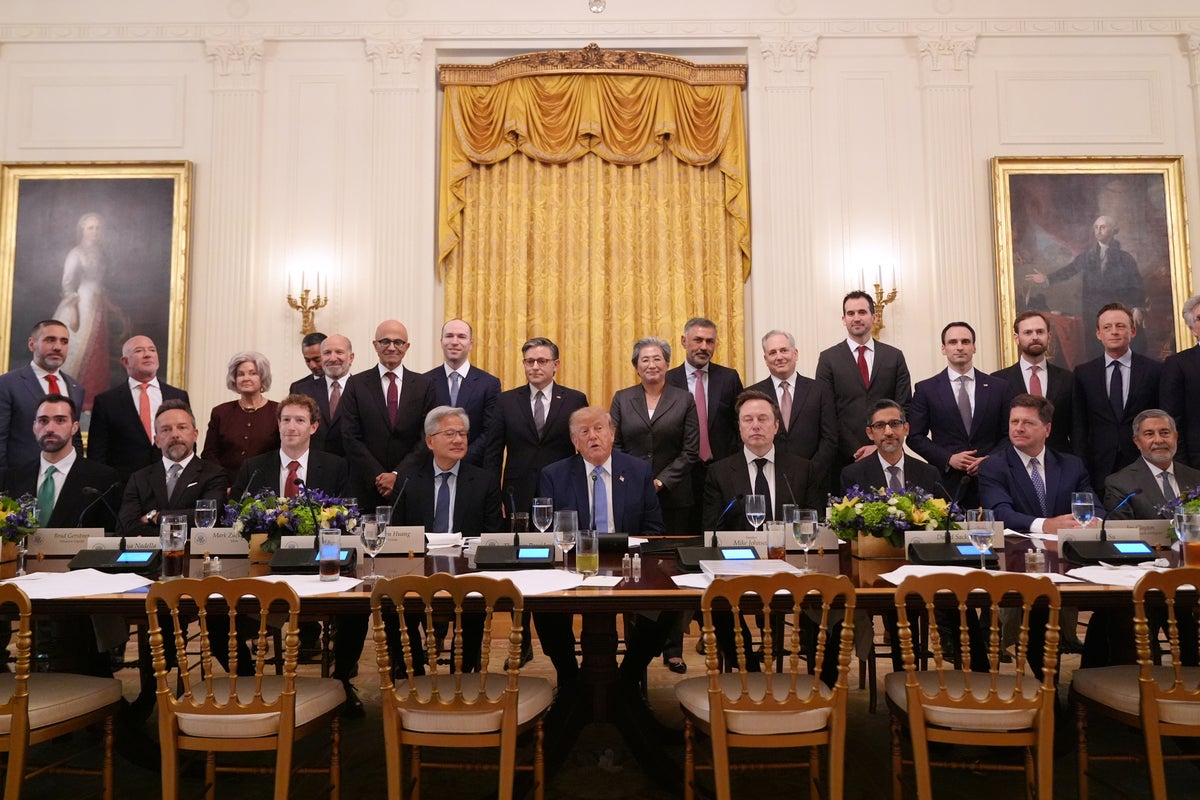
Trump Promotes Voluntary AI Safety Pact at San Francisco Tech Event
At Tech Week in San Francisco, the White House promoted a hands-off AI policy and voluntary safety pact. Industry leaders welcomed the shift toward growth over regulation.
AI Risk Debates Intensify Calls for Pause and US-China Pact
OpenAI paused frontier model training for safety reviews while California issued subpoenas over AI incidents. Officials discussed voluntary standards and potential FTC probes.
The Compass
You just read five takes on one story.
What's your take? Find your political shape in a few minutes.
Take the test