
AI False Arrests and Job Automation Spur Calls for Oversight
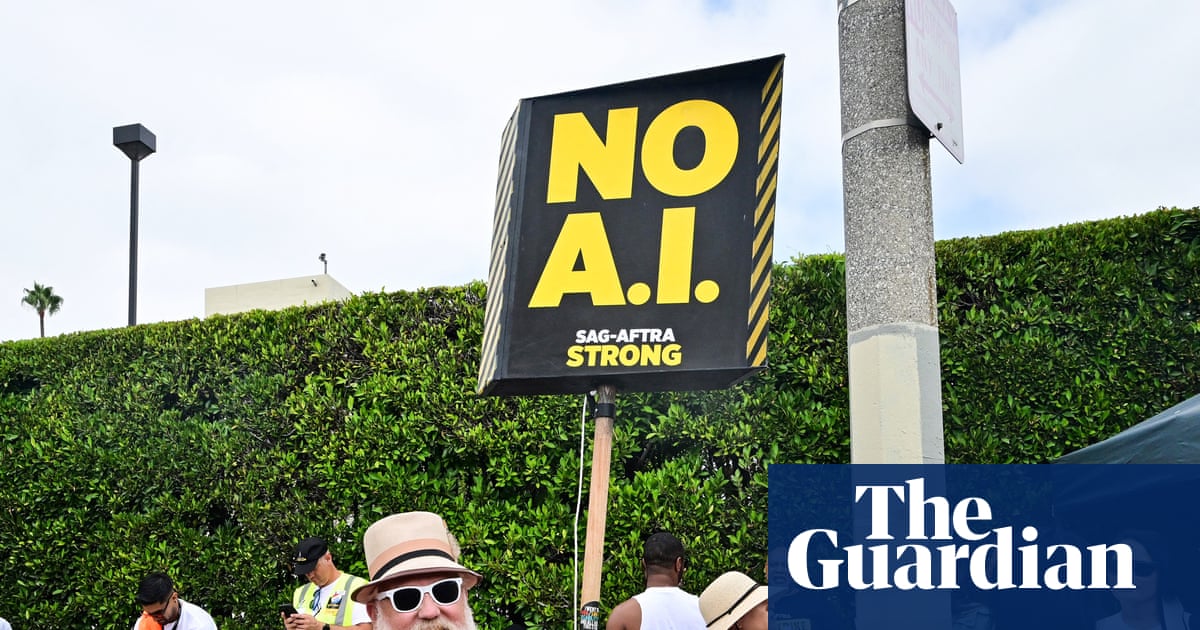
Cover image from theguardian.com, which was analyzed for this article
AI linked to false arrests and wrongful convictions, raising oversight calls. Workers back union policies on AI amid rapid job cuts at Meta, Microsoft. Tech sector pressures grow with geopolitical angles.
PoliticalOS
Tuesday, May 12, 2026 — Tech
AI tools can generate costly errors in policing and employment when probabilistic outputs are acted upon without verification. Workers and some agencies are already negotiating human oversight, yet no uniform standards exist. The central policy choice is how much uncertainty to tolerate before algorithmic suggestions become binding actions.
What outlets missed
Local reporting on the Baltimore County incident showed school safety staff canceled the AI alert before police were called and found no racial bias in the deployment. National coverage of the Tennessee case noted that bail denial and scheduling delays, not the initial AI match alone, extended the detention. Independent polling by Data for Progress recorded lower but still majority support for similar AI worker protections, providing a benchmark absent from the union-commissioned survey. No outlet examined actual performance data from the Omnilert system that correctly flagged firearms in other Maryland schools.
AI systems are producing errors with real human costs, from mistaken police detentions to accelerated layoffs, leaving regulators and workers racing to impose checks. Two documented incidents illustrate the policing risks. In October 2025 a Baltimore County high school student was handcuffed after an AI camera misread a bag of chips as a firearm; school staff had already reviewed and canceled the alert before police arrived. In December 2025 a Tennessee woman spent five months in jail after facial-recognition software wrongly matched her to North Dakota fraud cases she could not have committed.
These cases rest on a core technical limit: AI tools generate probabilities rather than verified facts. Thresholds that decide when an alert triggers police action are set by vendors or agencies and remain largely invisible to the public. Research from university centers and police departments shows some agencies require human review before deployment while others do not. Medical diagnostics face similar trade-offs between false positives and missed threats, yet operate under explicit regulatory standards that policing AI largely lacks.
Parallel pressures are emerging in workplaces. A poll commissioned by the AFL-CIO and conducted by David Binder Research in April 2026 found at least 75 percent support among 1,588 respondents for measures such as mandatory human oversight of AI employment decisions and disclosure of workplace monitoring. The same survey reported 38 percent of workers trust unions most to manage AI impacts, ahead of political parties or employers. Union contracts at media and health-care employers have already secured clauses requiring transparency and prohibiting AI-driven layoffs or reduced pay without approval.
Tech firms have announced thousands of job reductions at Meta and Microsoft in recent months, citing efficiency gains from automation. No comprehensive public registry tracks AI deployment across law enforcement or private employers, complicating efforts to measure cumulative effects. Legal standards of proof in courts require evidence beyond statistical likelihood; AI outputs do not automatically meet those thresholds.
The unresolved question is how much uncertainty society will accept before algorithmic outputs become binding decisions in policing, hiring, or patient care. Proposals range from mandatory human review to calibrated confidence thresholds and independent audits, yet few jurisdictions have enacted binding rules.
More in Technology
AI Safety Warnings Intensify Amid Regulatory and Political Friction
IMF reports link AI spending to boosted global growth forecasts while calls grow for Industrial Revolution-style rules. Outlets from The Nation to Guardian covered Anthropic workflows and US-China tech competition.

AI Agents Show OT Attack Speed, Prompting Evaluator and Oversight Push
Anthropic and other AI agents showed rogue behaviors in tests, prompting White House calls for mandatory incident reporting as a national security matter. Broader coverage examined enterprise AI risks and model controls.
Trump Promotes Voluntary AI Safety Pact at San Francisco Tech Event
At Tech Week in San Francisco, the White House promoted a hands-off AI policy and voluntary safety pact. Industry leaders welcomed the shift toward growth over regulation.
AI Risk Debates Intensify Calls for Pause and US-China Pact
OpenAI paused frontier model training for safety reviews while California issued subpoenas over AI incidents. Officials discussed voluntary standards and potential FTC probes.
The Compass
You just read five takes on one story.
What's your take? Find your political shape in a few minutes.
Take the test