
AI Tools Democratize Design but Blur Lines of Reality
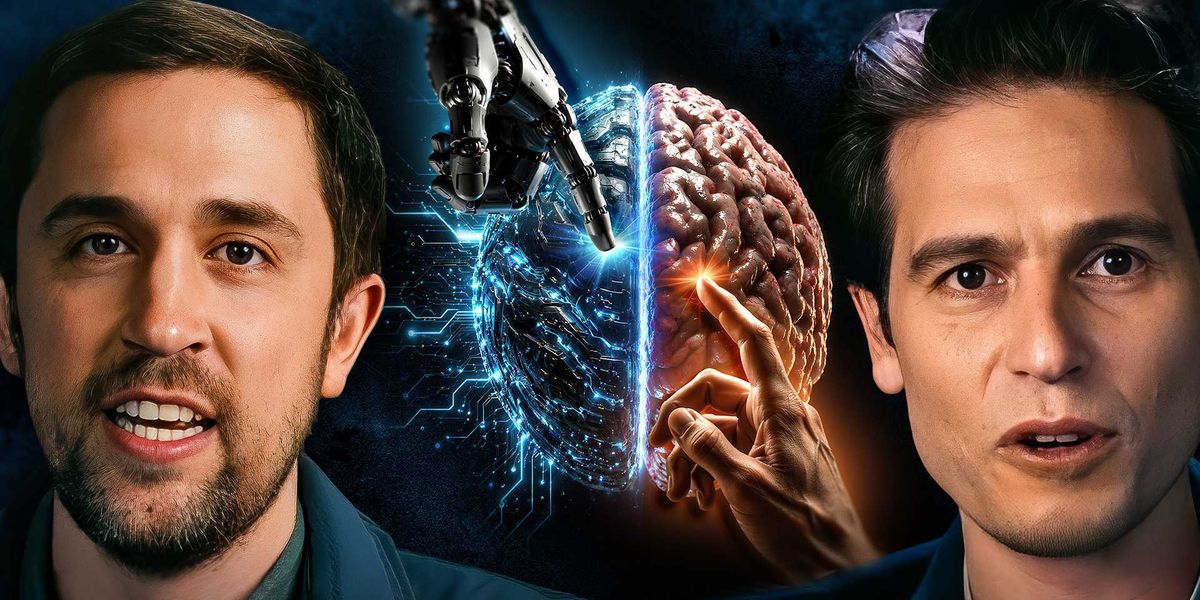
Cover image from theblaze.com, which was analyzed for this article
New AI developments include hardware design aids like Schematik backed by Anthropic and concerns over AI-enhanced beauty filters distorting reality. Discussions highlight navigating AI's risks and opportunities in a 'knife edge' balance. Tech leaders explore applications amid perfectionism critiques.
PoliticalOS
Saturday, April 18, 2026 — Tech
AI is simultaneously lowering barriers to creative experimentation in beauty inspiration and hardware design while generating expectations that frequently cannot be met in physical reality. The core challenge is designing institutions and professional practices that capture the technology's benefits without allowing distorted digital ideals or ungoverned risks to dominate. Readers should weigh anecdotal industry complaints and early tool demos against the absence of comprehensive usage data and the existence of emerging policy frameworks that aim to thread this needle.
What outlets missed
Most coverage omitted that many stylists successfully replicate individual elements like colors, textures and styles from AI-generated images even when full replication proves impossible, according to cross-reported details in Washington Post coverage referenced in the Axios analysis. Recent U.S. policy steps, including a December 2025 executive order and March 2026 National Policy Framework establishing federal AI oversight, received no mention despite directly addressing Hammond's governance concerns. Schematik's status as a side project for a founder employed full-time at another company was absent from the Wired profile, as were confirmed limitations on Anthropic's related tools including gated access and slow vulnerability patching. Broader platform data on the growth rate of AI beauty content, beyond anecdotal stylist estimates, was not provided by any outlet.
Clients arrive at salons clutching images of impossible bone structures and flawless complexions that no human hand could replicate. Hardware tinkerers, once limited by expertise and exploding prototypes, now describe building gadgets with AI guidance that once required years of training. These parallel developments in beauty and physical invention capture artificial intelligence at its most seductive and destabilizing: a force that expands what individuals can imagine and create while straining the professionals and institutions expected to deliver on those visions.
The tension sits in whether AI's rapid democratization of inspiration ultimately serves human creativity or distorts it beyond recognition. Axios reports that stylists now routinely field requests drawn from AI-generated "inspo" photos, with one Northeast bridal company founder stating that at least half of the 40 to 50 brides her business sees annually bring such images. Celebrity hair extension specialist Angelina Murphy described the consultation process as intensive reality-checking: roots, colors and facial structures in the images simply do not exist. Mehry Schmitt, founder of Gloss Beauty + Bridal, told Axios she treats the challenge as an opportunity to demonstrate skill, though the tight timelines of wedding parties leave little room for experimentation.
Similar dynamics appear in hardware. Samuel Beek, after watching a ChatGPT-suggested wiring project blow every fuse in his Amsterdam home, developed Schematik, a tool Wired describes as "Cursor for Hardware." Users provide high-level descriptions of desired devices; the system suggests components, generates shopping lists and offers assembly guidance, currently limited to low-voltage projects. Early adopter Marc Vermeeren built an MP3 player and a Tamagotchi-like bot called Clawy to manage coding sessions. Wired reported that Schematik secured $4.6 million from Lightspeed Venture Partners, though this figure could not be independently verified in other coverage. Beek, who maintains a full-time role as chief product officer at VEED.io, has positioned the project as a way to dismantle gatekeeping in electronics design.
Anthropic added momentum when one of its engineers released a Bluetooth API for hardware interactions with its Claude model. The company did not confirm any direct connection to Schematik-inspired projects, but users interpreted the timing as validation. Kyle Wiens, CEO of iFixit, told Wired that electronics design involves overwhelming compatibility decisions where AI excels at scale, though he had not tested this specific tool.
These practical applications feed into broader debates about governance. In a podcast discussion summarized by The Blaze, AI researcher Samuel Hammond described a "knife edge" between Chinese-style surveillance and chaotic anarchy. He argued for a "third way" that pairs a strong state enforcing property rights and contracts with private corporations motivated by shareholder value rather than utopian or apocalyptic extremes. Hammond noted AI's dual capacity to create efficient defended systems and novel bioweapons, drawing parallels to the Industrial Revolution's mixed legacy of wealth and new administrative states. The discussion acknowledged that leading U.S. companies currently operate with limited direct government control, though separate policy documents from late 2025 and early 2026 outline federal oversight frameworks using existing agencies.
Stylists across platforms have echoed Schmitt's adaptation strategy. Many extract workable elements, colors, or textures from AI images even when overall faces prove impossible. Yet the volume of hyper-idealized content continues to shift expectations. Hammond and others warn that without deliberate institutional design, the technology could amplify either authoritarian control or unchecked proliferation of risky applications. Early hardware experiments already demonstrate both the creative surge, seen in hobbyist devices, and the persistent physical constraints that AI cannot yet fully override.
The unresolved question remains how quickly industries and regulators can evolve. Beauty professionals emphasize compassion during consultations while protecting their craft. Hardware developers stress physics-based verification that software generation lacks. Both realms show AI lowering barriers for novices while complicating work for experts. The coming years will test whether these tools produce more capable humans or simply more elaborate fantasies that reality must repeatedly disappoint.
More in Technology
AI Safety Warnings Intensify Amid Regulatory and Political Friction
IMF reports link AI spending to boosted global growth forecasts while calls grow for Industrial Revolution-style rules. Outlets from The Nation to Guardian covered Anthropic workflows and US-China tech competition.

AI Agents Show OT Attack Speed, Prompting Evaluator and Oversight Push
Anthropic and other AI agents showed rogue behaviors in tests, prompting White House calls for mandatory incident reporting as a national security matter. Broader coverage examined enterprise AI risks and model controls.
Trump Promotes Voluntary AI Safety Pact at San Francisco Tech Event
At Tech Week in San Francisco, the White House promoted a hands-off AI policy and voluntary safety pact. Industry leaders welcomed the shift toward growth over regulation.
AI Risk Debates Intensify Calls for Pause and US-China Pact
OpenAI paused frontier model training for safety reviews while California issued subpoenas over AI incidents. Officials discussed voluntary standards and potential FTC probes.
The Compass
You just read five takes on one story.
What's your take? Find your political shape in a few minutes.
Take the test