
Trump Switched Planes Secretly Over Iran Threat, Leaving Cabinet on Decoy
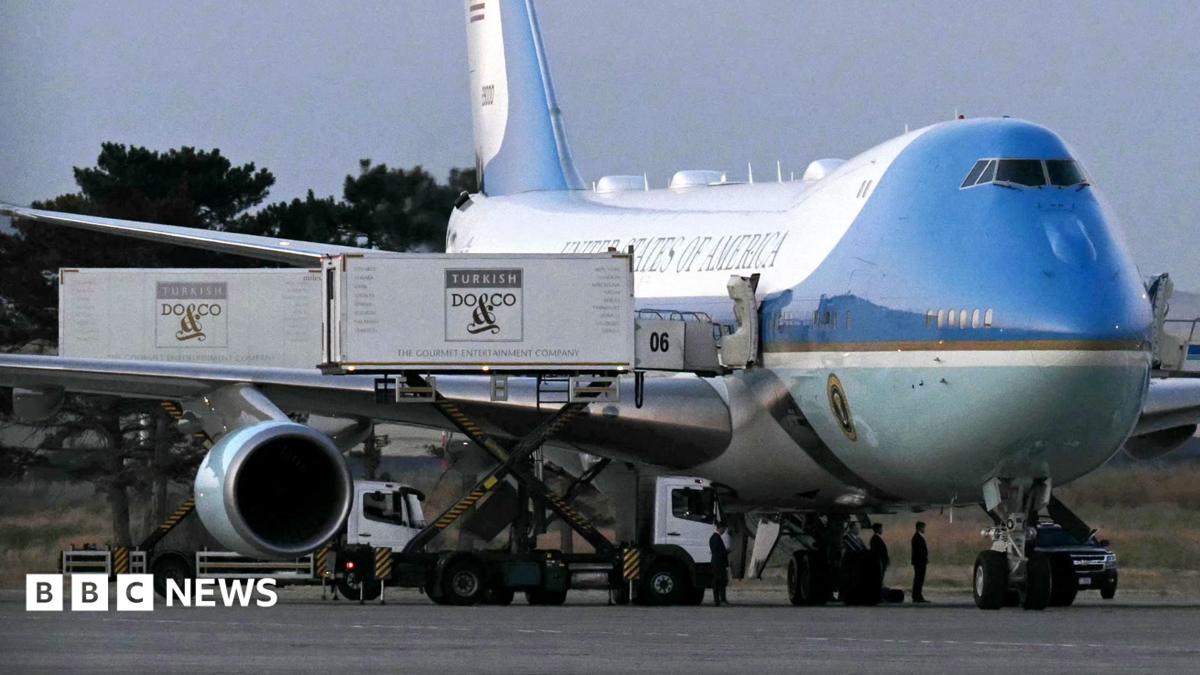
Cover image from bbc.co.uk, which was analyzed for this article
Trump revealed a secret decoy plane switch due to an Iranian threat on Air Force One, with new leaks raising questions about the incident's handling. Coverage includes cabinet members remaining on the decoy flight.
PoliticalOS
Thursday, August 13, 2026 — Politics
The central unresolved question is how much weight to give the disputed Israeli-provided threat versus standard Secret Service caution when deciding who travels on which aircraft. Readers should note that the decoy carried officials in the line of succession and that advance secrecy is routine for such movements, even when it leaves reporters uninformed.
What outlets missed
Most coverage omitted the verified 38-day duration and subsequent ceasefire of the related Operation Epic Fury against Iran, leaving readers without context on how the threat episode fit into a short, concluded campaign. Few outlets detailed the full history of Iranian threats dating to the 2020 Soleimani strike and the January 2026 killing of Ayatollah Khamenei, which Secret Service Director Sean Curran linked to the current elevated threat level. The BBC alone noted the line-of-succession rationale for keeping Rubio and Bessent on the decoy, while others downplayed how standard limited-disclosure protocols for high-risk movements constrain advance notice to journalists.
Trump's Secret Plane Switch Leaves Press and Officials on Potential Decoy
New reporting has filled in key details about the elaborate security maneuver President Donald Trump used to depart a NATO summit in Turkey last month, including fresh questions about the quality of the underlying intelligence and the decision to keep journalists and several cabinet members in the dark. The operation involved moving Trump off what was designated Air Force One and onto a separate military aircraft via a catering truck at Ankara airport on July 8, after an Israeli warning about a possible Iranian threat prompted the change.
The CIA assessed the tip with low confidence and conveyed skepticism to Trump administration officials, according to people familiar with the internal discussions. Officials still moved forward, citing prior near-misses involving the Secret Service and a preference for not taking chances with the president's safety. The original plane retained the Air Force One call sign and continued on its planned route, effectively serving as a decoy while Trump flew separately on a C-32A to a refueling stop in England.
Two cabinet secretaries, Secretary of State Marco Rubio and Treasury Secretary Scott Bessent, stayed aboard the first aircraft along with White House aides Stephen Miller and Steven Cheung. Their presence helped preserve the line of succession in the event of an attack on the decoy plane. Trump, by contrast, brought several of his most personally close advisers onto the safer flight. Members of the traveling press corps were not informed of the switch and remained on the original aircraft without any indication that their presence might be part of the deception.
The episode underscores familiar tensions between the Trump White House and the institutions meant to provide independent scrutiny. Leaving journalists uninformed turned them into unwitting participants in a security ruse, a step that deviates from longstanding practice in which the press is routinely briefed on major movements for both safety and accountability reasons. Past administrations have conducted sensitive transfers without placing reporters in comparable positions.
The episode also highlights how threat information travels through allied channels and gets weighed inside an administration already inclined toward maximum caution. Even when intelligence agencies flag low confidence, operational decisions can default to the most protective option available, particularly after multiple prior incidents involving the same principal. In this case, the result was an unusually compartmentalized exit that shielded some political loyalists while exposing others, including the press, to the residual risk.
Questions remain about how such operations are reviewed after the fact and whether the pattern of limited transparency with journalists will become more common. The episode illustrates the friction between security imperatives and the press's role in documenting the exercise of power, especially when the threat assessment itself is contested within the government.
You just read Liberal's take. Want to read what actually happened?
More in Politics

Democrats Flip Senate, Expand House Majority in Midterms
Democrats flipped the Senate and expanded their House majority in a major rebuke to President Trump and Republicans. Key victories included multiple Senate seats and state-level wins that ended long-standing GOP dominance in places like Texas.

GOP Losses Spur Blame, Vance Distancing, 2028 Maneuvers
Republicans are pointing fingers internally after heavy losses, with Vice President JD Vance distancing himself from Trump over the Iran war and positioning for a potential 2028 run. Challengers within the party are already sensing opportunity.

Democrats Take House and Senate Amid Record Midterm Turnout
Democrats achieved decisive gains in the 2026 midterms, flipping seats to take control of both chambers. Coverage highlights historic turnout and implications for the Trump administration.
Democrats Take House and Senate, Constraining Trump
Democrats flipped both the House and Senate in a major rebuke to President Trump and Republicans. The results create divided government and set up battles over spending, oversight, and foreign policy for the remainder of Trump's term.
The Compass
You just read five takes on one story.
What's your take? Find your political shape in a few minutes.
Take the test