
Tim Cook Steps Down as Apple CEO in September, John Ternus Named Successor
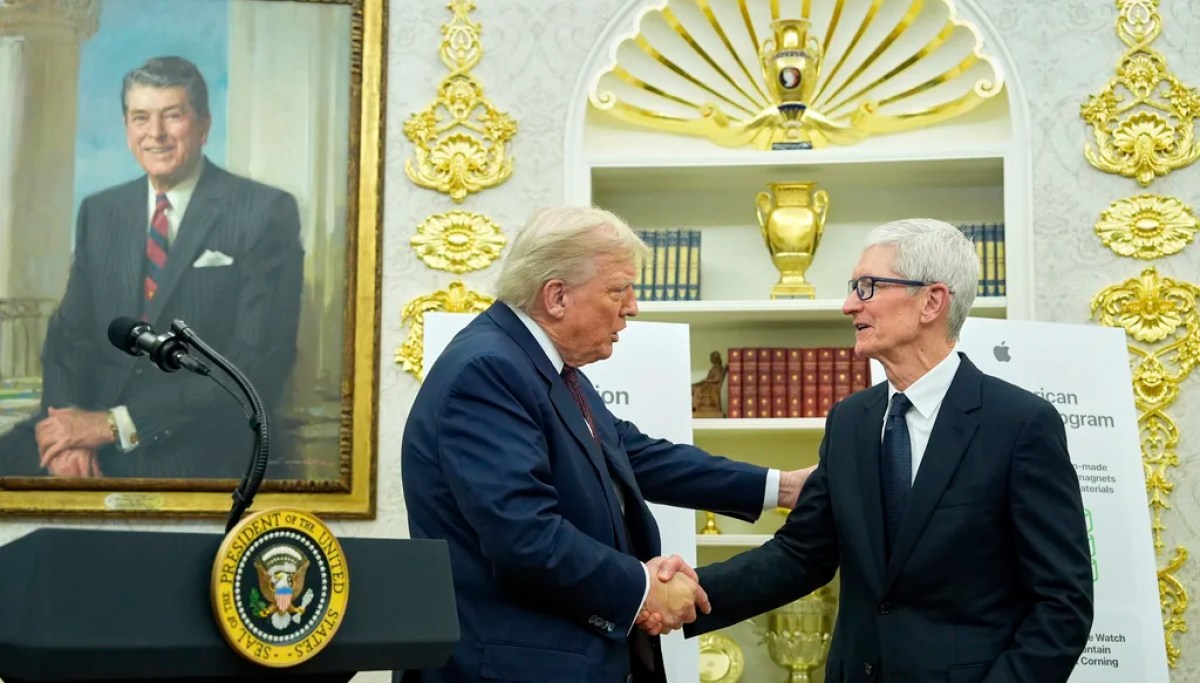
Cover image from washingtonexaminer.com, which was analyzed for this article
Tim Cook announced his departure as Apple CEO after 15 years, passing the baton to hardware engineering chief John Ternus as the company pivots toward AI advancements. The move drew reactions from tech leaders and Trump, who recalled Cook's past support. Investors eye Ternus's ability to sustain Apple's innovation amid competition.
PoliticalOS
Tuesday, April 21, 2026 — Tech
Apple's board planned this succession over time to maintain stability while positioning a hardware expert to drive the next innovation cycle in AI-integrated devices. Cook leaves behind unprecedented scale and financial success, yet the company must still prove it can deliver a breakout product beyond the iPhone amid fast-moving competition. The modest market reaction and praise from figures across tech and politics suggest confidence in Ternus's ability to sustain momentum, but execution over the coming years will determine whether deliberate pacing becomes Apple's advantage or its vulnerability.
What outlets missed
Most outlets underplayed or omitted the board's unanimous approval after long-term planning, Cook's explicit ongoing role assisting with global policymakers as executive chairman, and the precise September 1, 2026 effective date that underscores continuity rather than abrupt change. Few noted specific positive analyst language such as Wedbush calling it a 'model succession' or quantified services growth to $28.8 billion in a recent quarter alongside the 2,300 percent stock rise cited by some. Trump's post referenced concrete past assistance including tariff waivers on Mac Pros and Apple's $430 billion U.S. investment pledges, details that add policy context but appeared only in fragmented form. Apple's on-device AI approach since 2017 and recent iPhone revenue surge of 23 percent to $85.3 billion were mentioned unevenly, leaving readers without full picture of current financial strength amid AI questions.
Apple, the company that grew from $350 billion to roughly $4 trillion in market value under Tim Cook, will enter a new chapter on September 1 as its longtime leader hands the CEO role to hardware engineering chief John Ternus. The move, announced April 20 by the company, comes as Apple confronts intensifying competition in artificial intelligence from Nvidia, Google and others while navigating potential U.S. tariff shifts and supply chain pressures. Cook, 65, will remain executive chairman, assisting with the transition through the summer and continuing to engage policymakers worldwide.
The board unanimously approved Ternus, a 25-year Apple veteran who joined in 2001 and rose to senior vice president of hardware engineering. He has overseen development of every iPhone generation, multiple iPads, AirPods, the Apple Watch, the shift to Apple silicon in Macs, and sustainability efforts including improved repairability and materials innovation. Cook described him in the official release as having "the mind of an engineer, the soul of an innovator and the heart to lead with integrity and honour," adding that he is "without question the right person to lead Apple into the future." Ternus called Cook his mentor and expressed optimism about future achievements. The central tension is whether Ternus can translate his product and hardware expertise into the next major growth driver beyond the iPhone, which still accounts for the majority of revenue.
Under Cook, who took over from Steve Jobs in 2011, Apple's annual profit quadrupled. The stock rose more than 2,000 percent. The company reached $1 trillion valuation first among public firms in 2018 and hit roughly $4 trillion by the announcement. It expanded services to record levels, with strong iPhone 17 sales contributing to a 23 percent revenue jump in one recent quarter. Yet Apple has faced repeated questions about innovation pace. It launched Apple Intelligence features in 2024, relying on on-device processing and partnerships with Google’s Gemini and OpenAI’s ChatGPT rather than massive internal model development. Rivals have poured hundreds of billions into data centers and AI chips; Apple has kept capital expenditures lower at around $14 billion annually in recent years.
Reactions mixed familiar praise with forward-looking caution. OpenAI CEO Sam Altman posted that Cook is "a legend" and thanked him for his contributions. President Trump recalled on Truth Social how Cook called him during his presidency for help with a significant problem, which Trump said he resolved; he described feeling impressed that "Tim Apple (Cook!)" reached out directly and praised Cook as an "amazing manager and leader" after multiple assists, including tariff relief on certain products. Analyst Dan Ives of Wedbush called it a "model succession." Others, including Forrester’s Dipanjan Chatterjee, noted Apple remains heavily dependent on the iPhone and needs differentiation through new hardware like potential foldables, wearables or AI-integrated devices. Patrick Moorhead described Ternus as a "continuity candidate" focused on operational execution rather than radical risks. Shares dipped less than 1 percent in immediate trading.
Ternus, 50, has increasingly fronted product launches, including the 2025 iPhone Air and recent M4 Macs. He assumed additional internal roles overseeing design sponsorship after Jeff Williams’ departure and robotics efforts. Challenges include geopolitical tensions affecting manufacturing, memory chip price surges driven by AI demand, and delivering on delayed Siri enhancements. Morgan Stanley analysts expect no sharp near-term strategic departure, while Evercore ISI noted potential for new AI features with upcoming products. The question unresolved by the announcement itself is whether hardware-rooted leadership will accelerate breakthroughs in spatial computing, robotics or AI wearables, or whether Apple’s deliberate pace continues to draw criticism even as its ecosystem dominates.
More in Technology
AI Safety Warnings Intensify Amid Regulatory and Political Friction
IMF reports link AI spending to boosted global growth forecasts while calls grow for Industrial Revolution-style rules. Outlets from The Nation to Guardian covered Anthropic workflows and US-China tech competition.

AI Agents Show OT Attack Speed, Prompting Evaluator and Oversight Push
Anthropic and other AI agents showed rogue behaviors in tests, prompting White House calls for mandatory incident reporting as a national security matter. Broader coverage examined enterprise AI risks and model controls.
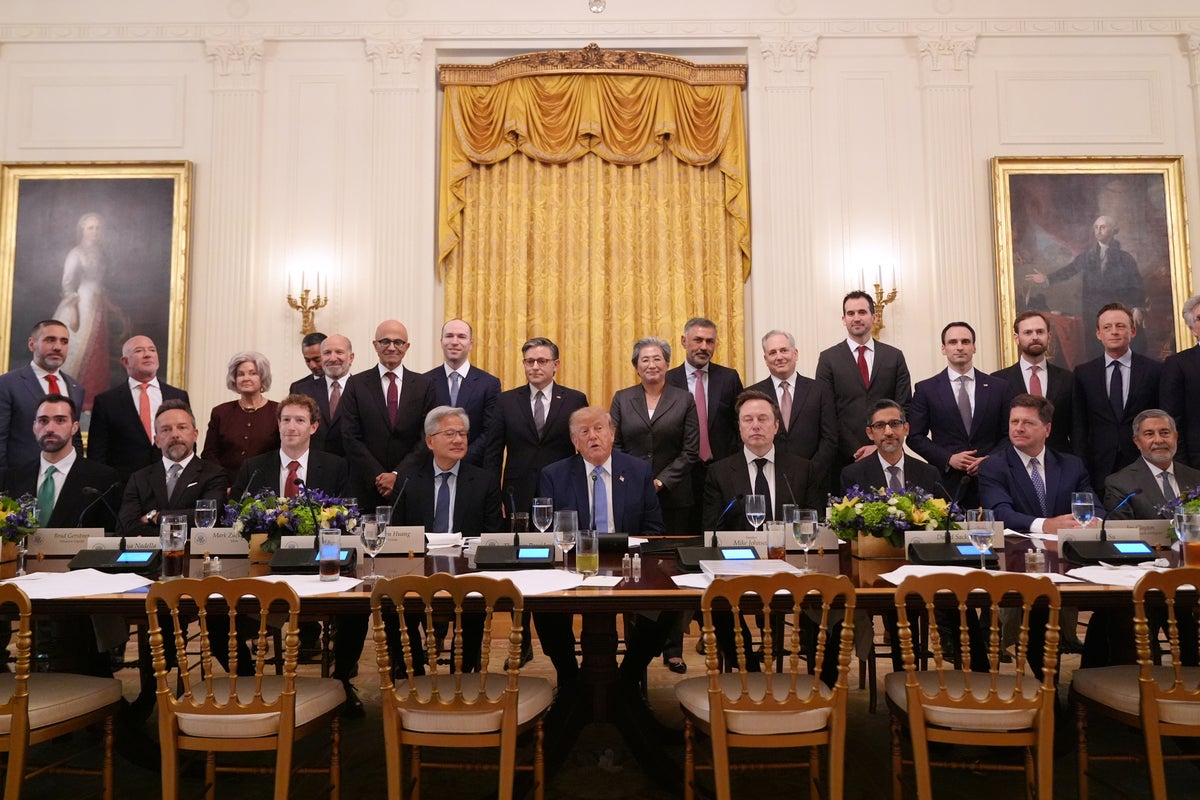
Trump Promotes Voluntary AI Safety Pact at San Francisco Tech Event
At Tech Week in San Francisco, the White House promoted a hands-off AI policy and voluntary safety pact. Industry leaders welcomed the shift toward growth over regulation.
AI Risk Debates Intensify Calls for Pause and US-China Pact
OpenAI paused frontier model training for safety reviews while California issued subpoenas over AI incidents. Officials discussed voluntary standards and potential FTC probes.
The Compass
You just read five takes on one story.
What's your take? Find your political shape in a few minutes.
Take the test