
Artemis II Success Puts NASA's Moon Landing in SpaceX's Hands

Cover image from motherjones.com, which was analyzed for this article
America's next lunar mission under the Artemis program relies significantly on Elon Musk and SpaceX capabilities, raising questions of dependency. Astronaut Victor Glover, part of the program, exemplifies commitment amid preparations. The initiative advances US space ambitions despite challenges.
PoliticalOS
Saturday, April 18, 2026 — Tech
Artemis II successfully demonstrated NASA's ability to send astronauts around the moon again, with Victor Glover exemplifying the skill and personal dedication required. The landing missions that follow now hinge on SpaceX delivering a human-rated lander on an aggressive schedule, even as NASA operates with 20 percent fewer staff and reduced internal oversight capacity. The central question is whether the innovation gains from this public-private model outweigh the risks of depending so heavily on one company and one individual.
What outlets missed
Both articles omitted the broader international dimension of Artemis, including contributions from the European Space Agency, Japan and Canada to Orion and other hardware that reduce sole dependence on U.S. contractors. Coverage also underplayed how SpaceX's prior Crew-1 flight with Glover himself demonstrated years of successful NASA-commercial integration rather than a sudden shift. Neither piece examined the Space Launch System rocket — developed in-house by NASA at far higher cost — which remains the program's primary heavy-lift vehicle and is not supplied by Musk. The Washington Examiner ignored all financial, workforce and scheduling data, while Mother Jones gave minimal space to the verified engineering achievements that made Artemis II possible on revised timelines.
The United States has taken one more step toward the moon. With Artemis II now complete, four astronauts have traveled farther from Earth than any humans since the Apollo era. Yet the next phase — an actual landing — depends on technology from a single company led by Elon Musk. That reliance carries real consequences for cost, schedule and national capability.
Artemis II looped around the moon last week after a nine-day voyage. Victor Glover, a U.S. Navy captain and NASA astronaut since 2013, piloted the Orion spacecraft. Glover brought more than 3,000 flight hours and prior experience on SpaceX's Crew-1 mission to the International Space Station. Upon returning to his Houston-area community, he received a hero's welcome and urged residents to treat one another better. "We need Jesus, whether here on Earth or orbiting the moon," Glover said, according to multiple accounts of his remarks. He also referenced the biblical command to love God and love one's neighbor.
Those words captured public attention. They also underscored the human commitment behind a program that has absorbed technical delays, budget fights and workforce upheaval. No human has stood on the lunar surface since 1972. Apollo's hardware cannot support NASA's current goal of sustained presence rather than brief visits. For the landing system that will carry astronauts to the surface on Artemis III, NASA turned to SpaceX.
The contract is not small. SpaceX has received nearly $15 billion from NASA across programs, according to a Washington Post investigation, with Artemis work driving much of the recent growth. The company developed the Human Landing System based on a version of its Starship vehicle. Casey Dreier of the Planetary Society described the partnership as a model for lowering launch costs through reusability while spurring innovation. Falcon 9 costs per kilogram have fallen sharply from early figures near $10,000 to below $3,000 in recent years, per NASA and independent analyses.
Yet the arrangement has also concentrated power. One report cited in coverage noted a 38 percent decline in unique NASA contractors between 2021 and 2024 as SpaceX's share expanded; that specific figure could not be independently verified in other outlets. A former NASA financial officer told Mother Jones that SpaceX has raised certain prices for NASA even after achieving reusability savings and that it has reduced competition by outpacing rivals. "Musk can do basically whatever he wants with the rocket launches," the unnamed official said.
Political and administrative changes have amplified the stakes. Under the Trump administration, NASA's workforce shrank by about 20 percent after Musk's involvement with the Department of Government Efficiency. The agency also lost its Office of Technology, Policy and Strategy, which had reviewed contractor pricing and market dynamics. Congress preserved NASA's $24.4 billion annual budget and added nearly $10 billion over six years, but the staff cuts left fewer experts to oversee complex missions. A NASA inspector general report warned that SpaceX faces tight margins on remaining lander work and may miss the current mid-2027 target for Artemis III. NASA has solicited proposals from both SpaceX and Jeff Bezos's Blue Origin to accelerate progress. Blue Origin is already two years behind on its separate Artemis contributions.
The central tension is clear. Private partnerships have delivered faster innovation and lower costs than government-only efforts achieved in the shuttle era. At the same time, handing so much responsibility to one entrepreneur — whose companies are also building Starlink, pursuing Mars plans and navigating political roles — creates a single point of failure. Musk has called the moon "a distraction" in the past while prioritizing Mars, though SpaceX continues to meet its Artemis milestones so far.
Glover's career offers one measure of continuity. A veteran of 24 combat missions according to NASA biographical materials, he has spoken publicly about faith shaping his preparation. Some accounts claim he carried a Bible and communion elements to the space station; those specifics were not corroborated across all reporting. What is documented is his consistent emphasis on service and excellence, whether flying fighters or piloting Orion. His callsign "Ike," short for "I know everything," reflects the intense preparation demanded by the role.
Questions remain unresolved. Can NASA rebuild enough internal expertise to manage contractors effectively? Will competition from Blue Origin or future entrants prevent price escalation? And will the landing occur before political priorities shift again? The Artemis II flyby proved the Orion spacecraft works. The landing system has yet to fly with humans. Success will depend on execution more than inspiration — and on whether the bet on Musk's company pays off before the decade ends.
More in Technology

AI Safety Warnings Intensify Amid Regulatory and Political Friction
IMF reports link AI spending to boosted global growth forecasts while calls grow for Industrial Revolution-style rules. Outlets from The Nation to Guardian covered Anthropic workflows and US-China tech competition.

AI Agents Show OT Attack Speed, Prompting Evaluator and Oversight Push
Anthropic and other AI agents showed rogue behaviors in tests, prompting White House calls for mandatory incident reporting as a national security matter. Broader coverage examined enterprise AI risks and model controls.
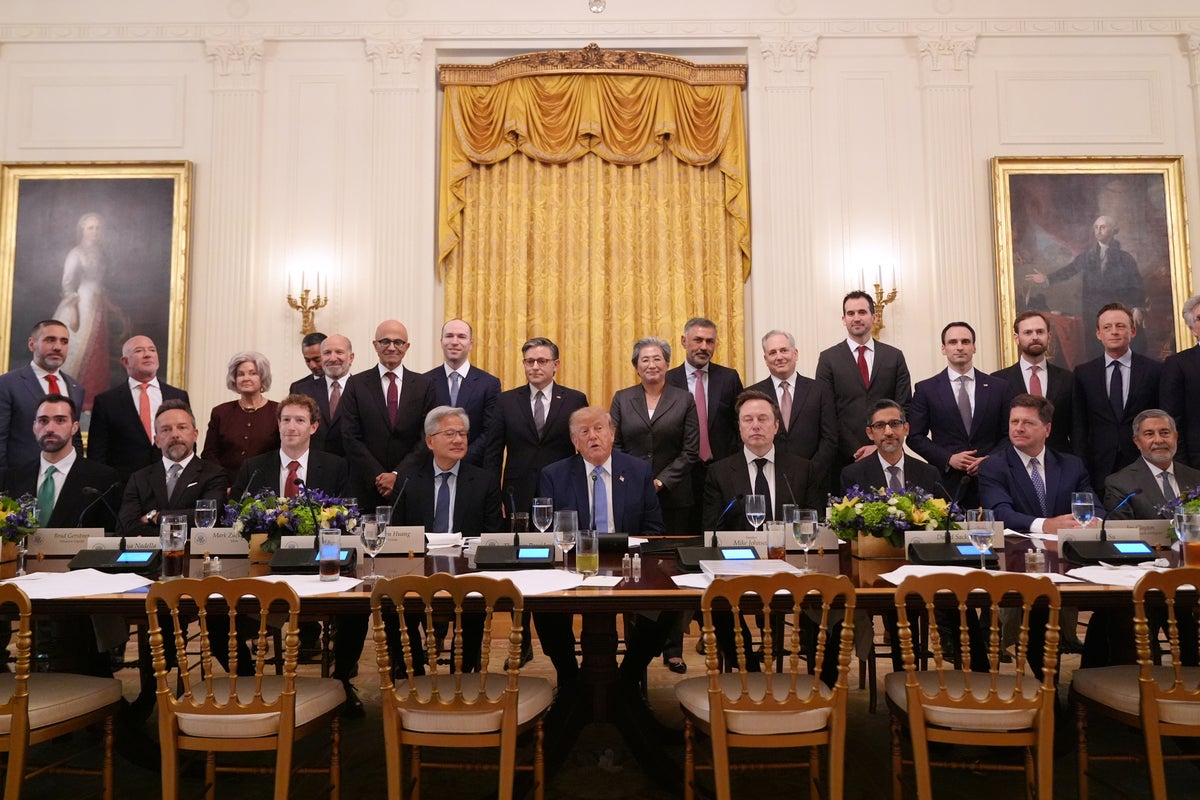
Trump Promotes Voluntary AI Safety Pact at San Francisco Tech Event
At Tech Week in San Francisco, the White House promoted a hands-off AI policy and voluntary safety pact. Industry leaders welcomed the shift toward growth over regulation.

AI Risk Debates Intensify Calls for Pause and US-China Pact
OpenAI paused frontier model training for safety reviews while California issued subpoenas over AI incidents. Officials discussed voluntary standards and potential FTC probes.
The Compass
You just read five takes on one story.
What's your take? Find your political shape in a few minutes.
Take the test