
Big Tech Accelerates Quantum Defenses as Q-Day Threat Draws Closer

Cover image from technologyreview.com, which was analyzed for this article
Recent breakthroughs bring Big Tech closer to quantum supremacy risks on Q-Day, when encryption could crack. Coverage highlights innovation pace and security implications. Industry pushes boundaries in computing power.
PoliticalOS
Friday, April 17, 2026 — Tech
New research on breaking elliptic-curve signatures with far fewer qubits than previously estimated has prompted Google and Cloudflare to target full post-quantum readiness by 2029, several years ahead of Microsoft, Amazon and lagging peers. The probability of a cryptographically relevant quantum computer arriving before 2035 remains low but the downside is existential, shifting priority from stored-data attacks to real-time authentication threats. Prudent risk management requires coordinated acceleration across the entire technology stack; waiting for certainty guarantees failure.
What outlets missed
Coverage largely treated company timelines and qubit estimates in isolation. Few noted that Google's circuits still require 70-90 million Toffoli gates, an operation currently difficult to scale. Current quantum hardware realities received little attention: the largest experimental arrays sit at roughly 6,000 qubits while fault-tolerant systems may need hundreds of thousands of physical qubits for error correction. The IOWN Forum's optical interconnect work was not linked to the classical control layer quantum computers will need. Technology Review's maintenance critique never addressed cryptographic upkeep as a civilizational-scale maintenance problem. No outlet fully reconciled the tension between rapid innovation in quantum research and the slow, unglamorous work of updating billions of devices and certificates.
The systems securing bank transfers, medical records, military communications and private messages face a clock that just ticked faster. Two recent research papers have convinced Google and Cloudflare to pull their full transition to post-quantum cryptography forward by five years, to 2029. The rest of the industry is moving on staggered schedules that stretch to 2033. No one knows exactly when a cryptographically relevant quantum computer will arrive. The uncertainty itself has become the story.
Those papers shift attention from theoretical breakthroughs to practical danger. One, from Oratomic, indicates a neutral-atom quantum architecture could break 256-bit elliptic curve cryptography with as few as 10,000 physical qubits. Google's accompanying work showed circuits requiring only 1,200 logical qubits could crack ECC-256 in nine minutes, according to Ars Technica. The speed matters. Previous planning centered on "harvest now, decrypt later" attacks in which adversaries stockpile encrypted data today for decryption tomorrow. Real-time attacks on digital signatures would let an adversary spoof certificates, hijack software updates or impersonate trusted servers instantly. Cloudflare researchers described overlooked quantum-vulnerable keys as potential remote code execution vectors.
Google and Cloudflare have therefore reprioritized authentication schemes over pure encryption upgrades. The latter is comparatively straightforward. The former involves tangled dependency chains, third-party validation and years of testing. Both companies publicly revised internal deadlines weeks after the papers appeared. Amazon told Ars Technica it remains on track for the Defense Department's 2031 mandate for national-security systems and uses an in-house SigV4 method that limits secret transmission to initial generation. Microsoft set 2033 as its target, citing participation in the Open Quantum Safe project since 2014, adherence to NIST standards and a platform-first rollout starting with Windows, Azure and identity services. Meta published principles and a maturity taxonomy ranging from "PQ unaware" to a "platinum standard" of full protection but declined to disclose an internal deadline. Apple did not respond to inquiries.
Experts frame the acceleration as actuarial prudence rather than panic. Stanford cryptographer Dan Boneh called the internet-wide migration for digital signatures a massive undertaking and said the 2029 goal builds in necessary slack. Former Microsoft cryptography engineer Brian LaMacchia described it as risk management: even a 5 percent chance of a cryptographically relevant quantum computer by 2030 carries catastrophic downside when paired with multi-year transition times. Scott Aaronson warned against denial while noting that constructing a machine capable of running Shor's algorithm at scale would demand Manhattan Project-level effort. Current hardware remains distant from requirements. Public machines top out at roughly 100 to a few thousand physical qubits; fault-tolerant logical qubits demand orders of magnitude more for error correction.
History supplies a warning. In 2010 sophisticated malware known as Flame exploited Microsoft's lingering use of the broken MD5 hash function to distribute malicious updates inside an Iranian government network. The flaw had been public since 2004. The incident, later attributed to US and Israeli intelligence, illustrated how even well-known vulnerabilities persist in sprawling infrastructure. Similar gaps could appear during the post-quantum transition.
US government benchmarks add pressure. The Defense Department requires quantum-safe algorithms in national security systems by the end of 2031. NIST has called for deprecation of vulnerable RSA and elliptic-curve algorithms by 2035. Whether industry meets those dates depends on execution. Authentication migration is harder than encryption upgrades. Legacy systems, third-party dependencies and the need for simultaneous interoperability complicate every step.
Parallel conversations about technology's long-term health surfaced in coverage around the same week. MIT Technology Review examined Stewart Brand's new book "Maintenance: Of Everything, Part One," which argues that upkeep deserves more honor than innovation receives. Reviewer Lee Vinsel, co-founder of the academic Maintainers network, credited Brand for spotlighting the issue yet criticized the work for treating maintenance as solitary fulfillment rather than collective responsibility. The review noted Brand's history with the Whole Earth Catalog and its libertarian emphasis on individual access to tools, contrasting it with movements focused on systemic change. Such perspectives matter when cryptographic infrastructure must be maintained across organizations and borders for decades.
Separately, The Register reported from the IOWN Global Forum's annual meeting in Sydney that datacenter interconnects have emerged as a leading use case. Forum leaders told the outlet that financial firms see value in linking to cheaper, distant facilities if latency stays low. All-photonic optical networks demonstrated synchronous replication over hundreds of kilometers in prior tests, according to IOWN statements. The technology could let neocloud GPU providers serve remote customers without performance penalties and support sovereign AI arrangements in which data never leaves owner-controlled infrastructure. These distributed architectures might eventually supply the enormous classical computing resources required to control and error-correct quantum machines, though no outlet explicitly connected the dots.
The central tension remains unresolved. Quantum progress is steady but hardware gaps are large. Migration timelines differ by as much as four years across major players. Probability estimates for cryptographically relevant quantum computing before 2035 range from very low to small-but-nonzero. Every expert agrees on one point: starting late guarantees failure. Google and Cloudflare have chosen to start sooner. The question is whether their peers, cloud customers, governments and the countless smaller organizations that rely on the same cryptographic primitives will match the pace. The difference between prudent preparation and belated scramble could determine whether Q-Day arrives as a manageable upgrade or a systemic breach.
More in Technology

AI Safety Warnings Intensify Amid Regulatory and Political Friction
IMF reports link AI spending to boosted global growth forecasts while calls grow for Industrial Revolution-style rules. Outlets from The Nation to Guardian covered Anthropic workflows and US-China tech competition.

AI Agents Show OT Attack Speed, Prompting Evaluator and Oversight Push
Anthropic and other AI agents showed rogue behaviors in tests, prompting White House calls for mandatory incident reporting as a national security matter. Broader coverage examined enterprise AI risks and model controls.
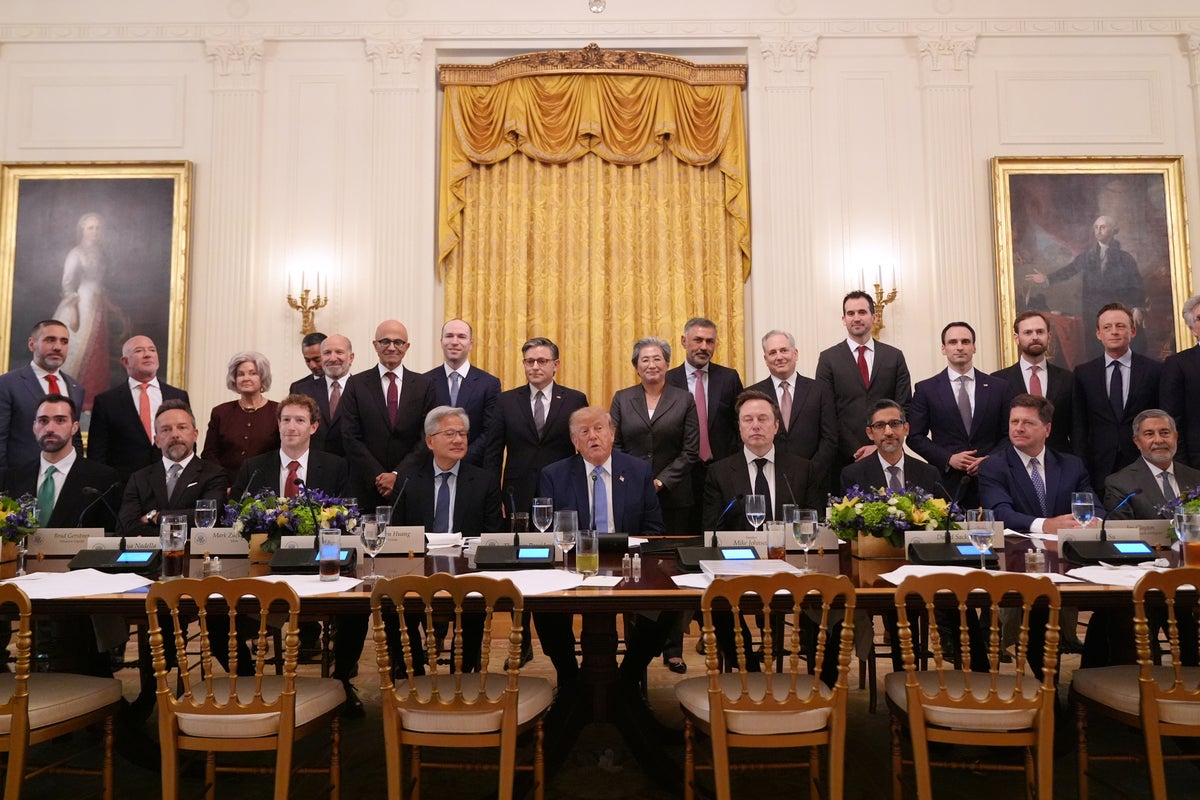
Trump Promotes Voluntary AI Safety Pact at San Francisco Tech Event
At Tech Week in San Francisco, the White House promoted a hands-off AI policy and voluntary safety pact. Industry leaders welcomed the shift toward growth over regulation.
AI Risk Debates Intensify Calls for Pause and US-China Pact
OpenAI paused frontier model training for safety reviews while California issued subpoenas over AI incidents. Officials discussed voluntary standards and potential FTC probes.
The Compass
You just read five takes on one story.
What's your take? Find your political shape in a few minutes.
Take the test