
Voters Wary of AI and Crypto as Industry PACs Flood Midterms
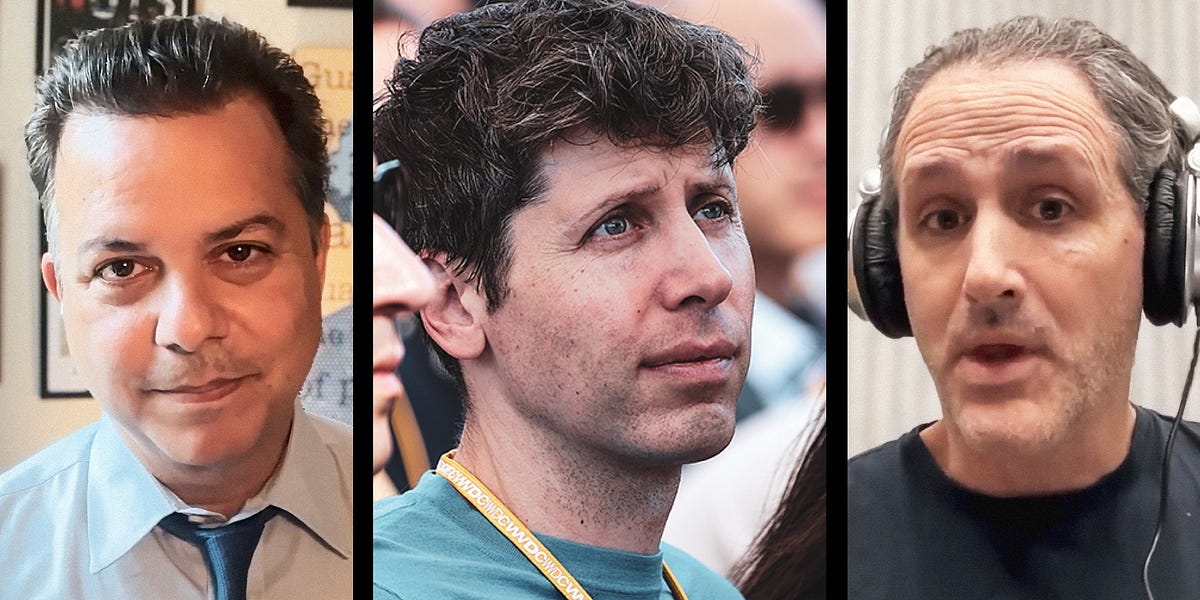
Cover image from thebulwark.com, which was analyzed for this article
Democrats and Republicans are united in concerns about AI, with polls showing public unease despite heavy midterm spending on tech and crypto. Warnings grow that AI could further erode democracy after social media.
PoliticalOS
Sunday, May 3, 2026 — Tech
Widespread public skepticism toward AI and crypto, centered on job losses, democratic risks and special-interest dominance, stands in sharp contrast to the record sums these industries are spending to shape the 2026 midterms. Despite courting candidates in both parties and pushing for uniform federal rules, the industries face the real possibility that financial influence will collide with voter distrust rather than overcome it. The most important reality is that past experience with social media has primed many Americans to view the next wave of technology with caution, making regulatory outcomes far from certain.
What outlets missed
Both outlets underplayed the IRS's documented AI expansion from 10 applications in 2022 to 126 currently deployed, alongside the specific GAO findings on management shortfalls, skills gaps and impending 25% workforce reductions that paint a more nuanced picture of implementation challenges rather than unqualified wins or unmitigated risks. Coverage also gave short shrift to rising real-world AI adoption, such as Quinnipiac data showing 51% of Americans using it for research, which sits alongside expressed skepticism and suggests the unease may be more abstract than absolute. The full scale of crypto PAC reserves, reported elsewhere as approaching $190 million entering the cycle, received only partial treatment, as did the explicit industry goal of securing federal preemption over state AI laws to avoid regulatory fragmentation. Finally, neither fully integrated how Operation Warp Speed's AI-adjacent tools were tied more closely to platforms like Palantir than to the core vaccine initiative itself, an unverified detail in promotional contexts that deserved clearer sourcing.
Americans are uneasy about artificial intelligence and cryptocurrency. This discomfort persists even as allied super PACs pour tens of millions into the 2026 midterms, funding candidates in both parties and rivaling traditional party organizations in spending power.
The central tension is whether financial muscle can overcome public skepticism or whether it will provoke backlash against perceived special-interest overreach. A survey reported by Politico, whose full methodology has not been independently corroborated by other outlets, found more than half of respondents say they have never and would not consider buying or trading cryptocurrency. Nearly half believe AI is likely to eliminate more jobs than it creates. A 43 percent plurality sees the technology's risks as outweighing its benefits. Separately, 41 percent view special interest groups as wielding too much political influence.
Spending has reached striking levels. The pro-AI group Leading the Future raised more than $75 million since launching last August, according to Federal Election Commission filings, and has backed candidates across party lines in multiple state primaries. The crypto-aligned network anchored by Fairshake, funded largely by Coinbase, Andreessen Horowitz and Ripple Labs, spent $28 million in competitive primaries this cycle and previously deployed more than $40 million to help defeat Sen. Sherrod Brown in 2024. Industry lobbyists have also increased activity. OpenAI and Anthropic together spent record sums in the first quarter of 2026 alone.
These efforts aim at concrete goals. Crypto interests are pushing the CLARITY Act in the Senate to establish federal market rules and legitimacy. AI groups seek a single national regulatory framework instead of a growing patchwork of state laws. Advocates argue this is essential to compete with China. A spokesperson for Leading the Future stated that such rules would prevent conflicting state measures from harming America's position in the global AI race.
Democrats and some Republicans share voter concerns. Sen. Chris Murphy has urged his party to highlight the spending, arguing that Americans do not want AI companies to dominate them culturally or economically and do not trust crypto. Yet the PACs deliberately court bipartisanship. Former Republican Senate campaign officials note the strategy is to identify champions on both sides who will support lighter-touch regulation.
Warnings about longer-term societal harm have intensified. A recent Bulwark podcast hosted by John Avlon with author Josh Tyrangiel opened with the assertion that technology, beginning with social media, has damaged democracy and that AI could accelerate the erosion; the precise causal claims about social media were not supported by empirical citations in the episode description. The discussion then turned to under-discussed successes. Participants pointed to AI's role in aspects of Operation Warp Speed and incremental improvements at the IRS. Government accountability records show the IRS expanded from 10 AI applications in 2022 to 126 in use with 61 more in development, partly funded by the Inflation Reduction Act, focusing on fraud detection, audits and chatbots. Those gains come with documented friction. A GAO report highlights skills gaps, strategic management shortfalls and the prospect of 25 percent workforce reductions in 2025 that could hinder further progress.
It remains too early to measure how this money will affect November outcomes. Hypothetical matchups in the unreleased poll suggested voters would prefer candidates backed by groups favoring stricter AI rules over those seeking looser ones. Public adoption of AI tools for research has meanwhile risen in other surveys, indicating the gap between abstract fears and practical use. The unresolved question is whether voters will ultimately punish or reward the politicians who accept this new wave of outside funding on issues that feel simultaneously distant and threatening.
More in Technology

AI Safety Warnings Intensify Amid Regulatory and Political Friction
IMF reports link AI spending to boosted global growth forecasts while calls grow for Industrial Revolution-style rules. Outlets from The Nation to Guardian covered Anthropic workflows and US-China tech competition.

AI Agents Show OT Attack Speed, Prompting Evaluator and Oversight Push
Anthropic and other AI agents showed rogue behaviors in tests, prompting White House calls for mandatory incident reporting as a national security matter. Broader coverage examined enterprise AI risks and model controls.
Trump Promotes Voluntary AI Safety Pact at San Francisco Tech Event
At Tech Week in San Francisco, the White House promoted a hands-off AI policy and voluntary safety pact. Industry leaders welcomed the shift toward growth over regulation.

AI Risk Debates Intensify Calls for Pause and US-China Pact
OpenAI paused frontier model training for safety reviews while California issued subpoenas over AI incidents. Officials discussed voluntary standards and potential FTC probes.
The Compass
You just read five takes on one story.
What's your take? Find your political shape in a few minutes.
Take the test