
Anthropic Rejects Chinese Bid for Mythos AI Model

Cover image from cnbc.com, which was analyzed for this article
Anthropic rebuffs China's bid for its latest AI model amid escalating US tech restrictions. Trump-Xi talks to address AI non-interference as US weighs chip exports. Business leaders push cooperation.
PoliticalOS
Tuesday, May 12, 2026 — Tech
Anthropic’s refusal keeps the most capable U.S. models out of Chinese hands for now, yet the underlying competition over chips and cybersecurity tools continues. The Trump-Xi summit may open limited communication channels but is unlikely to resolve access disputes.
What outlets missed
The Singapore request remains unverified by any named participant or public record and was not corroborated by other outlets. Actual delegation priorities center on agriculture, aviation, and manufacturing rather than AI policy emulation. Anthropic’s prior November 2025 report documenting state-linked use of its models for cyber-espionage against dozens of targets received no coverage. No evidence supports claims of an imminent White House executive order requiring model reviews or a direct Pentagon-Anthropic lawsuit over Mythos. Chinese officials continue to emphasize independent innovation while privately pressing for chip and model access.
The United States holds a clear lead in frontier artificial intelligence, and that advantage is now shaping diplomatic and commercial decisions at the highest levels. Anthropic’s decision to withhold its newest model, Mythos, from Chinese entities underscores how access to powerful systems has become a contested national-security issue.
Mythos, released in April, excels at identifying software vulnerabilities. Anthropic limited distribution to the U.S. government and roughly forty approved organizations to help defenders understand emerging risks before adversaries exploit them. A Chinese think-tank representative asked Anthropic officials at a Singapore meeting last month to reconsider that limit. Anthropic declined. White House officials learned of the exchange and viewed it as further evidence that Beijing seeks rapid access to the most capable American models.
President Trump arrives in Beijing this week for talks with Xi Jinping. AI and cybersecurity sit on the agenda, though the two sides are more likely to discuss chip-export rules than model-sharing. The United States has tightened controls on advanced semiconductors for four years; Nvidia’s most powerful chips remain blocked from China. Business leaders traveling with Trump, including executives from Qualcomm, Tesla, Apple, and Boeing, focus instead on agriculture, aviation, and manufacturing deals.
Chinese analysts have warned that restricted access widens a technology gap. One commentary described the situation as China sharpening swords while the other side fields a Gatling gun. U.S. officials counter that open release of models capable of large-scale network intrusion would increase global cyber risk. Both governments now treat leading AI firms as strategic assets, with Beijing blocking certain foreign acquisitions and Washington expanding export controls through the Commerce Department.
The gap between the two countries’ best models had been estimated at roughly six months; some U.S. assessments now place it at nine to twelve months. China’s DeepSeek models, adapted for domestic Huawei chips, show continued progress, yet American companies maintain tighter controls on their latest releases. The upcoming summit offers a narrow window for establishing communication channels on AI risks, but no agreement on model access appears imminent.
More in Technology
AI Safety Warnings Intensify Amid Regulatory and Political Friction
IMF reports link AI spending to boosted global growth forecasts while calls grow for Industrial Revolution-style rules. Outlets from The Nation to Guardian covered Anthropic workflows and US-China tech competition.

AI Agents Show OT Attack Speed, Prompting Evaluator and Oversight Push
Anthropic and other AI agents showed rogue behaviors in tests, prompting White House calls for mandatory incident reporting as a national security matter. Broader coverage examined enterprise AI risks and model controls.
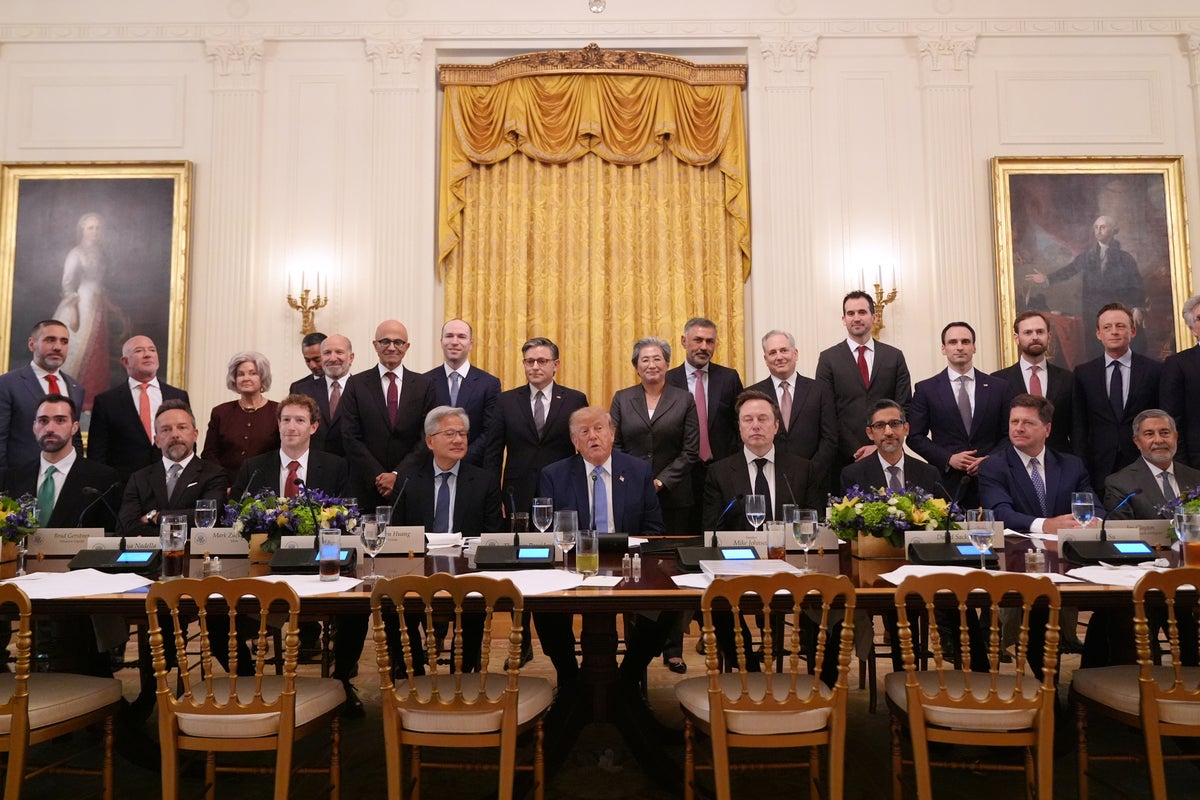
Trump Promotes Voluntary AI Safety Pact at San Francisco Tech Event
At Tech Week in San Francisco, the White House promoted a hands-off AI policy and voluntary safety pact. Industry leaders welcomed the shift toward growth over regulation.
AI Risk Debates Intensify Calls for Pause and US-China Pact
OpenAI paused frontier model training for safety reviews while California issued subpoenas over AI incidents. Officials discussed voluntary standards and potential FTC probes.
The Compass
You just read five takes on one story.
What's your take? Find your political shape in a few minutes.
Take the test