
Cubans Scrape By as Decades-Old Ration System Collapses
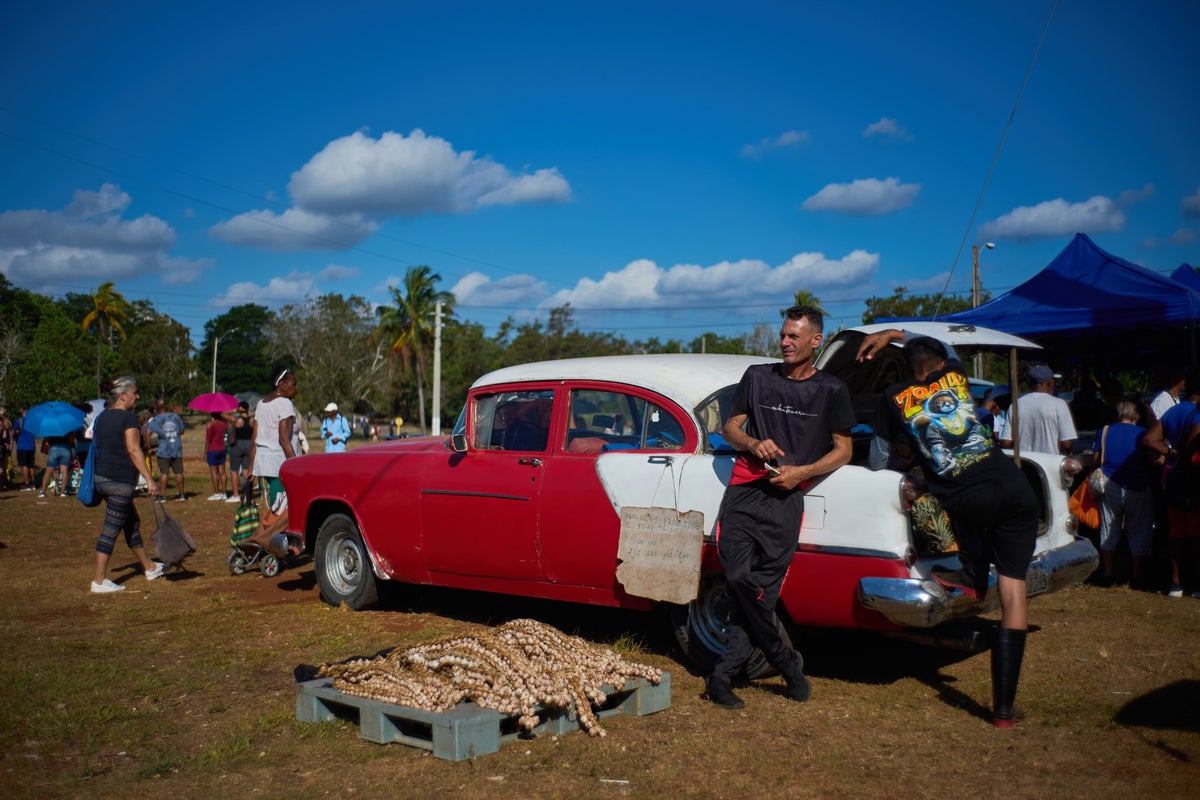
Cover image from independent.co.uk, which was analyzed for this article
Cubans are struggling to survive as the economy collapses, prices soar, and long-standing government ration books provide fewer and fewer products. Pocket-size rations are insufficient amid dwindling supplies.
PoliticalOS
Sunday, May 3, 2026 — Business
Cuba's ration system, the backbone of daily survival for more than six decades, is failing under the combined weight of chronic fiscal mismanagement, currency disasters, military dominance of hard-currency sectors, longstanding U.S. sanctions and the loss of Venezuelan oil. The crisis is real, multidimensional and worsening; residents are already choosing between beans and sugar, one meal or none. How the government executes its promised shift to targeted aid — and whether external pressures ease — will decide if this becomes a managed transition or a deeper social rupture.
What outlets missed
Most accounts omitted the military conglomerate GAESA's central role in controlling tourism revenue, foreign currency inflows and food import decisions, facts documented in CSIS and Miami Herald reporting that shift emphasis from pure scarcity to allocation priorities. Coverage also underplayed verifiable U.S. agricultural exports to Cuba — hundreds of millions of dollars in chicken, pork and rice sold on cash terms in 2025 — which demonstrate that some hard-currency food trade continues despite sanctions. The government's April 2026 pilot program to begin phasing out universal rations in favor of targeted subsidies for vulnerable groups received almost no attention, even though it directly addresses the libreta's future. Finally, compensatory Russian oil shipments of roughly 730,000 barrels in March 2026 and precise pre-2026 inflation and peso-devaluation data (77 percent inflation in 2021, 88 percent peso loss 2021-2023) were rarely quantified, leaving readers without a clear chronological or multi-causal picture.
Families across Cuba are cutting meals to one a day or surviving on rice, memories and whatever remittances arrive from abroad. The libreta — the pocket-sized ration book that has defined daily life since Fidel Castro introduced it in the early 1960s — now provides so little that many recipients say it cannot sustain them. This is not a temporary disruption. It is the visible fracture of an economic model that once promised universal basics but now confronts empty shelves, chronic blackouts and prices that outrun salaries measured in the low tens of dollars per month.
The immediate crisis crystallized in April 2026. Bodegas serving thousands of families stocked only rice, sugar and split chickpeas for weeks at a time, according to multiple residents interviewed by the Associated Press. José Luis Amate López, who works at one central Havana store, reported almost no customers for nearly two weeks; the freezers that once held meat now chilled his water bottle. Ana Enamorado, 68, collected two pounds of sugar and chickpeas at her assigned outlet and nothing more. Lázaro Cuesta described bread rations halved in weight, multiplied in price and degraded in quality. These accounts align with footage and reporting from France 24 and republished AP stories.
Cuba imports up to 80 percent of its food, a figure cited consistently by economists and the government itself. Yet foreign currency reserves have dwindled. The island lost its primary oil supplier when Venezuelan production collapsed; compensatory shipments from Russia, reported by AP and TIME at roughly 730,000 barrels in March 2026, have not closed the gap. Power outages intensified. Tourism arrivals fell sharply in early 2026 after thousands of canceled flights. At the same time, the Cuban peso has lost more than 80 percent of its value since 2021. Inflation ran above 30 percent annually in recent years, according to University of Michigan economic analyses.
Internal policy choices loom large. American University professor William LeoGrande told AP the government “bungled” the 2021 unification of its two currencies, after which it continued printing money faster than it collected revenue. The state spends the bulk of its budget on health, education, social welfare and food imports. Any deep cuts, LeoGrande noted, would trigger immediate social consequences — which explains why they have not occurred. The government has floated shifting from universal product subsidies to targeted aid for the vulnerable, a reform that could free resources for fuel and medicine but has yet to be fully implemented. In April it began piloting changes for certain age groups, offering sardines and soap to some seniors instead of broader rations.
External pressure is equally documented. U.S. sanctions, in place since 1960 and tightened under multiple administrations including additional 2026 restrictions on third-country oil shipments, limit Cuba’s access to credit and global markets. The policy is credited by the Council on Foreign Relations and others with worsening fuel shortages. Cuba nevertheless remains a cash customer for several hundred million dollars in U.S. agricultural exports each year, including chicken, pork and rice. These transactions occur under embargo exemptions requiring prepaid cash. Allocation of hard currency is another flashpoint: the military-linked conglomerate GAESA controls significant tourism revenue, foreign-exchange earnings and import channels, according to Miami Herald reporting and CSIS analyses. How much of that revenue reaches food imports versus other priorities could not be independently verified from public data.
Many Cubans who lived through the 1990s “Special Period” after the Soviet Union’s collapse describe the current situation as more severe, though direct comparisons of GDP contraction — estimated at 2 to 5 percent annually in recent assessments — remain imprecise. A medical journal study from that earlier era recorded average body-weight losses between 5 and 25 percent; similar metrics are not yet available for 2026. Claims that roughly 60 percent of island Cubans receive remittances appeared in AP reporting but could not be corroborated by World Bank or FIU household surveys; the figure may reflect broader estimates of affected families rather than precise coverage.
The central tension is unresolved. One reading, advanced by Cuban officials and some outside analysts, attributes the crisis primarily to six decades of embargo-induced isolation. Another, drawn from academic and think-tank reviews, emphasizes chronic fiscal imbalances, low productivity in sugar and tourism, and decisions that prioritize military-linked enterprises over consumer imports. Both explanations contain verifiable elements. Shortages are indisputable. Whether the government can manage a controlled transition away from the libreta without sparking unrest — or whether further external shocks will overwhelm it — will determine if this becomes another lost decade or a forced inflection point. For now, comedians mock the ration book on social media, vendors sell pineapples at weekly fairs to those with dollars, and ordinary Cubans stretch their memories of pork, beans and full plates into another uncertain month.
More in Business & Economy

Major Banks Deliver Mixed Q3 Results on Trading Beats
JPMorgan, Goldman Sachs, Citigroup, and Wells Fargo reported Q3 figures, with revenue beats in trading but some estimate misses. CNBC provided live updates on the results and market reactions.

Oil Falls on Russian Diesel Outlook Despite Geopolitical Risks
Dow futures rose while Nasdaq faced pressure from tech weakness and elevated oil after geopolitical spikes. CNBC tracked premarket moves tied to earnings and Fed speeches.

Hall and Woodford Win Economics Nobel for Stabilization Models
American economists Robert E. Hall and Michael Woodford won the Nobel memorial prize for their research on managing economies through booms and busts, informing central bank policies on inflation and unemployment.

Skydance Closes Paramount-Warner Bros. Discovery Deal
The long-delayed media mega-merger cleared hurdles and began operations under Skydance, consolidating Hollywood power. Center and center-left outlets track the regulatory and business milestones.
The Compass
You just read five takes on one story.
What's your take? Find your political shape in a few minutes.
Take the test