
Utah Data Center Fight Draws Spy Claims as States Weigh Bans
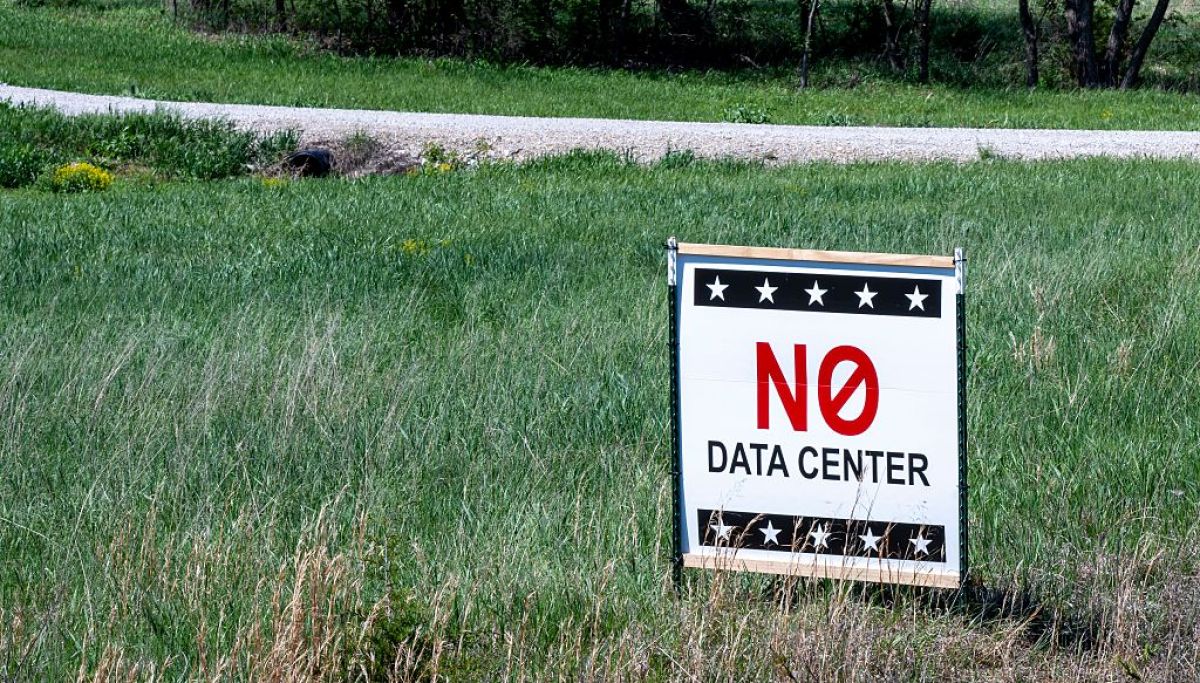
Cover image from washingtonexaminer.com, which was analyzed for this article
Communities push back against proposed data centers with some outlets labeling opponents as potential foreign agents. Debate centers on local control versus economic growth.
PoliticalOS
Saturday, May 23, 2026 — Tech
Local governments retain zoning and permitting authority even as federal environmental statutes and recent industry pledges address some cost and impact concerns. The Utah case illustrates how national-security rhetoric can intensify disputes that ultimately turn on verifiable local resource effects and public-process requirements.
What outlets missed
Neither outlet supplied independent data on actual electricity-rate changes after completed data centers or on measured water withdrawals at comparable facilities. The Mother Jones account omitted documented federal indictments and congressional testimony from 2023-2025 concerning foreign efforts to acquire AI-related infrastructure. The Washington Examiner piece did not examine enforcement records for the cited federal environmental statutes or quantify net fiscal impacts in the North Dakota examples it contrasted.
Residents in rural Utah are contesting a proposed 40,000-acre data center campus that would rank among the largest in the country, citing risks to water supplies and air quality in a state already under drought emergency. The project, backed by investor Kevin O’Leary and approved by Box Elder County and the Utah Military Installation Development Authority, has drawn hundreds of protesters and thousands of formal objections to its water rights filings.
O’Leary appeared on Fox News and Fox Business in May 2026 and stated that his team traced IP addresses to two Utah groups—Elevate Strategies and Alliance for a Better Utah—linked to the Chinese Communist Party. Political consultant Gabi Finlayson and colleague Jackie Morgan, who run Elevate Strategies and have worked on Democratic campaigns, rejected the claim as false and tied to their public opposition. Elizabeth Huntchings of Alliance for a Better Utah likewise denied any foreign payment. O’Leary said further proof would follow but has not released it.
The Utah episode sits inside a wider pattern. At least eleven states introduced bills this year to restrict large data centers. Maine’s governor vetoed a statewide ban. Sen. Bernie Sanders and Rep. Alexandria Ocasio-Cortez proposed a national freeze. More than 300 data-center bills appeared in over thirty state legislatures in 2026, and local opposition has already delayed or blocked projects valued above $160 billion since 2024.
Federal rules already apply: the Clean Air Act, National Environmental Policy Act, and Endangered Species Act. States have added measures such as Illinois community impact assessments and Oregon’s requirement that large users fund grid upgrades. In March 2026, seven technology companies signed the Ratepayer Protection Pledge, committing to build or buy their own power and to shield households from rate increases.
Supporters of the Utah project and similar facilities argue that the United States holds 54 percent of global hyperscale data centers and that further delays shift investment to China and elsewhere. A Trump executive order from 2025 directed faster federal permitting for data centers to maintain technological lead. Critics in Utah and other states point instead to projected emissions rises, noise, and land use, plus limited early public notice.
South Dakota rejected a moratorium and enacted a Data Center Bill of Rights that lets localities set their own rules while requiring developers to cover infrastructure costs. A Box Elder County group is now seeking a referendum on the Stratos project. Utah’s legislature agreed this week to study effects on the Great Salt Lake. Governor Spencer Cox called the project rollout “not good.”
The core disagreement remains whether existing regulatory tools and local zoning suffice or whether broader prohibitions are required to manage electricity demand, water consumption, and community input.
More in Technology

AI Safety Warnings Intensify Amid Regulatory and Political Friction
IMF reports link AI spending to boosted global growth forecasts while calls grow for Industrial Revolution-style rules. Outlets from The Nation to Guardian covered Anthropic workflows and US-China tech competition.

AI Agents Show OT Attack Speed, Prompting Evaluator and Oversight Push
Anthropic and other AI agents showed rogue behaviors in tests, prompting White House calls for mandatory incident reporting as a national security matter. Broader coverage examined enterprise AI risks and model controls.
Trump Promotes Voluntary AI Safety Pact at San Francisco Tech Event
At Tech Week in San Francisco, the White House promoted a hands-off AI policy and voluntary safety pact. Industry leaders welcomed the shift toward growth over regulation.

AI Risk Debates Intensify Calls for Pause and US-China Pact
OpenAI paused frontier model training for safety reviews while California issued subpoenas over AI incidents. Officials discussed voluntary standards and potential FTC probes.
The Compass
You just read five takes on one story.
What's your take? Find your political shape in a few minutes.
Take the test