
Democrats Take House and Senate Amid Record Midterm Turnout

Cover image from france24.com, which was analyzed for this article
Democrats achieved decisive gains in the 2026 midterms, flipping seats to take control of both chambers. Coverage highlights historic turnout and implications for the Trump administration.
PoliticalOS
Saturday, November 7, 2026 — Politics
Democrats gained majorities in both chambers with unusually high midterm turnout, creating immediate oversight capacity over the Trump administration while surfacing unresolved debates inside the party over whether moderate or progressive approaches produced the victories.
What outlets missed
Coverage largely omitted detailed vote margins in the closest races still being counted, such as Mississippi. No outlet supplied a full list of incoming committee chairs or the precise size of the Democratic majorities. France24’s claim of planned Trump investigations received no corroboration or detail from the other sources. The role of specific economic data, such as gas prices tied to the Iran conflict, appeared only in analyst quotes rather than as standalone reporting.
Democrats Ride Record Turnout to Midterm Landslide
Voter participation reached its second-highest level in more than a century in this week’s midterm elections, delivering Democrats one of their largest House and Senate majorities in recent decades. Preliminary figures from the University of Florida Election Lab show 49 percent of eligible voters cast ballots, just below the 2018 mark and well above 2022. The surge proved decisive in states that had not favored Democrats in years, including Senate victories in Texas, Kansas and Iowa.
The geographic spread of the wins reflected a broad coalition rather than a single ideological message. In Kansas, a pastor won a Senate seat by emphasizing rural economic concerns. In Iowa, a Paralympic athlete captured a House district long held by Republicans. In Texas, a former seminarian defeated the state attorney general on a platform that mixed progressive priorities with appeals to suburban moderates. At the same time, more explicitly left-leaning candidates prevailed in Michigan and Maine, where turnout exceeded 63 percent and Democratic Senate nominees ousted longtime Republican incumbents.
Those results have already sparked competing interpretations inside the party. Centrists point to the red-state successes as evidence that moderate positioning and candidate recruitment remain the most reliable route to expanding the map. Progressives counter that strong performances in competitive states show the value of mobilizing the base around affordability, health care costs and institutional accountability. Both factions now face the practical task of governing with their expanded majorities.
Democratic leaders have signaled that oversight of the Trump administration will rank among their first priorities. Several incoming committee chairs have pledged hearings on executive-branch actions from the past two years, including regulatory rollbacks and immigration enforcement. The precise scope remains unclear, but the combination of unified Democratic control and public appetite for scrutiny, evident in exit-poll responses on government performance, makes sustained investigations likely.
Campaign advertising offered early clues about which messages resonated. One of the most widely shared spots highlighted a Republican senator’s suggestion that voters facing high beef prices should simply choose another protein; the clip spread rapidly on social media and contributed to a tight Mississippi Senate race still being counted. Other effective ads focused on pocketbook pressures rather than national cultural debates, consistent with polling that showed economic anxiety cutting across partisan lines.
The turnout increase narrowed the usual midterm drop-off from presidential years, particularly in battleground states. Analysts attribute part of the participation to localized organizing efforts and part to lingering concerns over institutional stability. Either way, the electorate that showed up produced a Congress whose ideological range will test whether Democrats can convert their structural advantage into durable policy outcomes ahead of 2028.
You just read Liberal's take. Want to read what actually happened?
More in Politics

Democrats Flip Senate, Expand House Majority in Midterms
Democrats flipped the Senate and expanded their House majority in a major rebuke to President Trump and Republicans. Key victories included multiple Senate seats and state-level wins that ended long-standing GOP dominance in places like Texas.

GOP Losses Spur Blame, Vance Distancing, 2028 Maneuvers
Republicans are pointing fingers internally after heavy losses, with Vice President JD Vance distancing himself from Trump over the Iran war and positioning for a potential 2028 run. Challengers within the party are already sensing opportunity.
Democrats Take House and Senate, Constraining Trump
Democrats flipped both the House and Senate in a major rebuke to President Trump and Republicans. The results create divided government and set up battles over spending, oversight, and foreign policy for the remainder of Trump's term.
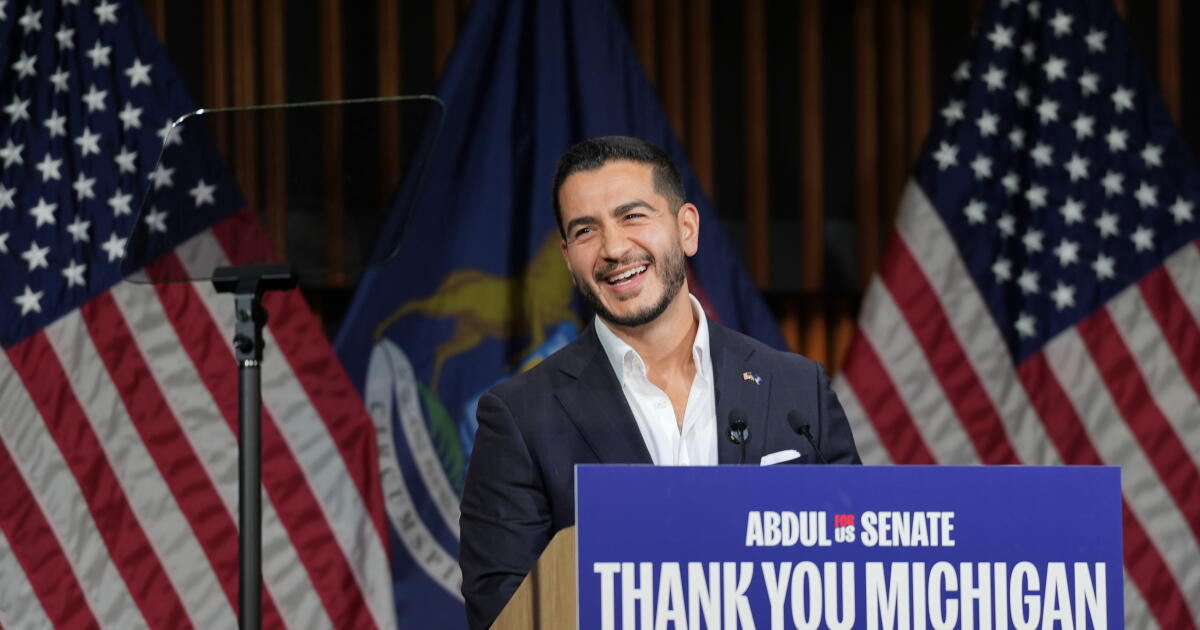
Voters Elect First Muslim Senator, Multiple Historic Firsts
Voters elected the first Muslim US Senator, first Black woman governor of Georgia, and first Native American woman governor of New Mexico, highlighting demographic shifts in key states.
The Compass
You just read five takes on one story.
What's your take? Find your political shape in a few minutes.
Take the test