
Voters Elect First Muslim Senator, Multiple Historic Firsts
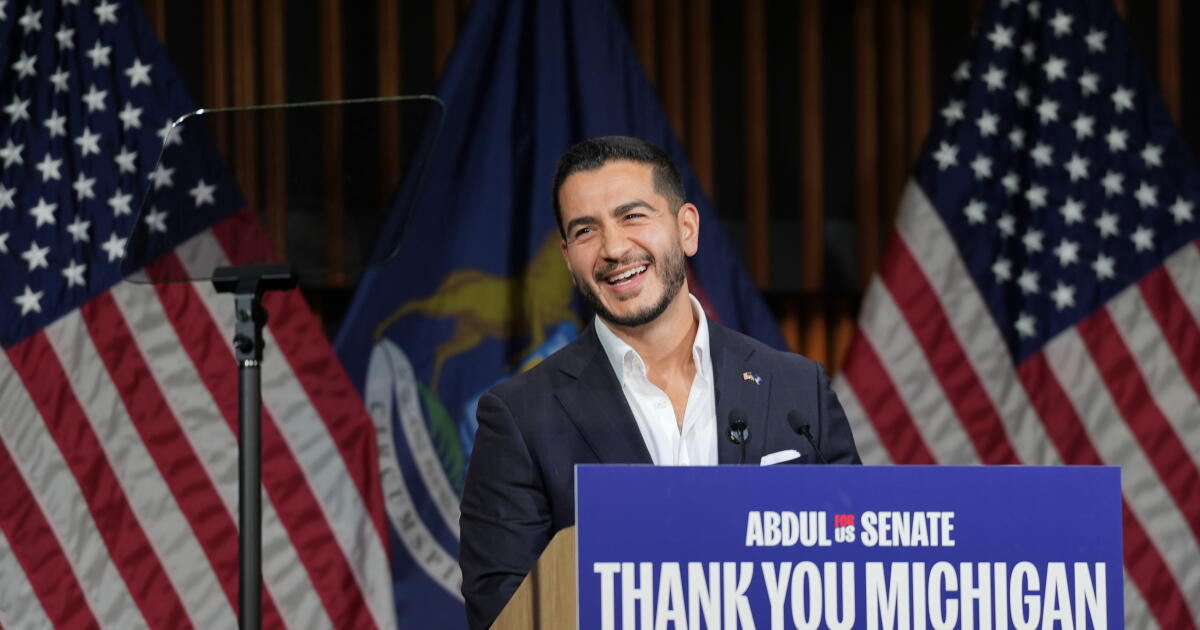
Cover image from latimes.com, which was analyzed for this article
Voters elected the first Muslim US Senator, first Black woman governor of Georgia, and first Native American woman governor of New Mexico, highlighting demographic shifts in key states.
PoliticalOS
Thursday, November 5, 2026 — Politics
Multiple candidates achieved historic firsts in identity and background, yet available reporting supplies few details on their platforms or the precise voter coalitions that produced the margins. The outcomes reflect measurable shifts in several states without confirmed explanations for every participating group.
What outlets missed
Coverage did not address the first Black woman governor of Georgia referenced in the overall summary, leaving that outcome unverified by the two outlets. Neither article supplied policy positions, prior legislative records, or campaign platforms for the winning candidates. Demographic breakdowns of support and turnout data were absent, preventing assessment of whether shifts were broad or concentrated in subgroups.
Democrats Secure Key Senate Win in Michigan as Identity Narratives Dominate Coverage
Abdul El-Sayed, a Democrat and son of Egyptian immigrants, won Michigan's Senate seat Tuesday by seven percentage points over former Republican representative Mike Rogers. The victory came during a broader Democratic sweep that included flipping control of both chambers of Congress and several governorships. El-Sayed, 42, emphasized his full name with Arabic pronunciation in his acceptance remarks, framing the outcome as a rebuke to critics who had questioned his background.
Election data shows the race unfolded amid sharp exchanges. Republican leaders described El-Sayed as an extremist and highlighted past statements on foreign policy. Democrats countered that such attacks crossed into prejudice. Voter turnout records indicate the contest drew heavy participation in urban and suburban areas, where economic concerns and state-level issues ranked high in exit polling. El-Sayed's platform stressed expanded healthcare access and infrastructure spending, positions aligned with national Democratic messaging.
Separate results in Texas and California produced the first Latino governors in those states in modern times, both Democrats. Hispanic voters shifted back toward Democratic candidates in several states after supporting Republicans in the prior presidential cycle. In Texas districts redrawn under assumptions of continued Republican strength among those voters, Democrats captured four of five targeted seats. Similar patterns appeared in California, Colorado, and Kansas, where margins in majority-Hispanic areas moved noticeably leftward.
These shifts reversed some of the 2024 gains Republicans had made with Latino voters on issues such as border security and inflation. Analysts attribute the change to renewed Democratic emphasis on labor market policies and state spending priorities. Historical patterns show Latino voting blocs have alternated between parties depending on economic conditions rather than fixed partisan loyalty.
Critics of identity-centered campaign framing argue that repeated focus on candidates' ethnicity or religion can obscure measurable policy records. Thomas Sowell has long documented how group-based narratives often overlook individual achievement and cultural factors that drive outcomes more consistently than external barriers. In this cycle, El-Sayed's background received extensive attention from supporters, yet his policy proposals on taxation and regulation followed standard progressive lines without notable deviation.
The midterm results leave Democrats with expanded majorities, though divided government at the federal level limits immediate legislative changes. Republican responses centered on the need to address voter priorities around cost of living and public safety rather than personal attributes of candidates. Future contests will test whether recent voter movements reflect temporary reactions to economic data or longer-term realignments.
Data from multiple states confirm that turnout among specific demographic groups proved decisive in close races. Yet aggregate economic indicators, including employment figures released before the election, showed modest improvement that failed to offset dissatisfaction in key battlegrounds. Campaigns that stressed measurable results over symbolic milestones maintained stronger consistency with voter surveys on issue importance.
You just read Conservative's take. Want to read what actually happened?
More in Politics

Democrats Flip Senate, Expand House Majority in Midterms
Democrats flipped the Senate and expanded their House majority in a major rebuke to President Trump and Republicans. Key victories included multiple Senate seats and state-level wins that ended long-standing GOP dominance in places like Texas.

GOP Losses Spur Blame, Vance Distancing, 2028 Maneuvers
Republicans are pointing fingers internally after heavy losses, with Vice President JD Vance distancing himself from Trump over the Iran war and positioning for a potential 2028 run. Challengers within the party are already sensing opportunity.

Democrats Take House and Senate Amid Record Midterm Turnout
Democrats achieved decisive gains in the 2026 midterms, flipping seats to take control of both chambers. Coverage highlights historic turnout and implications for the Trump administration.
Democrats Take House and Senate, Constraining Trump
Democrats flipped both the House and Senate in a major rebuke to President Trump and Republicans. The results create divided government and set up battles over spending, oversight, and foreign policy for the remainder of Trump's term.
The Compass
You just read five takes on one story.
What's your take? Find your political shape in a few minutes.
Take the test