
Voters Elect First Muslim Senator, Multiple Historic Firsts
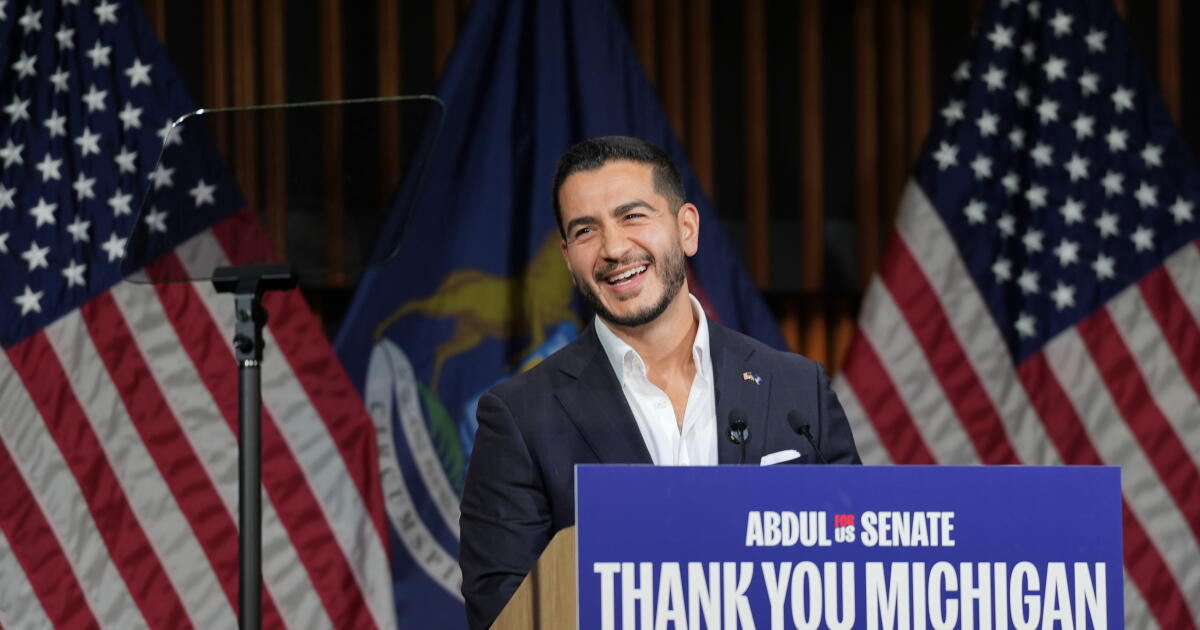
Cover image from latimes.com, which was analyzed for this article
Voters elected the first Muslim US Senator, first Black woman governor of Georgia, and first Native American woman governor of New Mexico, highlighting demographic shifts in key states.
PoliticalOS
Thursday, November 5, 2026 — Politics
Multiple candidates achieved historic firsts in identity and background, yet available reporting supplies few details on their platforms or the precise voter coalitions that produced the margins. The outcomes reflect measurable shifts in several states without confirmed explanations for every participating group.
What outlets missed
Coverage did not address the first Black woman governor of Georgia referenced in the overall summary, leaving that outcome unverified by the two outlets. Neither article supplied policy positions, prior legislative records, or campaign platforms for the winning candidates. Demographic breakdowns of support and turnout data were absent, preventing assessment of whether shifts were broad or concentrated in subgroups.
Democrats Hail First Muslim Senator as Midterm Identity Battles Intensify
Abdul El-Sayed, a 42-year-old son of Egyptian immigrants, won election to the U.S. Senate from Michigan on Tuesday, defeating former Republican Rep. Mike Rogers by seven points. The victory came after a campaign marked by sharp exchanges over El-Sayed's background and policy views, with critics including the president labeling him a jihadist and the vice president calling his candidacy a source of terrible evil. El-Sayed responded in his victory speech by insisting on the full Arabic pronunciation of his name, Abdulrahman Mohamed El-Sayed, and framing the outcome as a rebuke to bigotry.
The race stood out even in a cycle filled with identity-focused contests. Democrats also secured the first openly gay senator in New Hampshire and the first female Native American governor in New Mexico, along with the first Latina governor in Texas. El-Sayed's win drew particular attention from outlets that portrayed attacks on his name and heritage as the most overt racism of the midterms. Those reports noted that opponents deliberately mispronounced his name, treating it like something toxic to expel.
Republican messaging centered instead on El-Sayed's associations and statements, which they tied to concerns over extremism and foreign influence. The candidate's supporters countered that such criticism amounted to smears rather than substantive debate over issues like immigration enforcement or cultural integration. Michigan voters ultimately sided with the Democrat in a state that has seen rapid demographic shifts in recent decades.
Separate results showed Latino voters returning to Democratic columns in large numbers across Texas, California, Kansas, and Colorado. This shift helped flip several House seats and contributed to Democratic control of both chambers. In Texas and California, the two largest states, Latino Democratic candidates won governorships for the first time in modern records. Analysts pointed to turnout among Hispanic voters reversing some of the gains Republicans claimed in 2024, when those same voters helped deliver the White House.
Republicans had redrawn districts in Texas assuming continued support from that bloc, yet lost four of five targeted seats. The changes followed complaints from Latino communities that both parties had taken their priorities for granted, particularly on wages and border security. Tuesday's results left Hispanic lawmakers comprising roughly a fifth of the incoming Democratic House majority, a new high.
Taken together, the outcomes reflect ongoing realignment driven by immigration patterns and cultural signaling rather than traditional economic arguments alone. El-Sayed's elevation to the Senate places a figure from a distinct religious and ethnic tradition into a chamber long dominated by native-born Protestants and Catholics. Whether that presence advances cohesion or accelerates division will depend on how he navigates legislation touching national identity and security in the years ahead.
You just read America First's take. Want to read what actually happened?
More in Politics
Democrats Flip Senate, Expand House Majority in Midterms
Democrats flipped the Senate and expanded their House majority in a major rebuke to President Trump and Republicans. Key victories included multiple Senate seats and state-level wins that ended long-standing GOP dominance in places like Texas.
GOP Losses Spur Blame, Vance Distancing, 2028 Maneuvers
Republicans are pointing fingers internally after heavy losses, with Vice President JD Vance distancing himself from Trump over the Iran war and positioning for a potential 2028 run. Challengers within the party are already sensing opportunity.
Democrats Take House and Senate Amid Record Midterm Turnout
Democrats achieved decisive gains in the 2026 midterms, flipping seats to take control of both chambers. Coverage highlights historic turnout and implications for the Trump administration.
Democrats Take House and Senate, Constraining Trump
Democrats flipped both the House and Senate in a major rebuke to President Trump and Republicans. The results create divided government and set up battles over spending, oversight, and foreign policy for the remainder of Trump's term.
The Compass
You just read five takes on one story.
What's your take? Find your political shape in a few minutes.
Take the test