
Voters Elect First Muslim Senator, Multiple Historic Firsts
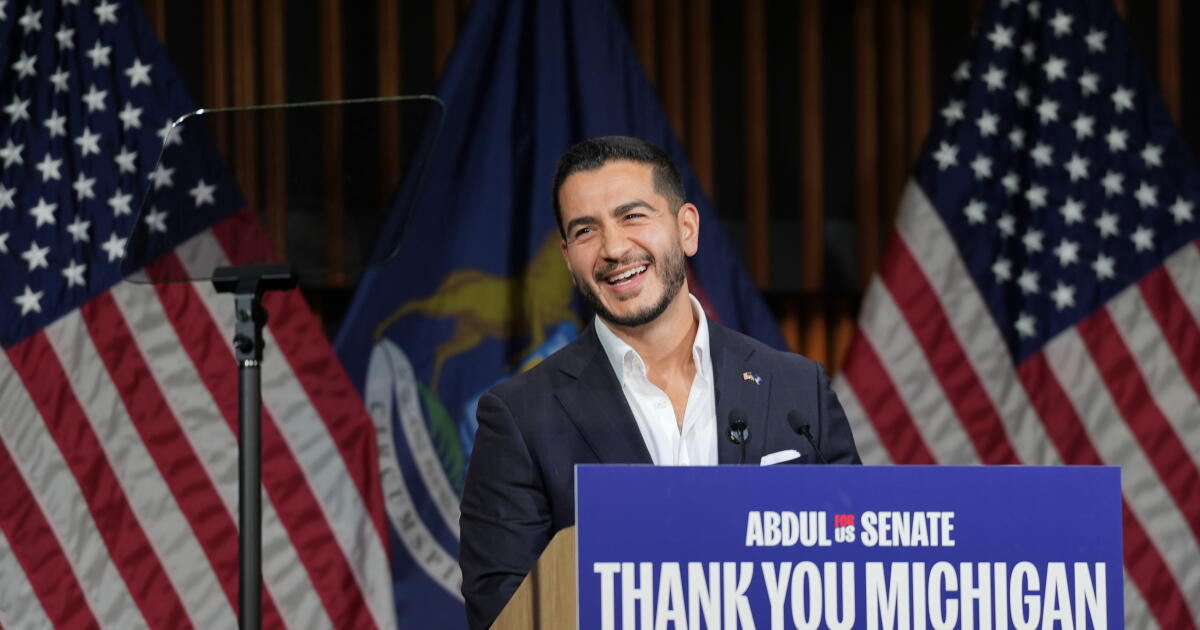
Cover image from latimes.com, which was analyzed for this article
Voters elected the first Muslim US Senator, first Black woman governor of Georgia, and first Native American woman governor of New Mexico, highlighting demographic shifts in key states.
PoliticalOS
Thursday, November 5, 2026 — Politics
Multiple candidates achieved historic firsts in identity and background, yet available reporting supplies few details on their platforms or the precise voter coalitions that produced the margins. The outcomes reflect measurable shifts in several states without confirmed explanations for every participating group.
What outlets missed
Coverage did not address the first Black woman governor of Georgia referenced in the overall summary, leaving that outcome unverified by the two outlets. Neither article supplied policy positions, prior legislative records, or campaign platforms for the winning candidates. Demographic breakdowns of support and turnout data were absent, preventing assessment of whether shifts were broad or concentrated in subgroups.
First Muslim Senator Triumphs in Michigan as Democrats Notch Historic Gains
Abdul El-Sayed delivered a pointed victory speech Tuesday night after becoming the first Muslim elected to the U.S. Senate, pronouncing his full name with deliberate Arabic inflection to counter repeated efforts by opponents to distort it. The 42-year-old Democrat, son of Egyptian immigrants, defeated former Rep. Mike Rogers by seven percentage points in Michigan despite a barrage of attacks that included being labeled a jihadist by the president and an extremist by his Republican rival.
The race stood out even in a midterm cycle marked by unusually direct appeals to prejudice. El-Sayed faced intentional mispronunciations of his name on the campaign trail and accusations of representing terrible evil from the vice president. Those tactics failed to sway enough voters in a state where Democrats also helped flip control of the Senate and House overall. El-Sayed framed his win as a rebuke to the normalization of such rhetoric from the White House, telling supporters there is an Allah after all.
The Michigan result formed part of a broader set of breakthroughs for Democratic candidates. Voters elected the first openly gay senator, Chris Pappas of New Hampshire, and the first female Native American governor, Deb Haaland of New Mexico. In Texas, Gina Hinojosa became the state's first Latina governor, while California also chose a Latino Democrat for the same office. These outcomes marked the first time in modern history that the nation's two largest states will be led by Latino governors.
Latino voters played a decisive role in reshaping several contests. After shifting toward Republicans in 2024, Hispanic support moved back toward Democrats in Texas, California, Colorado and Kansas. This realignment helped Democrats capture four of five Texas districts that Republicans had redrawn assuming continued Latino backing. Hispanic lawmakers now make up about a fifth of the Democratic House majority, a record share. Analysts noted that the pattern reflected frustration with policies on the economy and immigration rather than a permanent partisan realignment.
El-Sayed's campaign highlighted the personal stakes for communities that have long faced questions about their belonging. He spoke directly to those who have been othered because of heritage, skin color or religious practice. His success, alongside the other firsts, underscored that overt appeals to bias can be overcome at the ballot box even when they originate at the highest levels of government. Democrats now hold unified control of Congress for the first time in years, giving the incoming majority leverage to address issues that motivated turnout among minority voters.
You just read Progressive's take. Want to read what actually happened?
More in Politics
Democrats Flip Senate, Expand House Majority in Midterms
Democrats flipped the Senate and expanded their House majority in a major rebuke to President Trump and Republicans. Key victories included multiple Senate seats and state-level wins that ended long-standing GOP dominance in places like Texas.
GOP Losses Spur Blame, Vance Distancing, 2028 Maneuvers
Republicans are pointing fingers internally after heavy losses, with Vice President JD Vance distancing himself from Trump over the Iran war and positioning for a potential 2028 run. Challengers within the party are already sensing opportunity.
Democrats Take House and Senate Amid Record Midterm Turnout
Democrats achieved decisive gains in the 2026 midterms, flipping seats to take control of both chambers. Coverage highlights historic turnout and implications for the Trump administration.
Democrats Take House and Senate, Constraining Trump
Democrats flipped both the House and Senate in a major rebuke to President Trump and Republicans. The results create divided government and set up battles over spending, oversight, and foreign policy for the remainder of Trump's term.
The Compass
You just read five takes on one story.
What's your take? Find your political shape in a few minutes.
Take the test