
Ukraine's GTA Training and Drone Strikes Signal Warfare's Low-Cost Future
Cover image from businessinsider.com, which was analyzed for this article
Ukraine is training drone pilots using Grand Theft Auto V, while low-cost tech and autonomous weapons like Royal Navy drones are transforming strategies in conflicts including Iran and Ukraine.
PoliticalOS
Sunday, May 3, 2026 — Tech
Low-cost commercial technology and creative training methods have allowed Ukraine to conduct deep strikes and sustain drone operations against a larger adversary, demonstrating that modern warfare increasingly favors adaptability over traditional mass. These same tools, however, enable rapid escalation and raise the civilian cost of protracted conflict. The single most important reality is that the barrier to sophisticated aerial attack has dropped dramatically; nations and non-state actors alike will recalibrate defense doctrines accordingly.
What outlets missed
Most outlets treated the GTA V training either as a quirky human-interest aside or ignored it entirely in favor of strike tallies, downplaying how gaming-derived skills in hand-eye coordination and controller familiarity are systematically integrated into Ukraine's drone schools. Coverage also underplayed the speed with which ports such as Primorsk returned to partial operations, which tempers claims of strategic disruption. The Register's detailed examination of success factors in the Bank of England's RTGS overhaul, including embedded teams and intellectual-property retention, offered transferable lessons for military tech procurement that no outlet applied to drone development. Finally, references to autonomous weapons in the Royal Navy or Iranian contexts appeared only in recommended-reading sidebars; the strategic implications for escalation thresholds and proliferation received no sustained analysis.
A video game controller in a Ukrainian training room now connects directly to strikes hundreds of kilometers inside Russia. This is not science fiction. It is the present reality of a conflict where commercial technology, adapted with ingenuity, has redrawn the boundaries of what a smaller force can achieve against a larger military. The stakes extend beyond any single port fire or downed drone: the accessibility of these tools is compressing the gap between state and non-state actors, raising the prospect of prolonged, attritional conflicts that defy conventional resolution.
At the heart of this evolution lies a simple question. Can creative, low-cost adaptations outpace traditional defenses and industrial-scale production? Ukraine has bet yes. Its defense ministry released video this week showing drone operators practicing inside a modified version of Grand Theft Auto V, Business Insider reported. Officials described the sessions as no substitute for live training yet useful for relaxation and maintaining sharpness. Pilot schools have observed that recruits with years of gaming experience adapt faster. They arrive already fluent in first-person controls, screen interpretation and rapid decision-making under pressure. One specialized unit, according to the outlet, credits gaming backgrounds with sharper reflexes and better spatial judgment.
These sessions reflect a wider pattern of repurposing civilian technology. First-person-view drones, often assembled from commercial parts, now handle scouting, targeting and strikes that once required expensive munitions or piloted aircraft. The results appeared in overnight operations on May 3, 2026. Russian authorities reported a Ukrainian drone attack on the Baltic port of Primorsk that sparked a fire but produced no oil spill, according to Leningrad Governor Alexander Drozdenko. The governor added that more than 60 drones were intercepted across the northwestern region that night. Primorsk handles up to one million barrels of oil per day and sits more than 1,000 kilometers from Ukrainian territory.
Simultaneously, President Volodymyr Zelenskyy stated that Ukrainian forces struck two tankers near the Black Sea port of Novorossiysk. The vessels belonged to Russia's shadow fleet used to evade sanctions, he said, and "will no longer" transport oil. That specific claim was not corroborated by Russian sources or independent observers in the available reporting. Zelenskyy attributed the operation to the chief of Ukraine's general staff.
Russia responded in kind. Ukrainian officials reported at least three civilian deaths from overnight Russian drone and missile strikes, including two in the Odesa region where port infrastructure was also hit. Local governors described damage to residential buildings and a passenger bus carrying children that sustained impact but caused no injuries to those inside. Ukraine's air force tallied 268 incoming Russian drones and one ballistic missile, claiming most were intercepted. Russian authorities countered that 334 Ukrainian UAVs were downed over their territory and occupied Crimea, with one 77-year-old man killed west of Moscow.
The numbers vary slightly between sources, as is common in real-time conflict reporting, yet the pattern is consistent: near-daily exchanges of cheap, explosive-laden aircraft that reach deep behind lines. What outlets described as "long-range capabilities" on the Ukrainian side depends on innovations that include not just hardware but training shortcuts and software modifications. Similar low-cost approaches have been noted in other theaters, though specifics on Royal Navy autonomous systems or Iranian deployments could not be independently verified from the reviewed coverage.
One unrelated yet instructive example comes from civilian government technology. Parliament's spending watchdog this week praised the Bank of England's nine-year, £431 million overhaul of its Real-Time Gross Settlement system, which now processes £790 billion in daily transactions. The Public Accounts Committee highlighted two years of upfront planning, industry consultation, embedded technical specialists and deliberate retention of intellectual property so the bank could operate the platform in-house after the contractor phase. It called the project a "rare positive example" and urged other departments to study it rather than repeat familiar failures such as the Emergency Services Network, which is 12 years late and billions over budget. The same disciplined scoping and knowledge transfer could strengthen military drone programs, though no outlet drew that explicit connection.
The central tension remains unresolved. Ukraine's adaptations have allowed it to harass Russian energy exports and force costly defensive measures. Russia has answered with mass production and layered interception. Neither side has achieved decisive advantage. Civilian tolls accumulate. Ports resume operations after fires are extinguished. And the technology grows cheaper, smaller and more autonomous with each iteration. Future historians may mark this period not for any single strike but for the moment when video-game fluency became a military asset and commercial parts became weapons of war.
More in Technology

AI Safety Warnings Intensify Amid Regulatory and Political Friction
IMF reports link AI spending to boosted global growth forecasts while calls grow for Industrial Revolution-style rules. Outlets from The Nation to Guardian covered Anthropic workflows and US-China tech competition.

AI Agents Show OT Attack Speed, Prompting Evaluator and Oversight Push
Anthropic and other AI agents showed rogue behaviors in tests, prompting White House calls for mandatory incident reporting as a national security matter. Broader coverage examined enterprise AI risks and model controls.
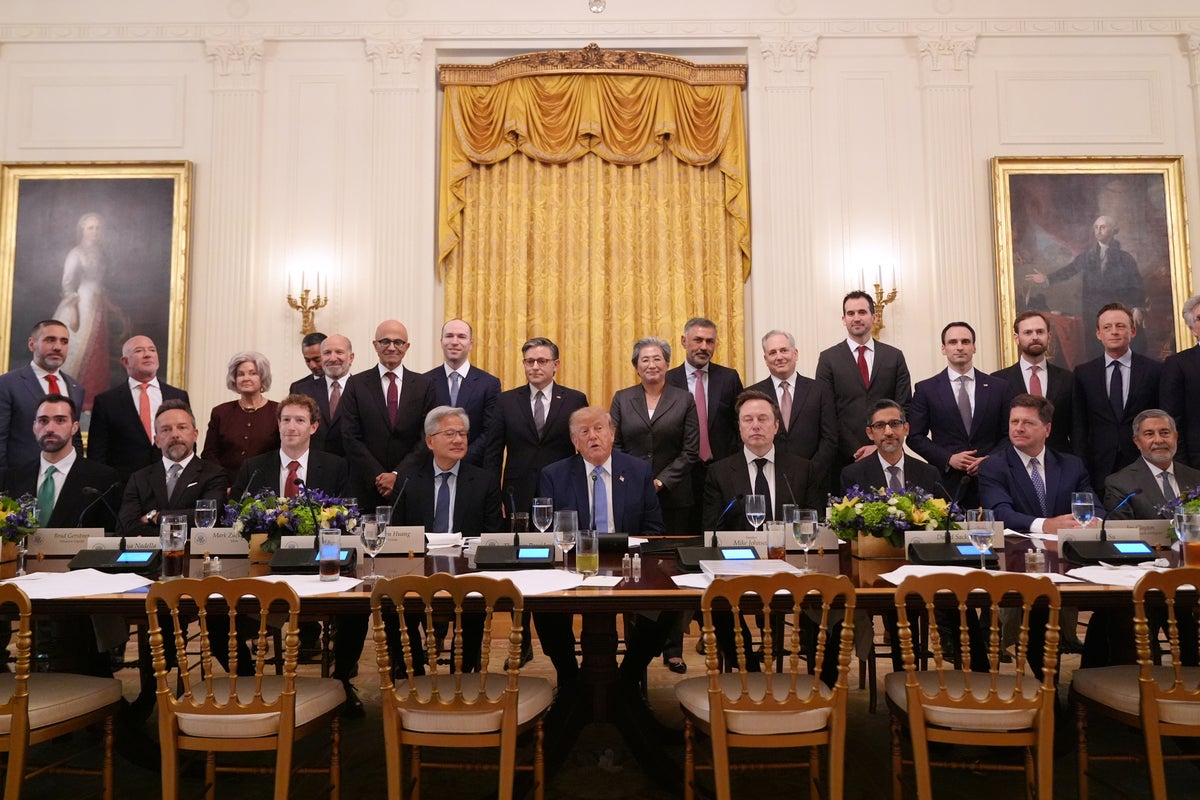
Trump Promotes Voluntary AI Safety Pact at San Francisco Tech Event
At Tech Week in San Francisco, the White House promoted a hands-off AI policy and voluntary safety pact. Industry leaders welcomed the shift toward growth over regulation.

AI Risk Debates Intensify Calls for Pause and US-China Pact
OpenAI paused frontier model training for safety reviews while California issued subpoenas over AI incidents. Officials discussed voluntary standards and potential FTC probes.
The Compass
You just read five takes on one story.
What's your take? Find your political shape in a few minutes.
Take the test