
Judge Warns Trump DOJ of Contempt Penalties in Epstein Files Case
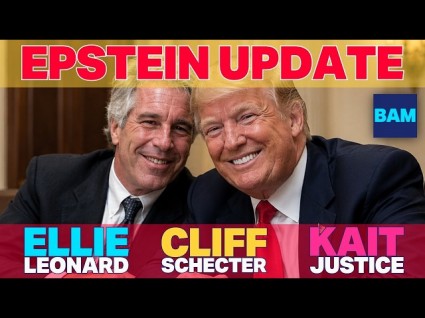
Cover image from crooksandliars.com, which was analyzed for this article
Senate questioning and legal fights continued over handling of Jeffrey Epstein documents. A judge threatened the Trump DOJ with jail time in one case. Left and right sources covered the political controversies.
PoliticalOS
Wednesday, August 19, 2026 — Politics
A federal judge has threatened contempt sanctions against Justice Department lawyers in a civil lawsuit seeking fuller release of Epstein-related FBI materials. The core dispute centers on production timelines rather than the content of any new revelations, and details beyond the single reported hearing remain unverified by additional sources.
What outlets missed
The underlying case is a FOIA-style civil action under the Epstein Files Transparency Act rather than a criminal investigation. The judge issued a new 10-day order for the parties to submit proposals on next steps. No Senate questioning or additional political scrutiny was documented in the supplied coverage, leaving the scope of any broader congressional involvement unverified.
Democrats Seek to Frame Trump Corruption as Direct Cost to Americans
Sen. Adam Schiff has outlined a strategy for challenging President Donald Trump that centers on linking self-enrichment to tangible harms for ordinary citizens. In a recent interview, the California Democrat argued that highlighting corruption requires consistent emphasis on its downstream effects rather than abstract allegations. “The key to making corruption a powerful issue is by always bringing it back to the impact of that, the cost of his corruption,” Schiff said. “Because the cost of his corruption is a president not focused on doing what he promised.”
This approach comes as Democrats prepare for potential congressional majorities and as courts confront administration resistance on high-profile disclosures. Schiff, who led the first Trump impeachment effort in the House, described the shift from prosecutorial oversight to legislative and messaging tools that tie executive actions to policy failures on issues from healthcare costs to infrastructure.
Separately, federal courts have signaled stricter enforcement against delays in document production. Judge Emmet Sullivan, during a hearing on files related to Jeffrey Epstein, warned Justice Department lawyers that failure to meet deadlines could result in contempt findings carrying jail time. Sullivan pressed attorneys for concrete timelines after they offered vague assurances that materials were “forthcoming,” noting that enforcement of legitimate orders remains available when necessary.
These episodes reflect broader efforts to restore institutional checks after years of eroded norms. Schiff has proposed measures aimed at strengthening guardrails, including enhanced ethics rules for executive branch officials and clearer boundaries on the use of public resources. He has pointed to the president’s business interests as a recurring source of distraction from legislative priorities, though he acknowledges that proving direct causation between personal financial gain and specific policy shortfalls requires granular evidence.
The Epstein files case illustrates one arena where judicial oversight intersects with political claims of obstruction. Prosecutors have faced repeated questions about the pace of releases involving associates and investigative materials, with Sullivan emphasizing that prior warnings about compliance were not rhetorical. Such confrontations test the durability of separation-of-powers principles when administrations test disclosure limits.
Analysts note that Schiff’s emphasis on costs to voters aligns with polling data showing public concern over government waste and influence peddling. Framing corruption around concrete outcomes—higher drug prices, delayed projects, or uneven regulatory enforcement—could differentiate Democratic messaging from past impeachment-focused campaigns that struggled to resonate beyond core supporters.
At the same time, rebuilding mechanisms for accountability faces structural obstacles. Republican majorities in Congress have shown limited appetite for expansive oversight, while administration lawyers continue to assert broad privileges over investigative records. Sullivan’s courtroom exchange underscores that judges retain tools to compel compliance, yet sustained pressure depends on consistent follow-through rather than isolated threats.
Schiff has also addressed foreign policy tensions, noting that traditional bipartisan support for Israel has frayed as evidence mounts of policies that complicate long-term U.S. interests. He described these shifts as driven by observable developments rather than partisan calculation, suggesting that institutional credibility requires willingness to adjust positions when facts change.
Together, the judicial push on document release and Schiff’s proposed legislative focus illustrate parallel tracks for addressing perceived executive overreach. Whether these efforts coalesce into durable reforms will depend on the ability to demonstrate measurable effects on public resources and decision-making processes.
You just read Liberal's take. Want to read what actually happened?
More in Politics
Democrats Flip Senate, Expand House Majority in Midterms
Democrats flipped the Senate and expanded their House majority in a major rebuke to President Trump and Republicans. Key victories included multiple Senate seats and state-level wins that ended long-standing GOP dominance in places like Texas.
GOP Losses Spur Blame, Vance Distancing, 2028 Maneuvers
Republicans are pointing fingers internally after heavy losses, with Vice President JD Vance distancing himself from Trump over the Iran war and positioning for a potential 2028 run. Challengers within the party are already sensing opportunity.
Democrats Take House and Senate Amid Record Midterm Turnout
Democrats achieved decisive gains in the 2026 midterms, flipping seats to take control of both chambers. Coverage highlights historic turnout and implications for the Trump administration.
Democrats Take House and Senate, Constraining Trump
Democrats flipped both the House and Senate in a major rebuke to President Trump and Republicans. The results create divided government and set up battles over spending, oversight, and foreign policy for the remainder of Trump's term.
The Compass
You just read five takes on one story.
What's your take? Find your political shape in a few minutes.
Take the test