
Polls Show Drop in Trump Backing Among White Evangelicals
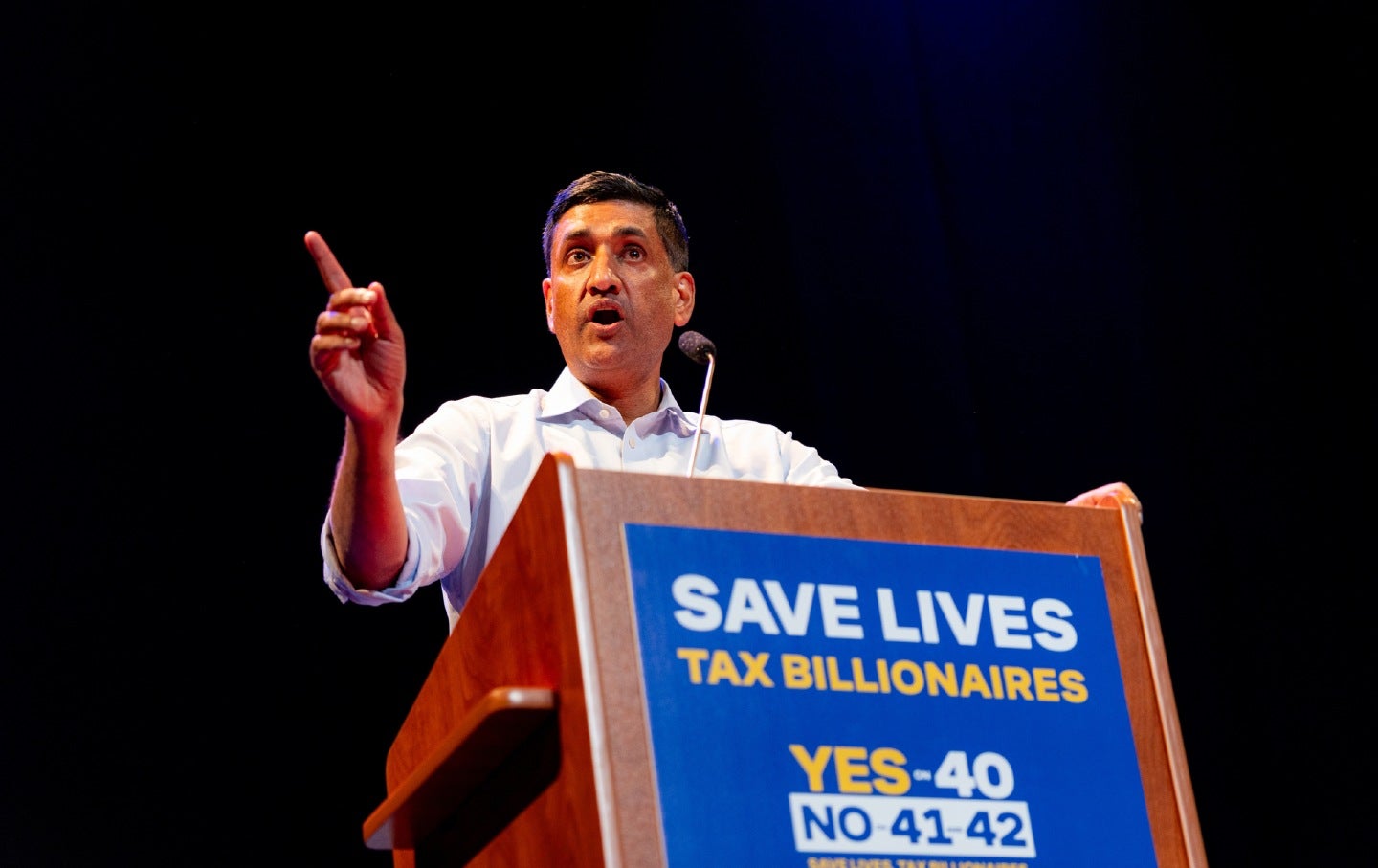
Cover image from thenation.com, which was analyzed for this article
New surveys show sharp drop in backing from key GOP constituency heading into midterms. Shift highlights potential vulnerabilities for Republicans in final campaign stretch.
PoliticalOS
Thursday, October 29, 2026 — Politics
Available reporting flags possible erosion in a key Republican constituency but provides no verifiable numbers or context. Readers cannot yet determine whether the reported change is statistically meaningful or electorally decisive.
What outlets missed
No outlet supplied the actual poll results, including margins of error or question wording, needed to assess whether the reported drop exceeds normal sampling variation. The provided coverage also omitted any discussion of possible causes such as specific policy disagreements or broader dissatisfaction. No reactions from evangelical leaders or Republican strategists appeared in the material.
Ro Khanna Positions Himself as Standard Bearer for New Deal Democrats
Representative Ro Khanna has stepped forward with a clear historical argument for the Democratic Party’s direction. Speaking alongside Senator Bernie Sanders at a Los Angeles rally this month, the California Democrat declared that the party must reclaim its identity as New Deal Democrats rather than corporate or neoliberal ones. The line drew applause from the crowd but also highlighted a longer-running debate inside the party about which era of its past offers the best guide for the present.
Khanna’s references to Franklin Roosevelt are not casual. He has repeatedly invoked Roosevelt’s 1944 Economic Bill of Rights, which proposed guarantees to employment, housing, medical care, and education. In recent speeches he has paired that program with contemporary proposals for higher minimum wages, expanded public investment in manufacturing, and stronger antitrust enforcement. The approach treats the New Deal not as a fixed set of programs but as a governing philosophy that used federal power to reshape market outcomes after a period of economic crisis and political instability.
The timing of Khanna’s comments coincides with polling that shows eroding support for President Trump among white evangelical voters. Three recent surveys indicate measurable declines in that group’s approval of the president, a shift that could alter turnout calculations in the 2026 midterms. While the two developments operate in different coalitions, both point to voter restlessness with the dominant political alignments of the last decade. Democratic strategists have long argued that economic messaging can reach beyond traditional party lines; Khanna’s rhetoric tests whether an explicit return to mid-century progressive language can accelerate that process.
Critics inside the party contend that such framing risks overstating continuity with the 1930s and 1940s. The New Deal operated in a different demographic and institutional environment, they note, and many of its signature programs were later narrowed or restructured. Khanna’s response has been to emphasize principles rather than precise replicas: government’s role in guaranteeing baseline economic security and countering concentrated private power. He has cited Roosevelt’s own 1930 statement that the country needed to become “fairly radical for a generation” as evidence that earlier Democrats recognized moments when incrementalism was insufficient.
The argument carries implications for the 2028 presidential contest. Khanna has not declared a candidacy, yet his recent appearances and fund-raising have drawn attention from donors and activists looking for a candidate who can blend technological expertise with redistributionist economics. Whether that combination can consolidate support among voters who have drifted from both major parties remains an open question. The recent polling on evangelical voters suggests that Republican support is not monolithic, but translating dissatisfaction into Democratic gains will require concrete offers on wages, housing costs, and health care access.
For now, Khanna’s intervention has reopened a discussion about which historical precedents the party should claim. The New Deal era supplies one set of tools and rhetoric; other periods offer different lessons. The coming months will show whether voters respond to the choice Khanna has placed before them.
You just read Liberal's take. Want to read what actually happened?
More in Politics
Democrats Flip Senate, Expand House Majority in Midterms
Democrats flipped the Senate and expanded their House majority in a major rebuke to President Trump and Republicans. Key victories included multiple Senate seats and state-level wins that ended long-standing GOP dominance in places like Texas.
GOP Losses Spur Blame, Vance Distancing, 2028 Maneuvers
Republicans are pointing fingers internally after heavy losses, with Vice President JD Vance distancing himself from Trump over the Iran war and positioning for a potential 2028 run. Challengers within the party are already sensing opportunity.
Democrats Take House and Senate Amid Record Midterm Turnout
Democrats achieved decisive gains in the 2026 midterms, flipping seats to take control of both chambers. Coverage highlights historic turnout and implications for the Trump administration.
Democrats Take House and Senate, Constraining Trump
Democrats flipped both the House and Senate in a major rebuke to President Trump and Republicans. The results create divided government and set up battles over spending, oversight, and foreign policy for the remainder of Trump's term.
The Compass
You just read five takes on one story.
What's your take? Find your political shape in a few minutes.
Take the test