
Senate Hearing Triggers State Probes Into Fauci's COVID Role
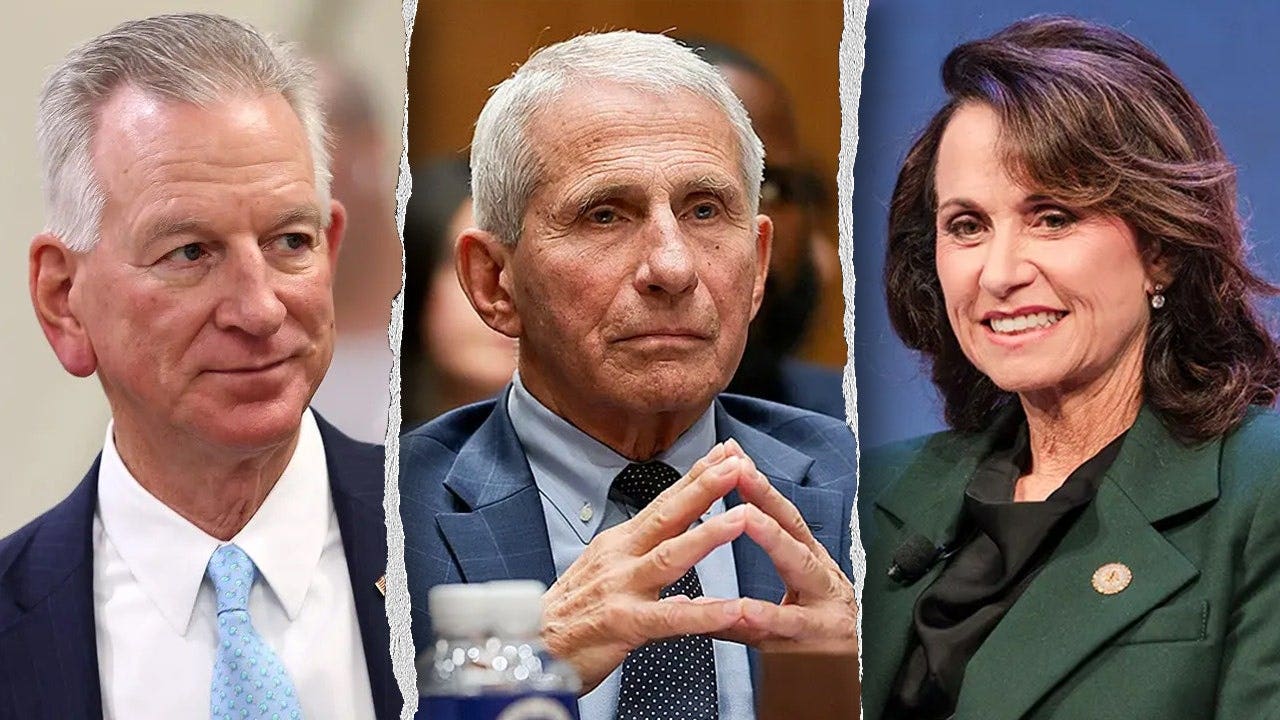
Cover image from foxnews.com, which was analyzed for this article
Senate hearings on COVID-19 origins have prompted Republican-led probes in multiple states, with critics accusing Fauci of misleading the public. Outlets across the spectrum covered the political fallout and related claims.
PoliticalOS
Sunday, August 2, 2026 — Politics
The Senate hearing has moved COVID-19 origins scrutiny from federal to state venues without new scientific resolution. Readers should track whether state investigations produce admissible evidence or remain at the level of political statements.
What outlets missed
Most coverage omitted the full text of the WHO advisory group's 2025 conclusion that a lab incident remains possible due to data gaps from China. Few outlets noted that Fifth Amendment invocations on advice of counsel do not constitute an admission of guilt under established legal precedent. The diary entries released by Sen. Paul contain observations spanning both the Trump and Biden administrations, a detail absent from several accounts that focused only on 2020 material.
Fauci Hearing Exposes Rift Over Pandemic Accountability and Scientific Debate
The Senate Homeland Security and Governmental Affairs Committee hearing on July 29 featured former National Institute of Allergy and Infectious Diseases Director Anthony Fauci invoking his Fifth Amendment right against self-incrimination 111 times while facing questions about his pandemic management and the origins of COVID-19. The Republican-led session drew on excerpts from Fauci's private diary, which recorded both his early optimism about working with President Donald Trump and his later frustrations as their approaches diverged.
Fauci's notes from January 2020 described an "amazing day" after meeting Trump, who praised him as "a famous guy." By spring, the diary reflected growing tension over messaging on distancing, masks and economic reopening. Trump viewed Fauci's cautions as overly pessimistic amid his reelection campaign, while Fauci saw the president's briefings as "painfully rambling." These private observations have fueled scrutiny of how personal and institutional dynamics shaped public health responses.
The hearing also revisited the virus origins question. Initial public statements from Fauci and others emphasized a natural spillover at a Wuhan market. Private communications among scientists, referenced in the proceedings, showed early doubts about that explanation. Comedian Bill Maher highlighted this shift on his HBO program, stating that Fauci had told "actual lies" by dismissing the lab-leak possibility as a conspiracy theory when evidence suggested otherwise. Maher noted the theory's importance given more than seven million confirmed deaths worldwide.
Louisiana Attorney General Liz Murrill announced her office would investigate Fauci, joining efforts in Alabama and Florida. She cited discrepancies between Fauci's deposition testimony and diary entries, arguing that a federal pardon from former President Joe Biden would not shield him from state-level review. These actions illustrate how pandemic-related questions have moved from federal oversight into state political arenas.
The episode underscores a pattern in which scientific uncertainty during an emergency became entangled with partisan conflict. Early rejection of the lab-leak hypothesis by some officials and media outlets later proved premature, as intelligence assessments and studies left the question open. At the same time, the transformation of that debate into repeated congressional spectacles and state probes has complicated efforts to separate legitimate accountability from efforts to discredit public health institutions. Diary passages mocking Trump's ears or noting high thread counts in bedsheets further personalize the record without clarifying policy decisions.
Public trust in health agencies remains strained years later. Polling and institutional data show persistent skepticism toward federal guidance on vaccines and future outbreaks. Hearings like this one may generate headlines, yet they risk reinforcing the view that expert judgment is merely another arena for political combat rather than a source of shared evidence. The challenge ahead lies in distinguishing documented missteps in communication from broader claims of coordinated wrongdoing.
You just read Liberal's take. Want to read what actually happened?
More in Politics
Democrats Flip Senate, Expand House Majority in Midterms
Democrats flipped the Senate and expanded their House majority in a major rebuke to President Trump and Republicans. Key victories included multiple Senate seats and state-level wins that ended long-standing GOP dominance in places like Texas.
GOP Losses Spur Blame, Vance Distancing, 2028 Maneuvers
Republicans are pointing fingers internally after heavy losses, with Vice President JD Vance distancing himself from Trump over the Iran war and positioning for a potential 2028 run. Challengers within the party are already sensing opportunity.
Democrats Take House and Senate Amid Record Midterm Turnout
Democrats achieved decisive gains in the 2026 midterms, flipping seats to take control of both chambers. Coverage highlights historic turnout and implications for the Trump administration.
Democrats Take House and Senate, Constraining Trump
Democrats flipped both the House and Senate in a major rebuke to President Trump and Republicans. The results create divided government and set up battles over spending, oversight, and foreign policy for the remainder of Trump's term.
The Compass
You just read five takes on one story.
What's your take? Find your political shape in a few minutes.
Take the test