
Senate Hearing Triggers State Probes Into Fauci's COVID Role
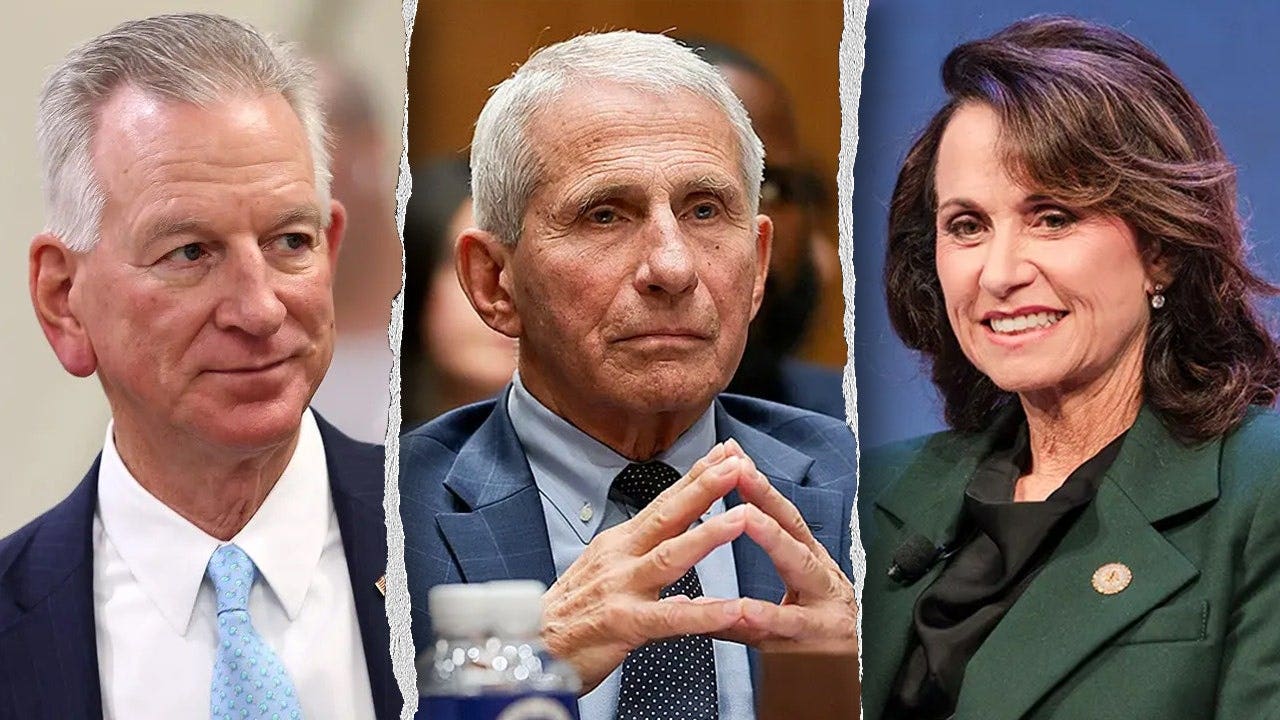
Cover image from foxnews.com, which was analyzed for this article
Senate hearings on COVID-19 origins have prompted Republican-led probes in multiple states, with critics accusing Fauci of misleading the public. Outlets across the spectrum covered the political fallout and related claims.
PoliticalOS
Sunday, August 2, 2026 — Politics
The Senate hearing has moved COVID-19 origins scrutiny from federal to state venues without new scientific resolution. Readers should track whether state investigations produce admissible evidence or remain at the level of political statements.
What outlets missed
Most coverage omitted the full text of the WHO advisory group's 2025 conclusion that a lab incident remains possible due to data gaps from China. Few outlets noted that Fifth Amendment invocations on advice of counsel do not constitute an admission of guilt under established legal precedent. The diary entries released by Sen. Paul contain observations spanning both the Trump and Biden administrations, a detail absent from several accounts that focused only on 2020 material.
Republican hearing on Fauci revives old COVID conspiracy claims without new evidence
Former NIH director Anthony Fauci appeared before a Republican-led Senate committee last week and invoked his Fifth Amendment rights more than 100 times while lawmakers pressed questions about his pandemic role and the origins of COVID-19. The July 29 session, held by the Homeland Security and Governmental Affairs Committee, produced no fresh documents linking Fauci to any wrongdoing but instead recycled long-standing accusations that have circulated on the political right since 2020.
Committee members focused heavily on whether the virus emerged from a Wuhan laboratory or a wet market. Early public statements from Fauci and other scientists had leaned toward a natural origin, consistent with patterns seen in prior outbreaks. Private notes later released show initial uncertainty among researchers, yet Republicans have framed any shift in emphasis as deliberate deception. The hearing offered no proof that Fauci suppressed evidence or directed research toward a particular conclusion.
Several Republican-led states have signaled follow-up actions. Louisiana Attorney General Liz Murrill announced her office would examine Fauci’s conduct, citing prior depositions in Missouri and Louisiana cases. Florida and Alabama have already launched parallel reviews. These moves come despite a federal pardon issued by former President Biden, which state officials argue does not shield against local prosecution. Critics note that the states involved are all governed by Republicans who have repeatedly targeted federal health officials.
Comedian Bill Maher used his HBO program to criticize Fauci’s early public comments on origins, calling them misleading. Maher’s remarks drew attention because he has often challenged institutional narratives on other issues, yet they aligned with the committee’s emphasis on the lab-leak possibility. Scientific consensus remains divided, with both natural spillover and laboratory accident still under active study by researchers worldwide. No congressional hearing has produced conclusive evidence resolving the question.
Fauci’s private diary entries, portions of which have surfaced in recent coverage, show an initially cooperative relationship with then-President Trump that deteriorated as messaging differences grew. Early notes record positive meetings and shared goals; later passages describe frustration with briefings that Fauci viewed as overly optimistic. These personal observations have been presented by some outlets as evidence of political maneuvering rather than routine professional disagreement during a crisis.
The broader pattern involves long-running efforts to portray Fauci as a central villain in pandemic policy disputes. Accusations have ranged from gain-of-function research oversight to mask guidance and vaccine promotion. Many originated on fringe platforms before migrating into mainstream Republican rhetoric and state investigations. Public health experts have noted that such attacks can discourage scientists from future government service during emergencies.
The hearing concluded without new legislative proposals or bipartisan agreement on next steps. Instead, it underscored how disputes over COVID origins continue to serve as a partisan flashpoint six years after the first cases emerged. State-level probes now underway will determine whether any additional legal exposure exists beyond the federal pardon already granted.
You just read Progressive's take. Want to read what actually happened?
More in Politics
Democrats Flip Senate, Expand House Majority in Midterms
Democrats flipped the Senate and expanded their House majority in a major rebuke to President Trump and Republicans. Key victories included multiple Senate seats and state-level wins that ended long-standing GOP dominance in places like Texas.
GOP Losses Spur Blame, Vance Distancing, 2028 Maneuvers
Republicans are pointing fingers internally after heavy losses, with Vice President JD Vance distancing himself from Trump over the Iran war and positioning for a potential 2028 run. Challengers within the party are already sensing opportunity.
Democrats Take House and Senate Amid Record Midterm Turnout
Democrats achieved decisive gains in the 2026 midterms, flipping seats to take control of both chambers. Coverage highlights historic turnout and implications for the Trump administration.
Democrats Take House and Senate, Constraining Trump
Democrats flipped both the House and Senate in a major rebuke to President Trump and Republicans. The results create divided government and set up battles over spending, oversight, and foreign policy for the remainder of Trump's term.
The Compass
You just read five takes on one story.
What's your take? Find your political shape in a few minutes.
Take the test