
Fauci invokes Fifth over 100 times in Senate COVID hearing
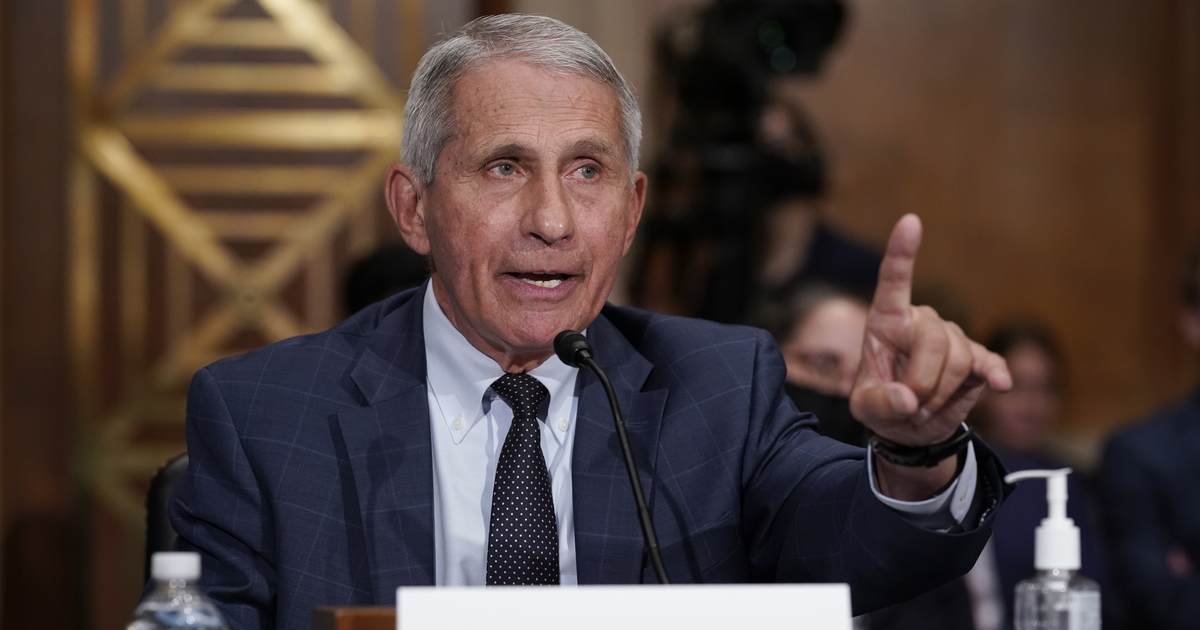
Cover image from redstate.com, which was analyzed for this article
Anthony Fauci testified before the Senate amid threats of contempt charges and sharp partisan attacks, with new diary excerpts fueling criticism from conservatives and defenses from supporters. Multiple outlets covered the contentious exchanges and political fallout.
PoliticalOS
Thursday, July 30, 2026 — Politics
Fauci’s repeated Fifth Amendment invocations occurred against the backdrop of a preemptive pardon and diary entries that Republicans say contradict his public statements on origins and school policy. The legal viability of contempt proceedings and the scope of any state investigation remain unresolved. Readers should weigh the documented diary language against the constitutional protection invoked and the partisan incentives on both sides.
What outlets missed
Most outlets omitted the full text of the 1896 Supreme Court precedent cited by Republicans that could test whether a pardon removes Fifth Amendment protection. Few reported the precise scope of Biden’s pardon (2014–2025) or the fact that it does not cover state crimes. Several accounts left out the 2023 ODNI report showing the FBI assessed a lab-associated origin with moderate confidence and the Department of Energy reached a similar conclusion with low confidence. The complete diary sentence acknowledging an animal-to-human jump alongside market doubts appeared in almost no coverage.
Fauci Invokes Fifth Amendment in Senate Hearing on Pandemic Response
Anthony Fauci appeared before the Senate Homeland Security and Governmental Affairs Committee on Wednesday and declined to answer questions more than 100 times, citing his Fifth Amendment rights against self-incrimination. The former director of the National Institute of Allergy and Infectious Diseases faced scrutiny over his role in the federal response to Covid-19, including questions about the virus's origins and research funding connected to the Wuhan Institute of Virology.
Committee chairman Rand Paul, who has long pressed claims that Fauci helped obscure a possible lab leak, announced plans to pursue contempt proceedings. Paul argued that Fauci's refusal to engage on even basic points undermined the committee's work. Other Republican members, including Ted Cruz and Josh Hawley, described the testimony as evidence of broader institutional failures and called for legal consequences, with some linking it to Fauci's receipt of cash awards during his government service.
Fauci's attorney countered that his client remains on firm legal footing. The former official received a broad pardon from President Biden covering activities through the end of the prior administration, which removes the immediate risk of federal prosecution for most matters under review. Legal experts note that such preemptive protections have historically shielded individuals from compelled testimony that could expose them to charges, even when the underlying conduct remains disputed.
The hearing also surfaced newly released excerpts from Fauci's diaries, which Paul had made public ahead of the session. In those entries, Fauci expressed private skepticism about early public narratives on the virus's emergence from a wet market while communicating with Chinese health officials. Documents obtained through prior congressional and Freedom of Information Act requests show internal discussions among scientists about the strength of evidence for natural versus laboratory origins, though no new proof of misconduct has emerged in the current inquiry.
Critics on the committee framed Fauci's repeated invocations as an evasion of accountability for policies that affected millions. Supporters of the former official point out that congressional hearings often mix legitimate oversight with partisan performance, particularly on a topic as polarized as the pandemic. The pardon itself reflects an effort by the prior administration to insulate key figures from what it viewed as politically motivated legal exposure.
Whether contempt charges advance remains unclear. Historical precedents show that such referrals rarely result in successful prosecutions when a witness has received a pardon and is following explicit legal advice. The episode underscores the limits of retrospective congressional investigations into complex public health decisions made under uncertainty, where legal protections and institutional incentives can constrain the pursuit of definitive answers.
You just read Liberal's take. Want to read what actually happened?
More in Politics
Democrats Flip Senate, Expand House Majority in Midterms
Democrats flipped the Senate and expanded their House majority in a major rebuke to President Trump and Republicans. Key victories included multiple Senate seats and state-level wins that ended long-standing GOP dominance in places like Texas.
GOP Losses Spur Blame, Vance Distancing, 2028 Maneuvers
Republicans are pointing fingers internally after heavy losses, with Vice President JD Vance distancing himself from Trump over the Iran war and positioning for a potential 2028 run. Challengers within the party are already sensing opportunity.
Democrats Take House and Senate Amid Record Midterm Turnout
Democrats achieved decisive gains in the 2026 midterms, flipping seats to take control of both chambers. Coverage highlights historic turnout and implications for the Trump administration.
Democrats Take House and Senate, Constraining Trump
Democrats flipped both the House and Senate in a major rebuke to President Trump and Republicans. The results create divided government and set up battles over spending, oversight, and foreign policy for the remainder of Trump's term.
The Compass
You just read five takes on one story.
What's your take? Find your political shape in a few minutes.
Take the test