
Gas Prices Hit $4.50 Amid Iran Conflict Disruptions in Strait of Hormuz
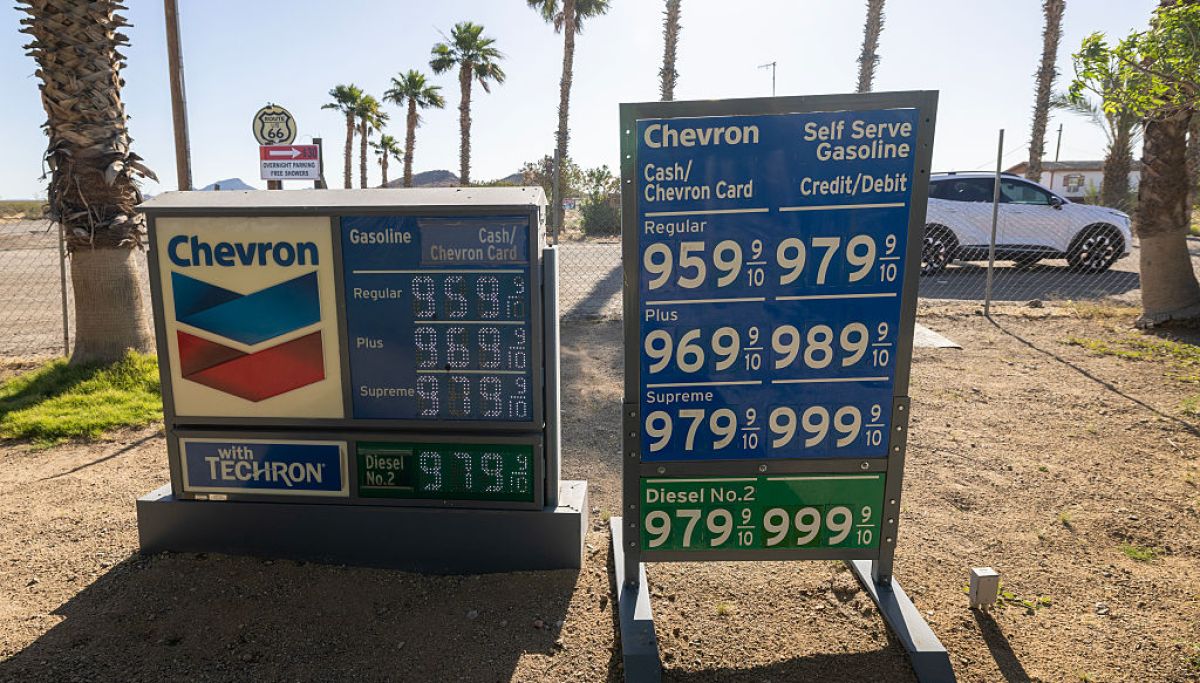
Cover image from washingtonexaminer.com, which was analyzed for this article
Nationwide gasoline prices have risen 50% to $4.50 per gallon due to Strait of Hormuz issues from the Iran conflict, fueling inflation concerns. Polls attribute blame to Trump as consumers feel the pinch. A state-by-state map shows variations in the spike.
PoliticalOS
Wednesday, May 6, 2026 — Business
U.S. gasoline prices have reached approximately $4.50 per gallon because the Iran conflict triggered a blockade in the Strait of Hormuz that disrupted one-fifth of global crude supply. The increase is straining household budgets for a clear majority of Americans and has driven President Trump's approval to record lows in recent polling, with 63 percent directly blaming him. Resolution depends on restoring secure shipping lanes; experts across outlets expect eventual declines if the risk premium fades, but the timeline remains uncertain.
What outlets missed
Most outlets underplayed the documented start date of U.S. and Israeli strikes on February 28, 2026, which multiple timelines list as the trigger for Iran's retaliatory strait closure. Partial U.S.-escorted tanker transits under a program referenced as "Project Freedom" occurred around May 5-6 according to some congressional and wire reports but received almost no attention. Current West Texas Intermediate crude closed at $92.60 on the day several stories published, a 9 percent daily drop that tempered the sense of unrelenting escalation. Exact casualty figures from the conflict and Trump's formal May 1 notification to Congress that hostilities had terminated were mentioned in only one outlet and omitted from consumer-focused or poll-driven coverage.
For American drivers already stretched by higher costs, the national average for a gallon of regular gasoline has climbed to $4.48, up roughly 50 percent from late February levels near $3. The surge stems from constrained oil flows through the Strait of Hormuz, where one-fifth of global crude normally passes. That disruption traces directly to the conflict that began with U.S. and Israeli strikes on Iranian targets February 28 and Iran's retaliatory blockade of the waterway.
Prices jumped 31 cents in the past week alone, according to AAA data. West Coast states have seen the sharpest increases, with California averages exceeding $6 in late April, while central states such as Oklahoma and Kansas stayed closer to the national floor. Business Insider's state-by-state map illustrates the spread. The pinch is broad. An NPR/PBS News/Marist poll conducted April 27-30 found 81 percent of respondents, including 79 percent of Republicans, say current prices strain household budgets.
The central tension remains unresolved: how quickly shipping through the strait can normalize. A ceasefire announced in early April brought brief daily price declines for nearly two weeks before the upward trend resumed. Trump notified Congress on May 1 that active hostilities had ended April 7 with no further exchanges of fire and that negotiations continued. Yet tanker insurance costs and risk premiums have kept crude benchmarks elevated. West Texas Intermediate traded near $93 per barrel in early May, according to market reports, though forecasts from S&P Global and GasBuddy vary on summer peaks between $3.50 and $5.50 nationally.
Trump told business leaders this week that prices would fall "very substantially" once flows resume. The Washington Examiner noted he is directionally correct but that refinery constraints, seasonal summer blends, and depleted inventories will slow any drop. Analysts attribute roughly 60 percent of pump prices to crude costs, with refining, distribution, and taxes making up the rest. A full reopening could push national averages toward $3.75 within weeks and below $3.25 by year-end if crude settles near $80, the Examiner calculated. Those projections remain unverified by other major outlets.
Public reaction has turned sharply political. The same Marist poll showed Trump's overall approval at 37 percent approve and 59 percent disapprove, his worst mark in the survey's history. By 63-37 percent, respondents blamed him for the gas price rise. His handling of the Iran situation drew 33 percent approval. Democrats now lead by 10 points on a generic congressional ballot, with an enthusiasm edge that could matter in November midterms. White non-college women, lower-income households, and millennials registered some of the steepest drops in support.
The conflict's economic ripple has revived inflation worries. Energy costs feed directly into broader price pressures. Yet the precise sequence of blockade actions, partial U.S.-escorted transits reported in some accounts, and the exact status of any ongoing naval operations could not be independently verified across all four outlets. Al Jazeera described a "global energy crisis caused by the US-Israel war on Iran" and cited an expert on persistent upward pressure; those details were not corroborated elsewhere. Business Insider noted both U.S. and Iranian blockades without sequencing. NPR emphasized budget strain and midterm implications. The Examiner focused on tempered optimism for eventual relief.
What happens next hinges on diplomacy and maritime security. Until shippers regain confidence, the risk premium lingers. Consumers feel it immediately at the pump. Policymakers on both sides face domestic costs that neither can easily ignore.
More in Business & Economy

Major Banks Deliver Mixed Q3 Results on Trading Beats
JPMorgan, Goldman Sachs, Citigroup, and Wells Fargo reported Q3 figures, with revenue beats in trading but some estimate misses. CNBC provided live updates on the results and market reactions.

Oil Falls on Russian Diesel Outlook Despite Geopolitical Risks
Dow futures rose while Nasdaq faced pressure from tech weakness and elevated oil after geopolitical spikes. CNBC tracked premarket moves tied to earnings and Fed speeches.

Hall and Woodford Win Economics Nobel for Stabilization Models
American economists Robert E. Hall and Michael Woodford won the Nobel memorial prize for their research on managing economies through booms and busts, informing central bank policies on inflation and unemployment.

Skydance Closes Paramount-Warner Bros. Discovery Deal
The long-delayed media mega-merger cleared hurdles and began operations under Skydance, consolidating Hollywood power. Center and center-left outlets track the regulatory and business milestones.
The Compass
You just read five takes on one story.
What's your take? Find your political shape in a few minutes.
Take the test