
Trump Claims Hamas Deal on Phased Gaza Disarmament
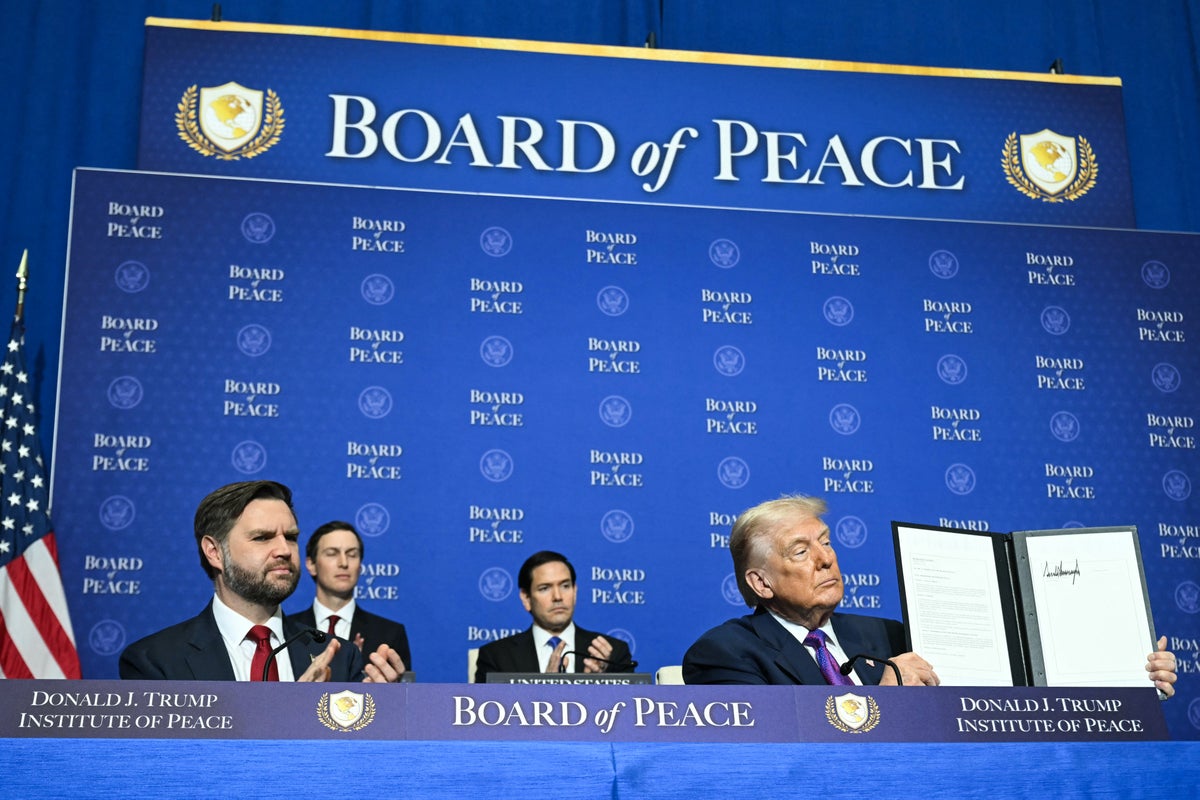
Cover image from independent.co.uk, which was analyzed for this article
Trump announces Hamas agreement on phased disarmament and next phase of Gaza peace, though implementation questions and skepticism remain.
PoliticalOS
Friday, July 31, 2026 — Politics
The core unresolved issue is sequencing: Hamas insists on Israeli withdrawal and aid increases before any disarmament begins, while Israeli officials demand full demilitarization first. Without mutual verification mechanisms that both sides accept, the roadmap remains conditional on steps neither party has yet committed to in public.
What outlets missed
Most coverage omitted the precise 14-day inventory deadline and the explicit prohibition on transferring weapons to any non-Palestinian party. Few outlets detailed the Board of Peace’s seven-member founding executive structure or the estimated 5,000-troop size of the stabilization force. The conditional linkage between each disarmament phase and a corresponding Israeli withdrawal line was mentioned only in passing, leaving readers without the mechanism that makes the deal sequential rather than simultaneous.
Trump Announces Deal for Phased Hamas Disarmament but Faces Familiar Implementation Hurdles
President Donald Trump declared Thursday that his administration had secured what he called a historic agreement for the complete disarmament of Hamas and other armed groups in Gaza. The announcement, posted on Truth Social, described the plan as a monumental step toward lasting peace and security, with an international stabilization force and a new Palestinian police force eventually taking responsibility for security as Israeli troops withdraw in phases.
The deal emerges from negotiations mediated by the United States, Egypt, Qatar, and Turkey under the framework of the Board of Peace, a body Trump established to oversee the next stage of the ceasefire reached last October. According to U.S. officials and the Board, Hamas has agreed in principle to the final text, which would require the group to surrender heavy and light weapons over a period of roughly six to eight months while disclosing tunnel networks and weapons sites. Israeli withdrawals would follow verified demilitarization in specific areas, with reconstruction and a new Palestinian governing authority to follow.
Yet the announcement immediately ran into the same sequencing disputes that have stalled progress since the original ceasefire took effect. A senior Hamas official told multiple outlets that the group would not begin surrendering arms until Israel first halts attacks, expands humanitarian aid flows, and completes its own withdrawals under the existing agreement. Israeli Prime Minister Benjamin Netanyahu has not publicly responded to the proposal, leaving unclear whether the Israeli government accepts the terms or the timetable.
The gap between announcement and execution reflects patterns that have defined the past ten months. Since the October 2025 ceasefire, Palestinian health authorities report more than 1,100 deaths from Israeli strikes, while Hamas has documented thousands of alleged violations. Aid deliveries have remained restricted, and Israel has extended its operational buffer inside Gaza, moves that mediators and Palestinian officials describe as undermining the prior deal. These developments have deepened distrust on the Palestinian side and raised questions about whether any phased process can survive the first test of compliance.
The political calendar adds another layer of pressure. Midterm elections loom in just over three months, and Trump has sought visible foreign-policy progress amid rising gas prices tied to regional tensions. Past declarations of breakthrough in the same conflict have not translated into sustained reductions in violence or accelerated reconstruction for a territory where the vast majority of housing has been damaged or destroyed.
Whether this latest framework can overcome the core obstacles, verification of disarmament, credible security guarantees for both sides, and the establishment of a functioning Palestinian authority, remains the central unresolved question. The Board of Peace structure itself represents an attempt to create new institutional oversight, yet its authority ultimately rests on the willingness of the parties to follow through on commitments that have repeatedly proved difficult to enforce.
You just read Liberal's take. Want to read what actually happened?
More in Politics
Democrats Flip Senate, Expand House Majority in Midterms
Democrats flipped the Senate and expanded their House majority in a major rebuke to President Trump and Republicans. Key victories included multiple Senate seats and state-level wins that ended long-standing GOP dominance in places like Texas.
GOP Losses Spur Blame, Vance Distancing, 2028 Maneuvers
Republicans are pointing fingers internally after heavy losses, with Vice President JD Vance distancing himself from Trump over the Iran war and positioning for a potential 2028 run. Challengers within the party are already sensing opportunity.
Democrats Take House and Senate Amid Record Midterm Turnout
Democrats achieved decisive gains in the 2026 midterms, flipping seats to take control of both chambers. Coverage highlights historic turnout and implications for the Trump administration.
Democrats Take House and Senate, Constraining Trump
Democrats flipped both the House and Senate in a major rebuke to President Trump and Republicans. The results create divided government and set up battles over spending, oversight, and foreign policy for the remainder of Trump's term.
The Compass
You just read five takes on one story.
What's your take? Find your political shape in a few minutes.
Take the test