
US Grocery Prices Climb 2.9% in April on Multiple Fronts
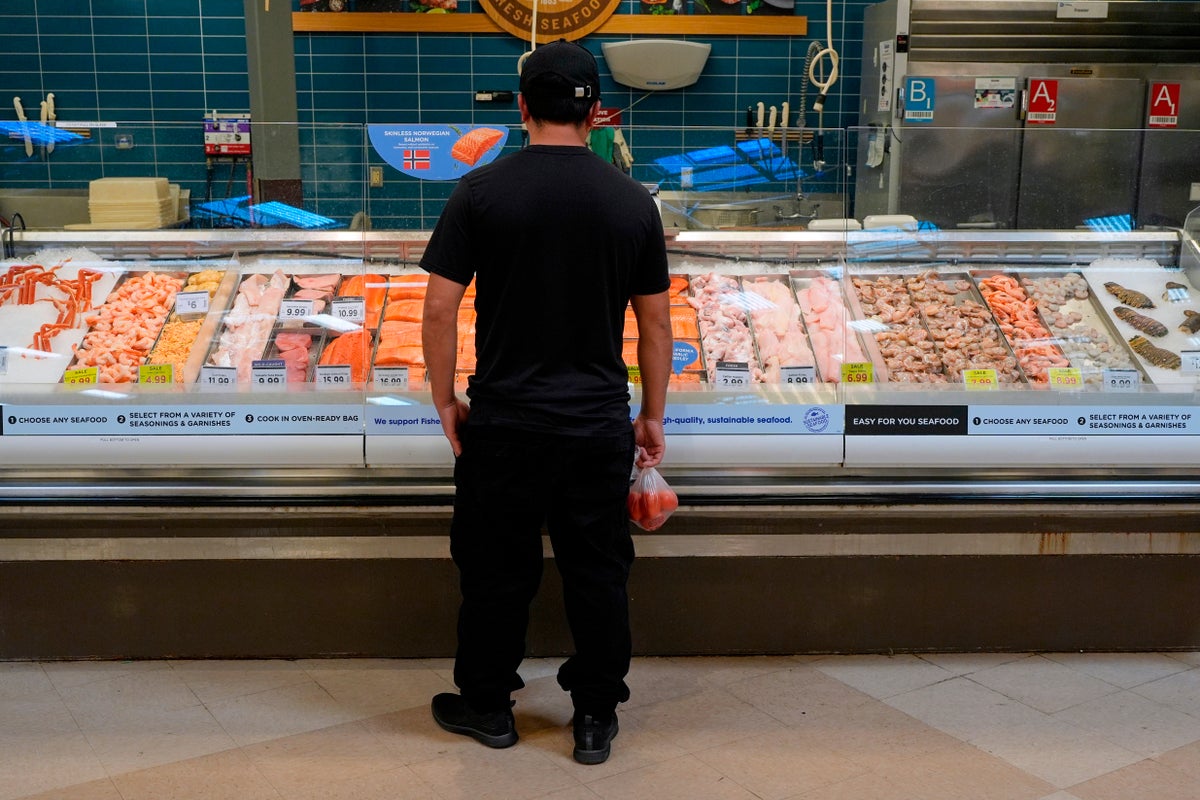
Cover image from independent.co.uk, which was analyzed for this article
US grocery prices increased in April due to multiple factors including supply issues and war impacts, not solely energy costs. Consumers face ongoing strain amid broader inflation. Debates focus on policy responses.
PoliticalOS
Wednesday, May 13, 2026 — Business
Grocery prices rose 2.9 percent in April for reasons that include but are not limited to higher diesel costs tied to the Iran conflict. Trade duties, weather, and supply-chain lags also contributed, and some categories such as eggs moved lower. Full effects of recent energy disruptions are still working through the system and will appear in later months.
What outlets missed
Most coverage omitted the precise timeline of U.S. naval actions in the Strait of Hormuz that began after the April CPI survey period, leaving unclear how much of the reported diesel spike had already affected March and early April data. Few outlets cross-checked subcategory figures such as the claimed 8.8 percent meat increase or 6.5 percent fresh-produce rise against publicly available BLS tables, which show month-to-month rather than exact year-over-year matches for those items. The role of avian-flu flock rebuilding in driving egg prices sharply lower received little attention outside the AP wire, even though it directly offset some headline inflation. Antitrust actions announced by the FTC and DOJ in mid-April on hidden delivery fees and alleged egg collusion were treated as new Trump initiatives in opinion pieces but were not placed in the context of ongoing Biden-era investigations that continued into 2026.
Americans saw grocery bills rise again in April, with food-at-home prices increasing 2.9 percent from a year earlier—the steepest annual pace since August 2023. Overall food costs, including restaurant meals, advanced 3.2 percent. The Labor Department’s consumer price index, released May 13, captured those gains across meat, produce, and staples in U.S. cities. Diesel prices, up 61 percent year-over-year according to AAA, added pressure because the fuel moves most agricultural goods and because the Iran conflict restricted tanker traffic through the Strait of Hormuz. Yet the same data showed that energy was only one contributor. Purdue University agricultural economists Ken Foster and Bernhard Dalheimer noted that higher production and transport costs typically reach shelves with a three-to-six-month lag, meaning much of April’s increase still reflected earlier conditions. Wholesale vendors supplying independent grocers such as Sparrow Market in Ann Arbor, Michigan, began adding fuel surcharges in recent weeks, owner Raymond Campise said, and those charges are now appearing on invoices for meat and produce. Trade measures also mattered. A 17 percent duty the Trump administration placed on Mexican tomatoes in July 2025 coincided with a 40 percent jump in tomato prices over the following twelve months. Dry weather in the West lifted beef prices 15 percent year-over-year, while global droughts pushed coffee 18.5 percent higher. Offsetting some of those increases, egg prices fell 39 percent as farmers restored flocks after earlier avian-flu losses, and butter declined 5.8 percent. Fertilizer costs could rise further if the Hormuz disruption persists into next year’s planting season, Foster said, because roughly 30 percent of world fertilizer shipments pass through the strait. Food prices and inflation are expected to remain central issues ahead of the November midterms.
The two AP-based wires stayed closest to verified CPI figures and expert lag estimates while listing other contributors. Townhall shifted the frame to partisan policy contrast and unverified claims about enforcement actions. Yahoo Finance covered an unrelated corporate restructuring and contributed no relevant information on prices.
Behind the Coverage
independent.co.uk
Most biased
townhall.com
finance.yahoo.com
newsmax.com
Least biased
What each outlet got wrong
independent.co.uk
The article uses a title 'US grocery prices rose in April, but gas spikes weren't the only reason' and selective quotes from Purdue economists like 'Most of what we’re seeing now in the food price chain probably predates the conflict' to downplay the Iran war's role, while including unverified stats such as 'trucks that ship 83% of U.S. agricultural products.' It stacks sources from one pair of economists to create an impression of consensus on minimal current war impact.
Our version: The neutral version balances the Iran conflict's contribution with lags and other factors like trade duties and weather without leading with downplaying language or unverified stats.
townhall.com
This op-ed employs partisan hero-villain framing in the title 'Trump Is Addressing Grocery Gouging the Right Way. Democrats Aren’t' and loaded language like 'It took a lot of gall for Democrats to cast themselves as champions of affordability after advancing Biden policies that sent inflation to a 40-year high,' while making unverified claims such as Trump 'kept inflation in check' despite contrary data on 2026 surges.
Our version: The neutral version avoids partisan blame, focusing on data-driven causes like CPI figures, diesel spikes, and policy impacts without glorifying or vilifying administrations.
finance.yahoo.com
The article on Walmart job cuts includes an untraceable author 'Cris Tolomia' with no journalistic record and an unverified claim that a memo was 'co-authored by Suresh Kumar... and Daniel Danker,' potentially eroding credibility despite factual sourcing on the 1,000 roles.
Our version: The neutral version, focused on grocery price data, omits unrelated corporate restructurings and sticks to verified CPI and economic analyses without authorship issues.
newsmax.com
Republishing the AP article, it frames disruptions passively as 'Fuel prices have soared while the Iran war prevents cargo ships from passing through the Strait of Hormuz' and relies heavily on Purdue economists' quotes like 'Most of what we're seeing now... predates the conflict' plus unverified '83% of U.S. agricultural products' by trucks to dilute the war's immediacy.
Our version: The neutral version specifies diesel's 61% rise due to Iran conflict and Hormuz restrictions alongside lags and other causes, using verified data without passive phrasing.
Facts outlets left out
War timeline: U.S./Israel strikes (late Feb 2026), Hormuz restrictions (early March), ceasefire (April 8)
Omitted by: independent.co.uk, newsmax.com
Avian flu's role in egg prices, with USDA data showing 2025-2026 outbreaks culling millions of hens
Omitted by: townhall.com
Trump's December 2025 Executive Order directing DOJ/FTC probes into food supply chain price-fixing
Omitted by: townhall.com
U.S.-led naval blockade imposed late April 2026
Omitted by: newsmax.com
Framing tricks we caught
Loaded headline
“'US grocery prices rose in April, but gas spikes weren't the only reason' (independent.co.uk) and identical in newsmax.com”
Neutral alternative: Neutral version uses descriptive title 'Grocery Prices Rise in April Beyond Just Gas Spikes' and leads with balanced CPI data without 'but' qualifiers.
Stacked sources
“Heavy reliance on Purdue economists Ken Foster and Bernhard Dalheimer with quotes like 'Most of what we’re seeing now... predates the conflict' and 'the story... is more complicated than just an energy shock' (independent.co.uk, newsmax.com)”
Neutral alternative: Neutral version cites economists on lags but integrates them with diesel data, trade duties, and weather without implying consensus against war's role.
Partisan hero-villain narrative
“'Trump Is Addressing Grocery Gouging the Right Way. Democrats Aren’t' with phrases like 'Democrats... succumbed to this temptation' (townhall.com)”
Neutral alternative: Neutral version reports policy impacts like the 17% Trump tomato duty factually alongside other factors, without blame attribution.
Source articles
More in Business & Economy

Major Banks Deliver Mixed Q3 Results on Trading Beats
JPMorgan, Goldman Sachs, Citigroup, and Wells Fargo reported Q3 figures, with revenue beats in trading but some estimate misses. CNBC provided live updates on the results and market reactions.

Oil Falls on Russian Diesel Outlook Despite Geopolitical Risks
Dow futures rose while Nasdaq faced pressure from tech weakness and elevated oil after geopolitical spikes. CNBC tracked premarket moves tied to earnings and Fed speeches.

Hall and Woodford Win Economics Nobel for Stabilization Models
American economists Robert E. Hall and Michael Woodford won the Nobel memorial prize for their research on managing economies through booms and busts, informing central bank policies on inflation and unemployment.

Skydance Closes Paramount-Warner Bros. Discovery Deal
The long-delayed media mega-merger cleared hurdles and began operations under Skydance, consolidating Hollywood power. Center and center-left outlets track the regulatory and business milestones.
The Compass
You just read five takes on one story.
What's your take? Find your political shape in a few minutes.
Take the test