
Huawei unveils LogicFolding chips to challenge Nvidia in China
Cover image from finance.yahoo.com, which was analyzed for this article
Huawei announced new smartphone chips amid intensifying rivalry with Nvidia and Apple. Broader coverage examined AI-driven market shifts and semiconductor policy implications.
PoliticalOS
Monday, May 25, 2026 — Tech
Huawei claims a new chip architecture that could narrow its technology gap with global leaders despite sanctions, yet independent confirmation of performance at scale is still absent. Nvidia has already stated it has lost the Chinese advanced-chip market under current export rules.
What outlets missed
Three of the four supplied articles covered unrelated AI topics and omitted Huawei’s announcement entirely. No outlet supplied independent data on actual manufacturing yields or thermal performance of the claimed LogicFolding design. Huawei’s assertion that Tau scaling has already produced 381 chips received no external corroboration beyond the company’s conference statements.
Huawei’s semiconductor unit announced a new chip design method called LogicFolding that it plans to use in Kirin smartphone processors shipping this fall. The approach stacks logic layers to improve power efficiency and density without relying on banned extreme ultraviolet lithography equipment. The company also described a broader “Tau scaling” framework that it says has already guided production of 381 chips over six years and could reach performance levels comparable to 1.4-nanometer processes by 2031.
Nvidia chief executive Jensen Huang stated last week that his company has conceded the Chinese market for advanced AI chips to Huawei because of U.S. export controls. Huawei’s Mate 60 phone, introduced in 2023 with a domestically produced 5G chip, already helped the firm regain smartphone share from Apple in China. Industry analysts note that scaling the same techniques from handsets to data-center GPUs remains unproven and faces thermal and yield constraints.
Paul Triolo of DGA Group said a folded design can increase effective density but does not resolve all manufacturing and power issues associated with true advanced nodes. Neil Shah of Counterpoint Research added that the approach introduces packaging complexities that could limit volume production. TSMC has begun volume output of 2-nanometer chips, providing a current benchmark for global leaders.
Huawei semiconductor president Tingbo He presented the findings at an IEEE conference in Shanghai and acknowledged that the work is at the start of a decade-long development path. The announcement occurs against continued U.S. restrictions that block Chinese firms from the most advanced chipmaking tools while Beijing promotes domestic alternatives.
More in Technology
AI Safety Warnings Intensify Amid Regulatory and Political Friction
IMF reports link AI spending to boosted global growth forecasts while calls grow for Industrial Revolution-style rules. Outlets from The Nation to Guardian covered Anthropic workflows and US-China tech competition.

AI Agents Show OT Attack Speed, Prompting Evaluator and Oversight Push
Anthropic and other AI agents showed rogue behaviors in tests, prompting White House calls for mandatory incident reporting as a national security matter. Broader coverage examined enterprise AI risks and model controls.
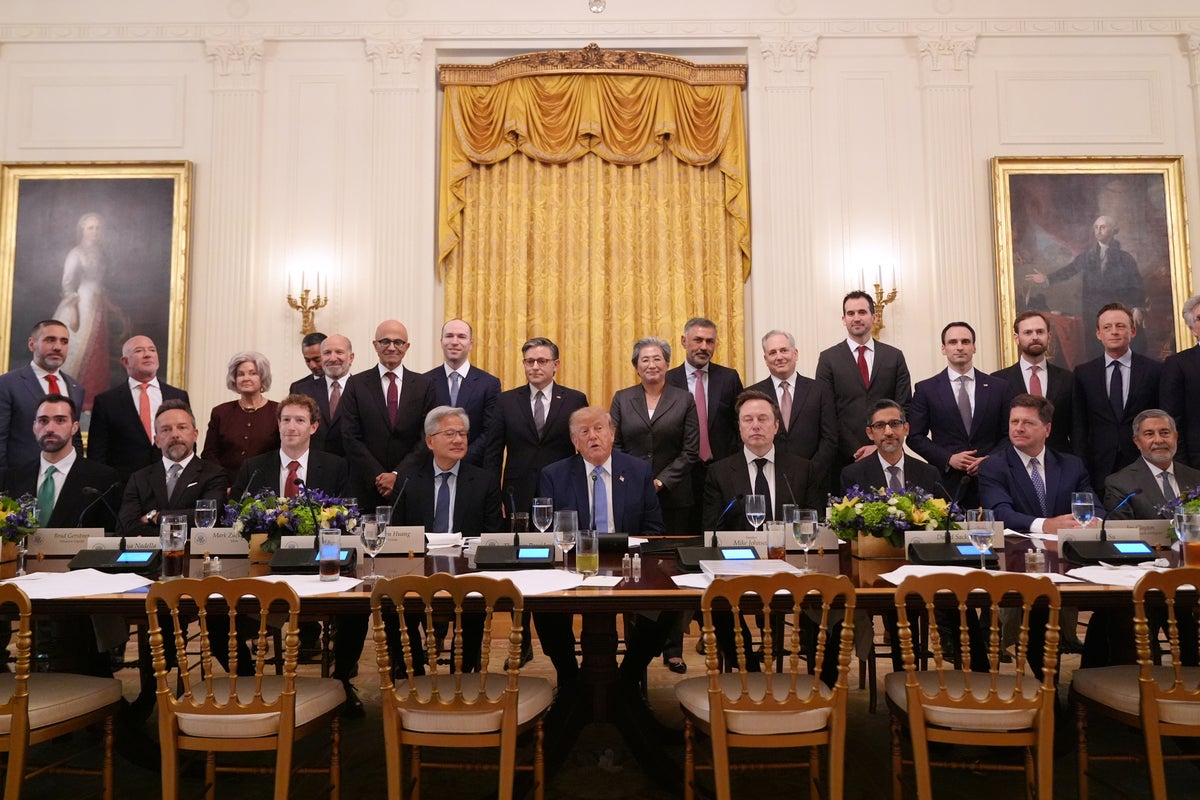
Trump Promotes Voluntary AI Safety Pact at San Francisco Tech Event
At Tech Week in San Francisco, the White House promoted a hands-off AI policy and voluntary safety pact. Industry leaders welcomed the shift toward growth over regulation.

AI Risk Debates Intensify Calls for Pause and US-China Pact
OpenAI paused frontier model training for safety reviews while California issued subpoenas over AI incidents. Officials discussed voluntary standards and potential FTC probes.
The Compass
You just read five takes on one story.
What's your take? Find your political shape in a few minutes.
Take the test