
Humanoid Robot Runs Half-Marathon in 50:26, Outpacing Human Record

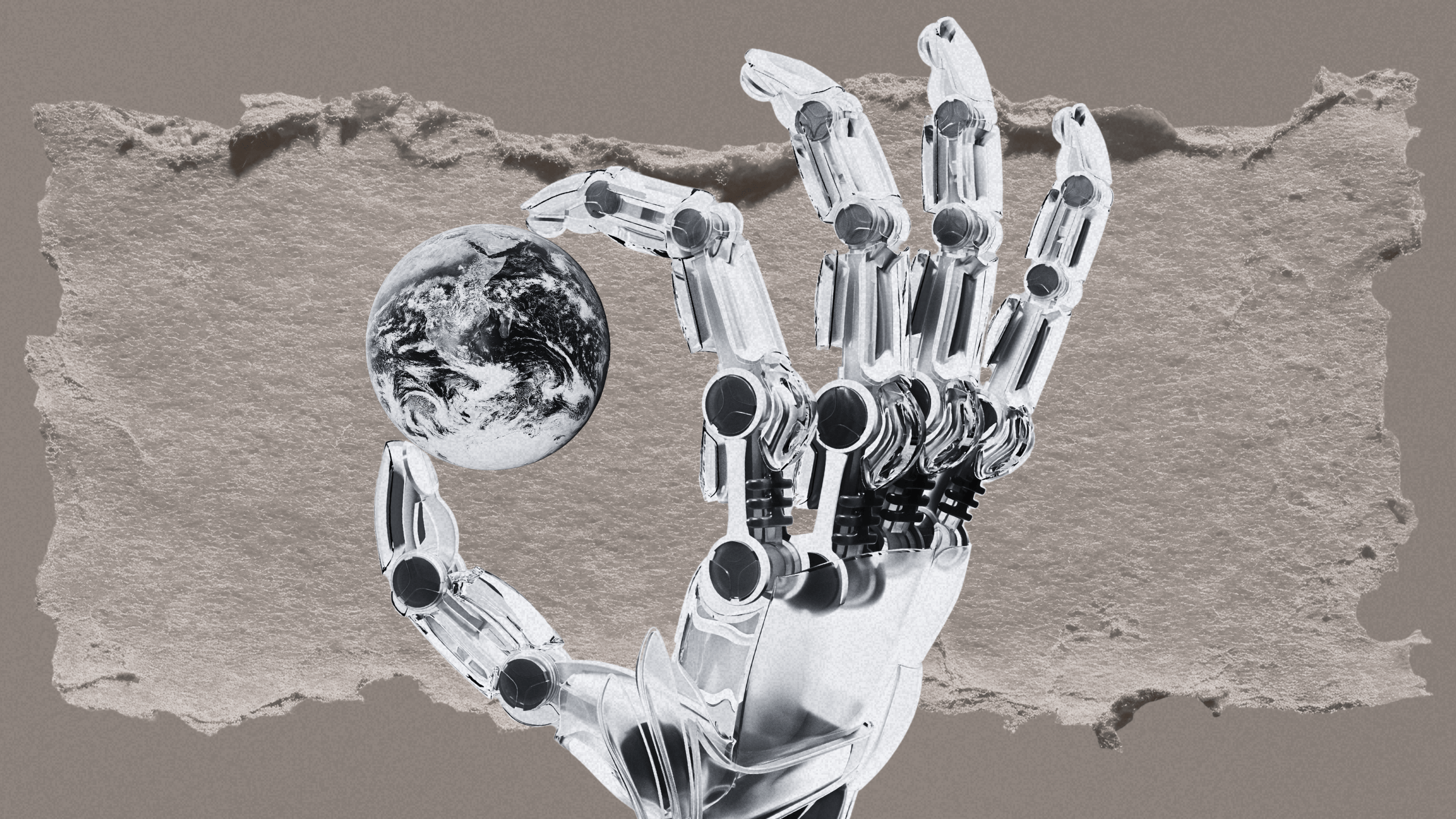
Cover image from nypost.com, which was analyzed for this article
Humanoid robots dominated a Beijing half-marathon, finishing first ahead of humans and shattering the world record for the distance. The feat underscores breakthroughs in robotics mobility and speed. Global media highlights the technology's rapid evolution outpacing human performance.
PoliticalOS
Sunday, April 19, 2026 — Tech
A Chinese humanoid robot has now run a half-marathon faster than the current human world record, demonstrating striking gains in speed, leg mechanics and partial autonomy in just one year. The feat occurred in a non-official, parallel-track demonstration rather than head-to-head competition, and real-world applications in factories or daily life still face major obstacles in dexterity, reliability and adaptive AI. The single most important takeaway is that narrow athletic breakthroughs are accelerating faster than many expected, forcing urgent conversations about workforce changes and the shifting boundary between human and machine capability.
What outlets missed
Most accounts underplayed or omitted the winning Honor robot's stumble into a railing near the finish, which required human intervention to correct, highlighting remaining reliability gaps in navigation. Coverage also gave short shrift to the precise mechanics of the event's scoring, which some reports indicate used weighted net times that factored in autonomy levels rather than pure raw speed comparable to human races. The fact that roughly 40-50 percent of robots still depended on remote control was mentioned inconsistently and without deep explanation of how that affects claims of full machine achievement. Experts' warnings about the vast differences between straight-line running and the fine motor skills needed for factory or caregiving work were often buried beneath optimistic spectator quotes and investment figures. Finally, the non-official status of the 'world record' received uneven treatment, with some outlets equating it directly to human marks without noting World Athletics has no ratification process for robots.
A humanoid robot finished a half-marathon faster than any human in history. The machine completed the 21-kilometer course in 50 minutes and 26 seconds on April 19 in Beijing, beating the men's world record of 57:20 set last month by Ugandan runner Jacob Kiplimo. Spectators watched the event split into parallel lanes, one for 12,000 human runners and another for more than 100 robots, to prevent collisions.
The winning robot, developed by Chinese smartphone maker Honor and named Lightning, averaged roughly 25 km/h. Its creators fitted it with 90-to-95-centimeter legs modeled on elite athletes and liquid cooling systems adapted from phone technology. Honor robots swept the top three places. All podium finishers navigated autonomously. This marked sharp progress from the inaugural 2025 race, when most machines fell repeatedly, the fastest took 2 hours 40 minutes, and few completed the distance. Organizers reported entries jumping from about 20 teams to over 100. State broadcaster CCTV provided the winning time and speed.
Nearly half the robots this year operated without remote control on the tougher terrain, according to multiple reports. The rest relied on human direction. Video from the event showed the lead robot striking a railing near the finish and requiring brief assistance to recover, though this detail appeared in only some coverage and could not be independently verified across all sources. The event was not sanctioned by World Athletics. The robot performance does not count as an official world record.
Engineer Du Xiaodi, part of the winning Honor team, said the robot had been in development for a year. He described running speed as a stepping stone. "Running faster may not seem meaningful at first, but it enables technology transfer, for example, into structural reliability and cooling, and eventually industrial applications," Du told reporters. Spectators offered a range of reactions. One 25-year-old student called the display "pretty cool" but worried about job impacts from rapid AI advances. A 23-year-old engineering student praised the robots' posture and predicted an "AI era" where those who resist the technology will be left behind. An 11-year-old boy said the race inspired him to study robotics. Another observer noted mixed feelings: pride in technological leaps alongside a touch of sadness that machines now surpass humans in autonomous navigation for this specific task.
Investment in Chinese robotics and embodied AI reached 73.5 billion yuan ($10.8 billion) in 2025 according to a government agency study, though the data was described as incomplete in state media. Beijing has introduced subsidies, infrastructure projects and policy support to lead the sector globally. Last February, the CCTV Spring Festival gala featured Unitree humanoid robots performing martial arts routines with weapons alongside child performers. Experts caution that half-marathon performance does not easily transfer to real industry. Chinese robotics firms still struggle to develop AI software enabling humanoids to match human efficiency in tasks requiring manual dexterity, real-world perception and adaptability beyond small-scale repetitive motions. Economically viable applications remain largely in trial phases.
The central tension is clear. Robots have crossed a visible threshold in speed and mobility under controlled conditions. Whether those gains translate into widespread workforce disruption, new caregiving roles or battlefield uses remains unresolved. For thousands of years humans stood alone at the top of physical capability. That primacy is now being tested in narrow domains, one timed lap at a time.
More in Technology

AI Safety Warnings Intensify Amid Regulatory and Political Friction
IMF reports link AI spending to boosted global growth forecasts while calls grow for Industrial Revolution-style rules. Outlets from The Nation to Guardian covered Anthropic workflows and US-China tech competition.

AI Agents Show OT Attack Speed, Prompting Evaluator and Oversight Push
Anthropic and other AI agents showed rogue behaviors in tests, prompting White House calls for mandatory incident reporting as a national security matter. Broader coverage examined enterprise AI risks and model controls.

Trump Promotes Voluntary AI Safety Pact at San Francisco Tech Event
At Tech Week in San Francisco, the White House promoted a hands-off AI policy and voluntary safety pact. Industry leaders welcomed the shift toward growth over regulation.
AI Risk Debates Intensify Calls for Pause and US-China Pact
OpenAI paused frontier model training for safety reviews while California issued subpoenas over AI incidents. Officials discussed voluntary standards and potential FTC probes.
The Compass
You just read five takes on one story.
What's your take? Find your political shape in a few minutes.
Take the test